On November 20, 2026, Babylon co-founder Fisher Yu proposed shutting down the protocol’s Bitcoin staking service by year-end and shifting its focus to Trustless Bitcoin Vaults (TBV). The proposal, posted to Babylon’s governance forum, was a plan for the community to consider—not a shutdown already in effect.
At the time of the proposal, about 41,556 BTC, valued at more than $2.5 billion, was locked in Babylon’s staking pool. Under the proposed change, the annual inflation rate of its BABY token would fall from 5.5% to 2.0%, a 63.64% reduction in annual new issuance. The proposal presents this as a move away from token subsidies for staking and toward fees from vault activity. Whether that activity would generate sufficient revenue is not established by the proposal.
The proposed wind-down would set staking and co-staking rewards to zero, disable finality validation and stop new staking registrations. Existing stakers would still have to follow the applicable time locks and unstaking rules to withdraw. The source describes the process as contract-based and claims staked principal would remain safe; those assurances should not be read as a guarantee of risk-free withdrawals.
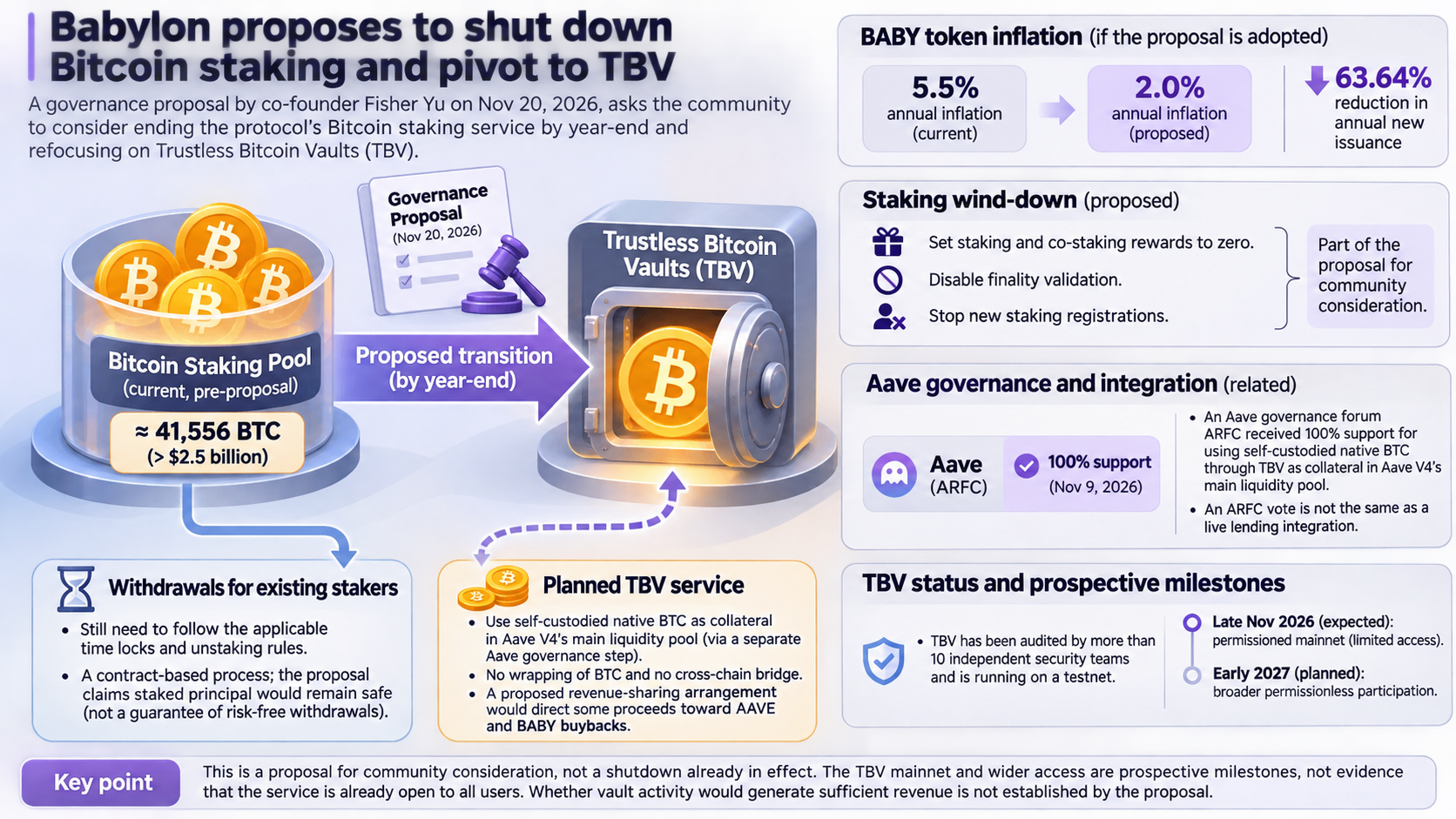
The TBV plan is tied to a separate Aave governance step. According to the November 20 report, an Aave governance forum ARFC received 100% support on November 9 for using self-custodied native BTC through TBV as collateral in Aave V4’s main liquidity pool. An ARFC vote is not the same as a live lending integration. The described design would avoid wrapping BTC or using a cross-chain bridge, while a proposed revenue-sharing arrangement would direct some proceeds toward AAVE and BABY buybacks.
Babylon Labs said TBV had been audited by more than 10 independent security teams and was running on a testnet. At the time of the report, a permissioned mainnet was expected in late November 2026, with broader permissionless participation planned for early 2027. Those were prospective milestones, not evidence that the service was already open to all users.