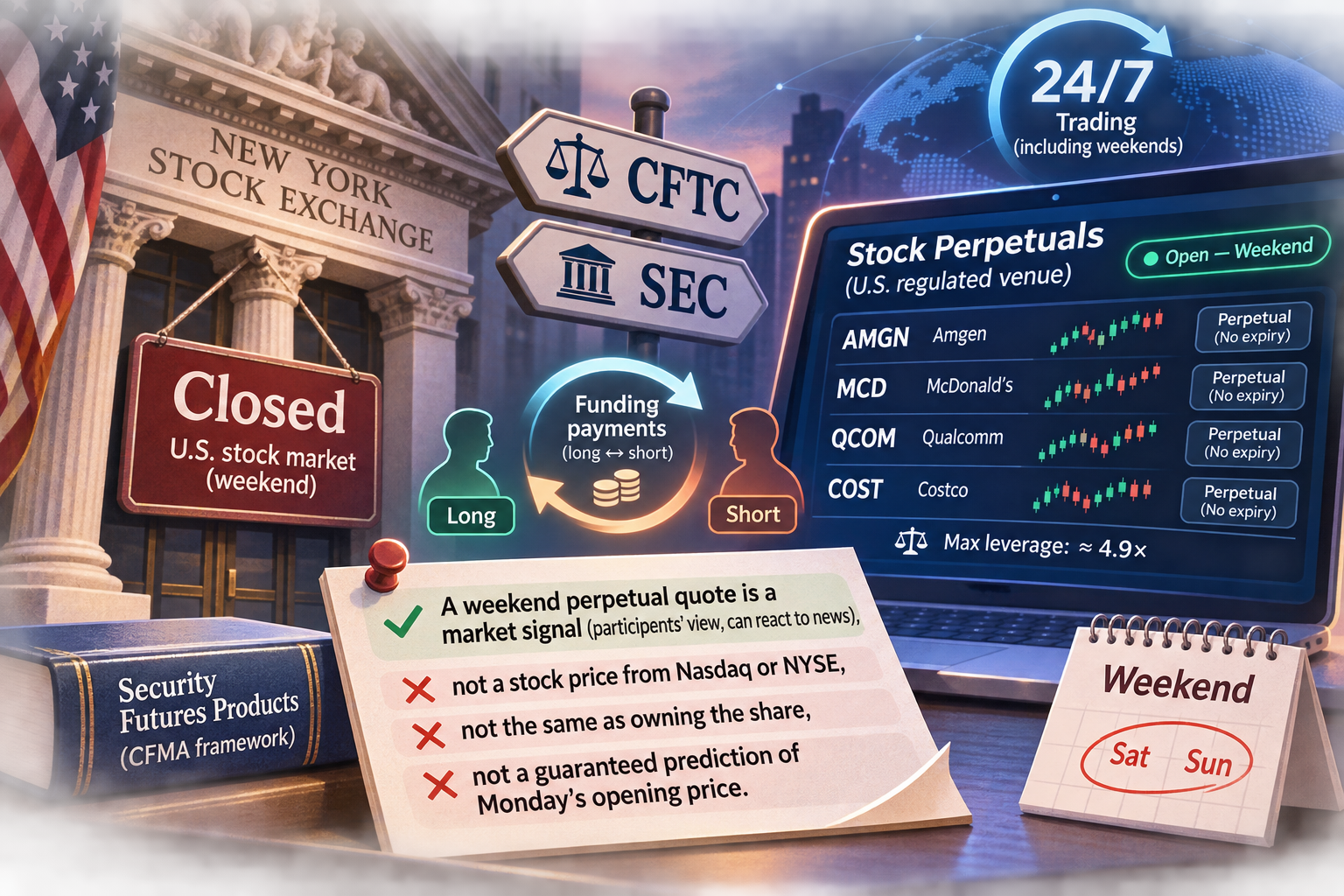
As reported on November 5, 2026, the U.S. market for single-stock perpetual contracts had taken a concrete step beyond the crypto exchanges that popularized them. Commodity Futures Trading Commission (CFTC) Chair Mike Selig said on November 3 that the contracts could trade on U.S. regulated venues under a framework involving both the CFTC and the Securities and Exchange Commission (SEC). According to the report, Kalshi began offering perpetuals tied to Amgen (AMGN), McDonald’s (MCD), Qualcomm (QCOM) and Costco (COST) that day, with maximum leverage of about 4.9 times.
The development gives a more specific form to a familiar crypto-market narrative: trading traditional assets outside traditional market hours. It does not mean that buying a stock perpetual is the same as owning a share, or that a weekend contract quote is an official stock price.
Why perpetuals matter
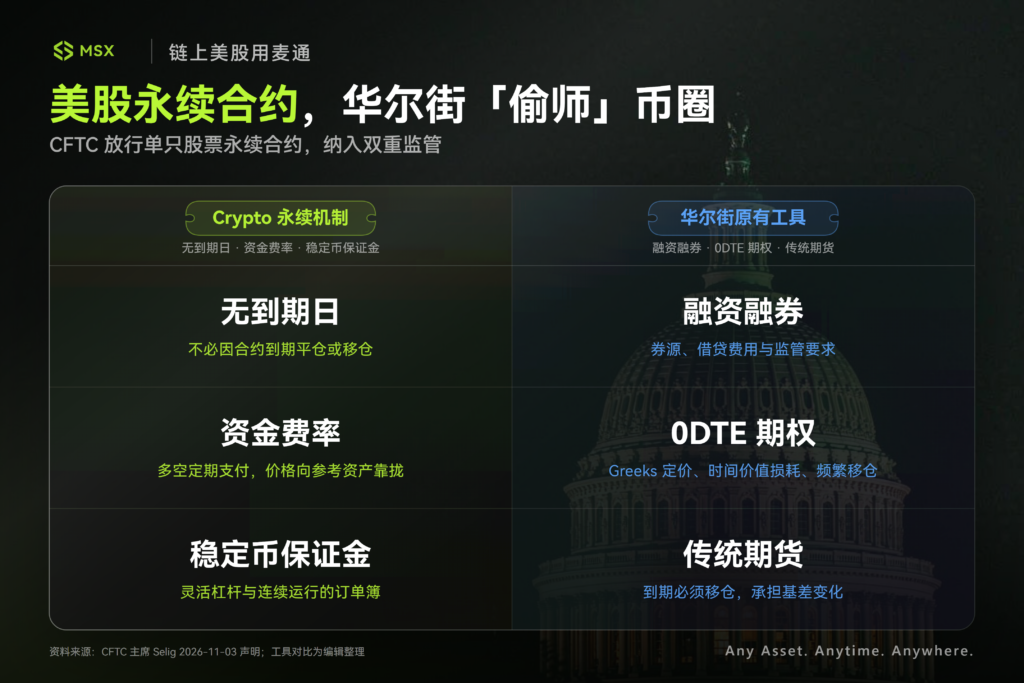
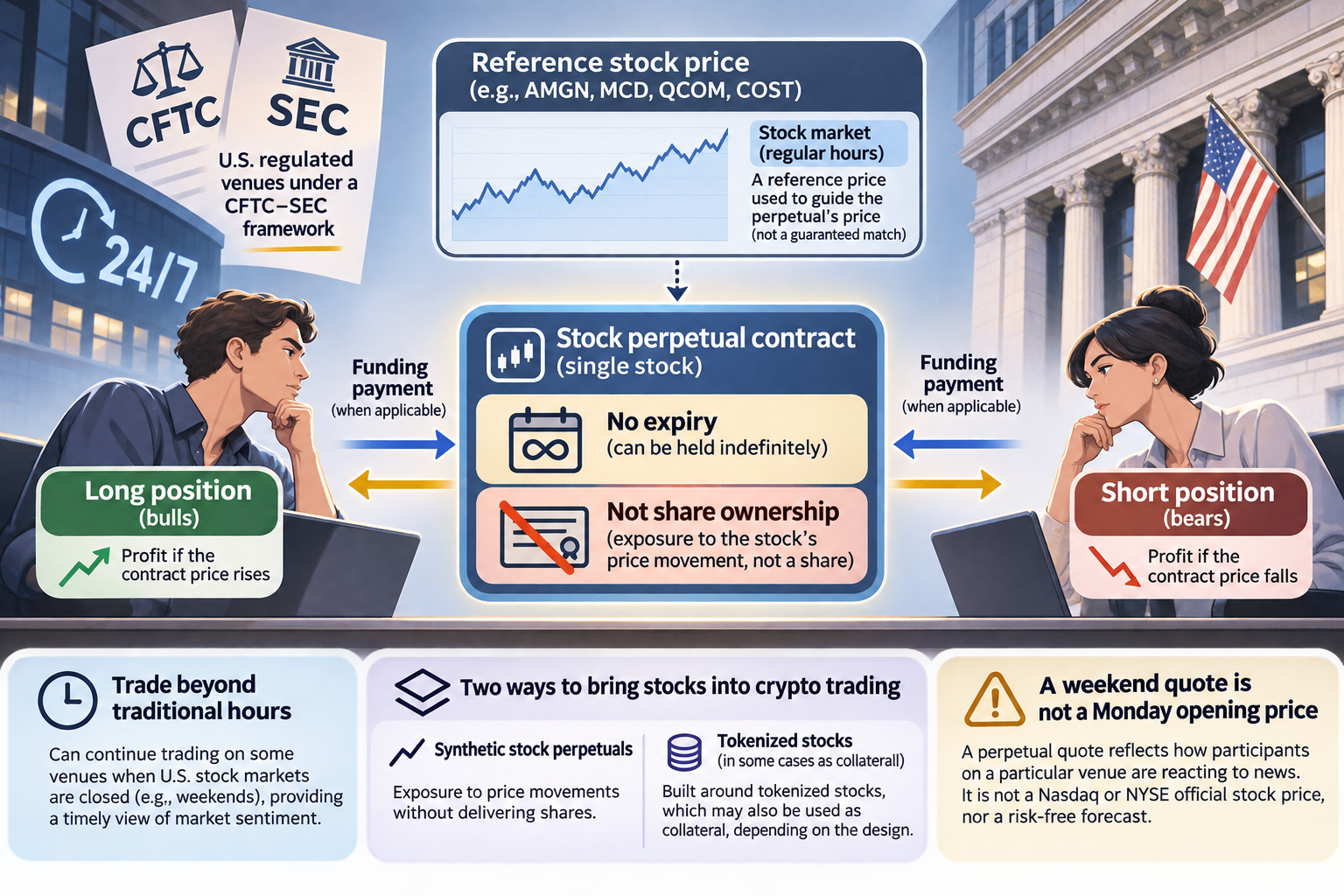
Unlike a conventional futures contract, a perpetual has no expiry date that forces a holder to close or roll a position. Periodic funding payments between long and short positions help pull its price toward a reference price. They do not guarantee that the two will match, particularly when the underlying stock market is closed.
The report says Selig classified single-stock perpetuals as security futures products under the Commodity Futures Modernization Act framework, subject to both commodities and federal securities law. It says a venue offering them needs CFTC registration as a designated contract market and SEC notification registration as a national securities exchange permitted to trade security futures.
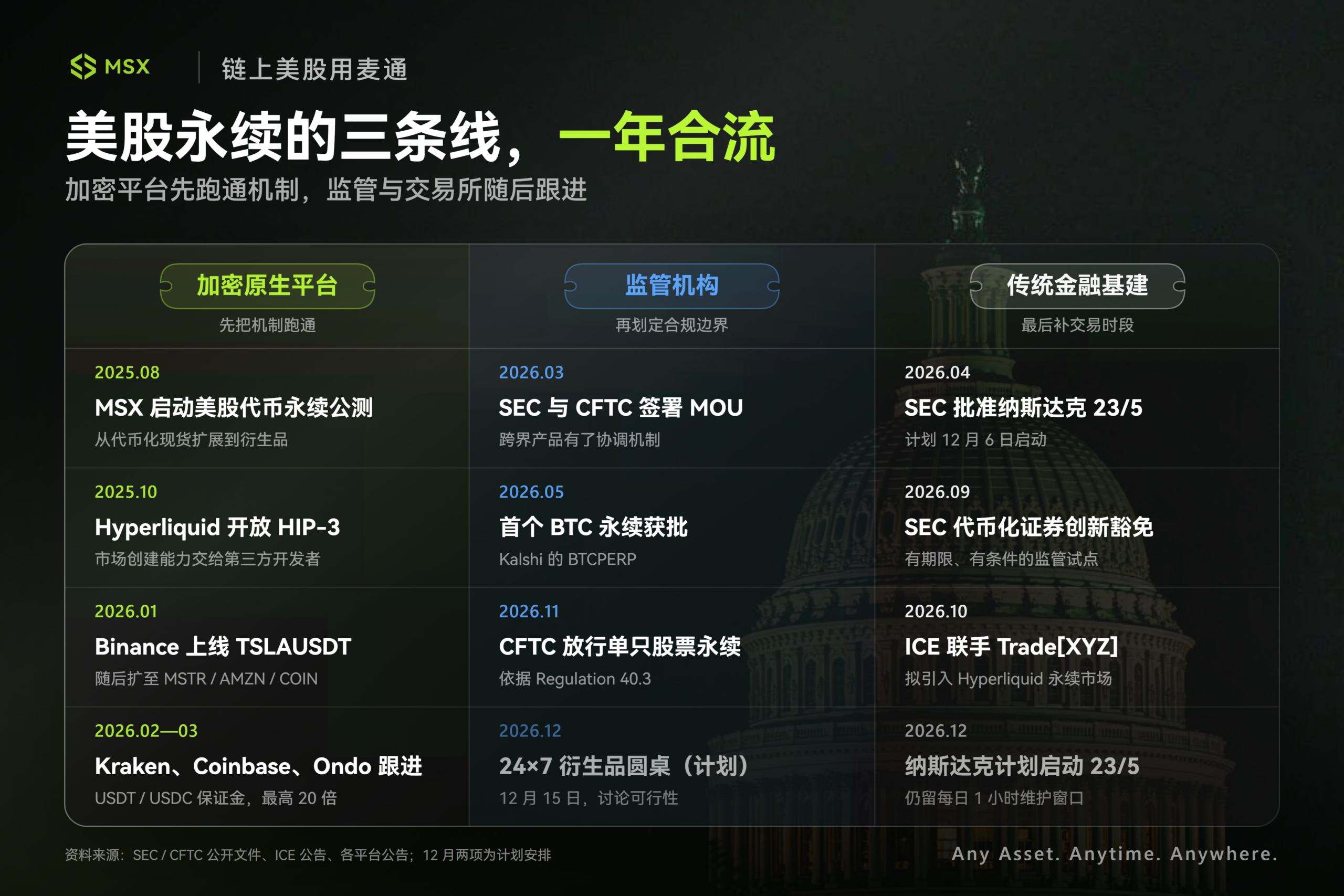
That regulatory route followed a March 11, 2026, cooperation memorandum between the SEC and CFTC and, according to the report, the CFTC’s May 29 approval of KalshiEX’s Bitcoin perpetual contract, BTCPERP. These are distinct developments: permission for a regulated product is not a blanket approval of every stock-linked contract sold on a crypto platform.
Two ways to bring stocks into crypto trading
Crypto platforms had already been expanding stock-linked products. The report traces launches and plans from MSX’s August 2025 test of tokenized-stock perpetuals and Hyperliquid’s October 2025 HIP-3 market-creation mechanism to 2026 offerings or plans from Binance, Ondo Finance, Kraken, Coinbase and Bitget. Eligibility and product design vary. Kraken’s February offering, for example, was described as available to eligible non-U.S. users in more than 110 countries and regions.
The report distinguishes synthetic stock perpetuals, which provide exposure to price movements without delivering shares, from products built around tokenized stocks and, in some cases, their proposed use as collateral. Calling both approaches “stocks on-chain” can obscure that difference.
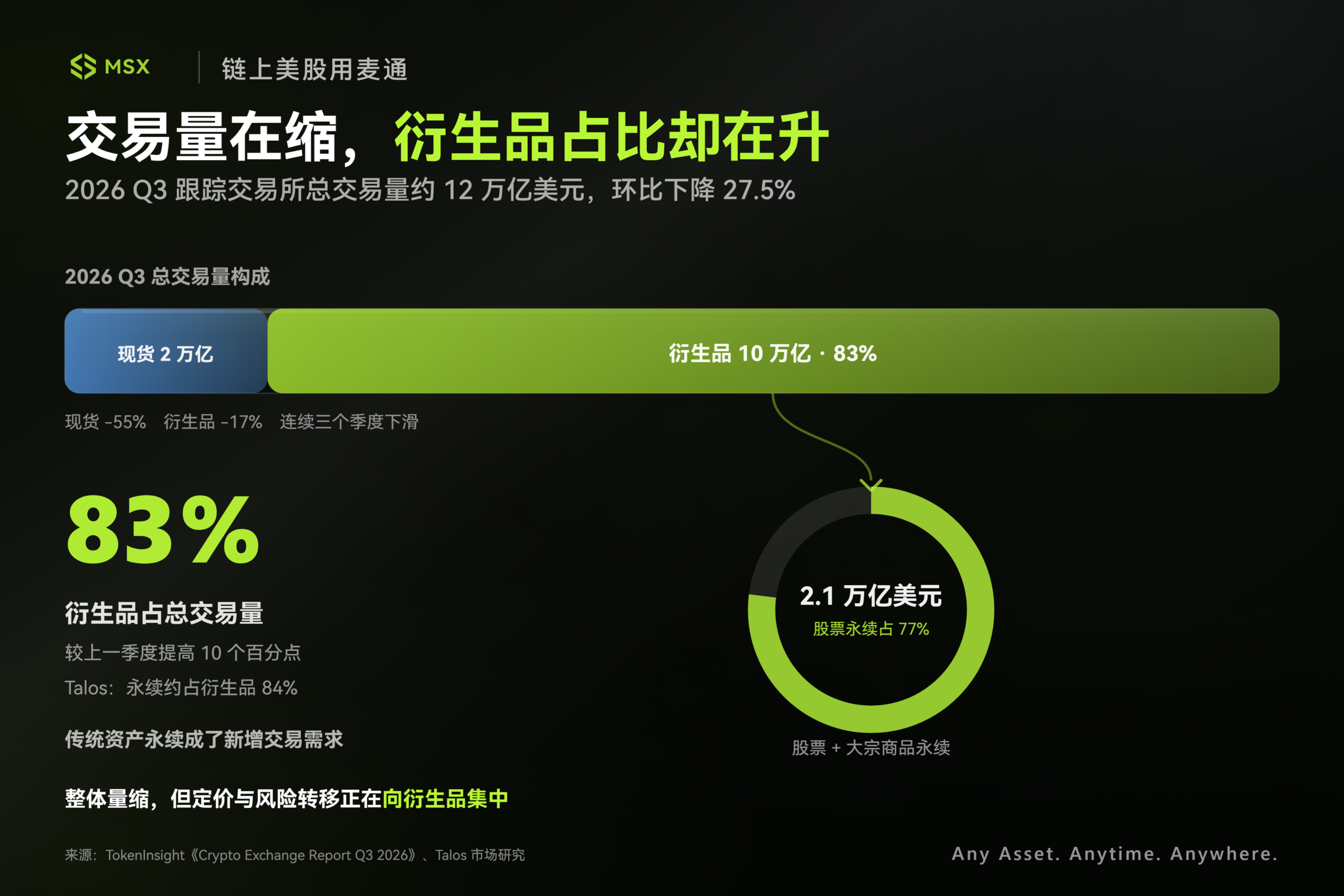
Scale helps explain the interest, but not the outcome. Citing TokenInsight, the report says derivatives represented 83% of trading volume across its tracked exchange sample in the third quarter of 2026, up 10 percentage points from the previous quarter, even as total sample volume fell 27.5% quarter over quarter to about $12 trillion. It puts stock and commodity perpetual volume across nine exchanges at about $2.1 trillion for the quarter. Those figures describe the tracked markets; they do not establish that stock perpetuals will draw equivalent demand on U.S. regulated venues.
Traditional finance was exploring the format too. On October 29, Intercontinental Exchange, the New York Stock Exchange’s parent, announced a partnership with Trade[XYZ] to plan a U.S. regulated market drawing on the Hyperliquid-based perpetuals model. The proposed trading and clearing arrangements still required regulatory approval, according to the report.
A weekend quote is not a Monday opening price
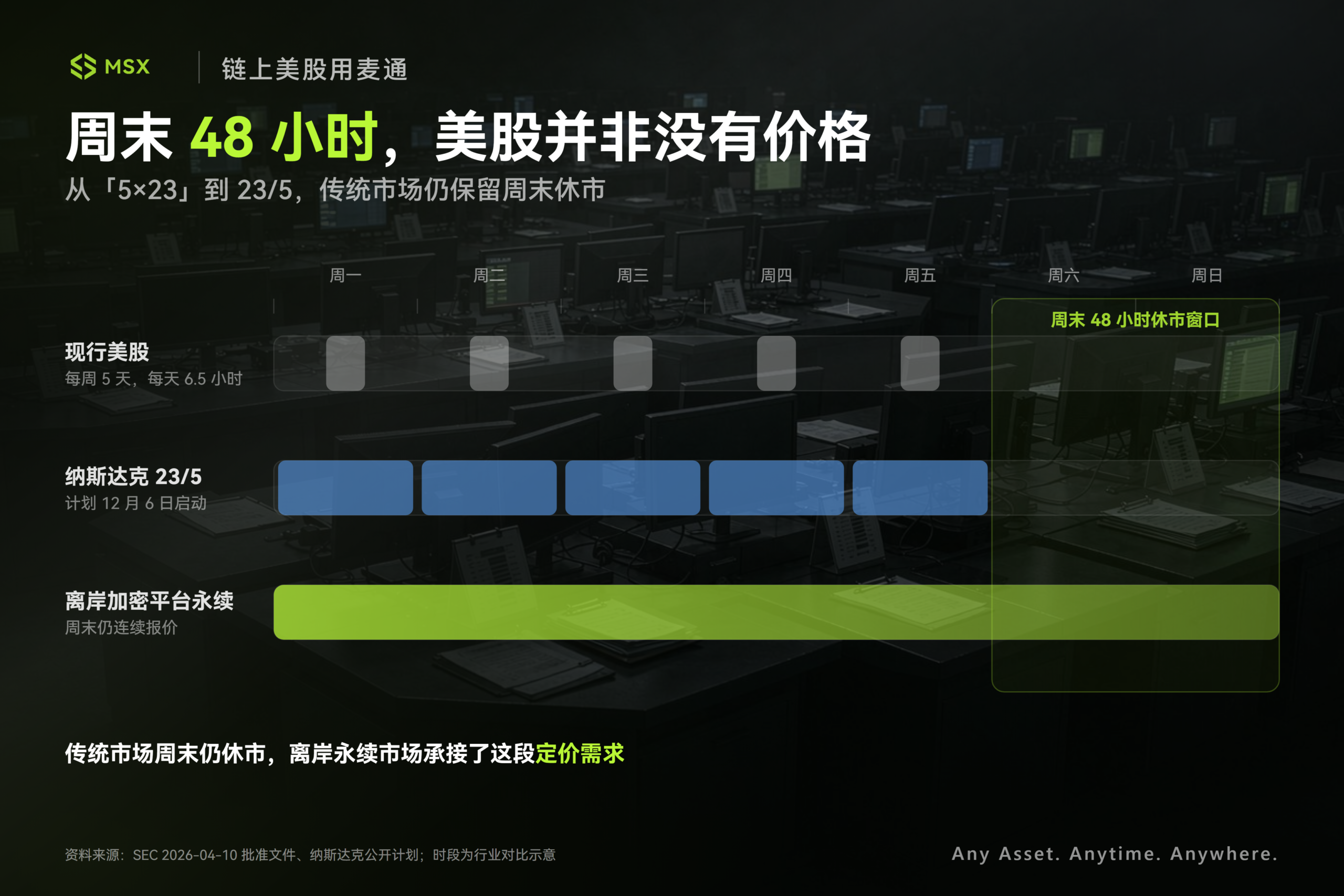
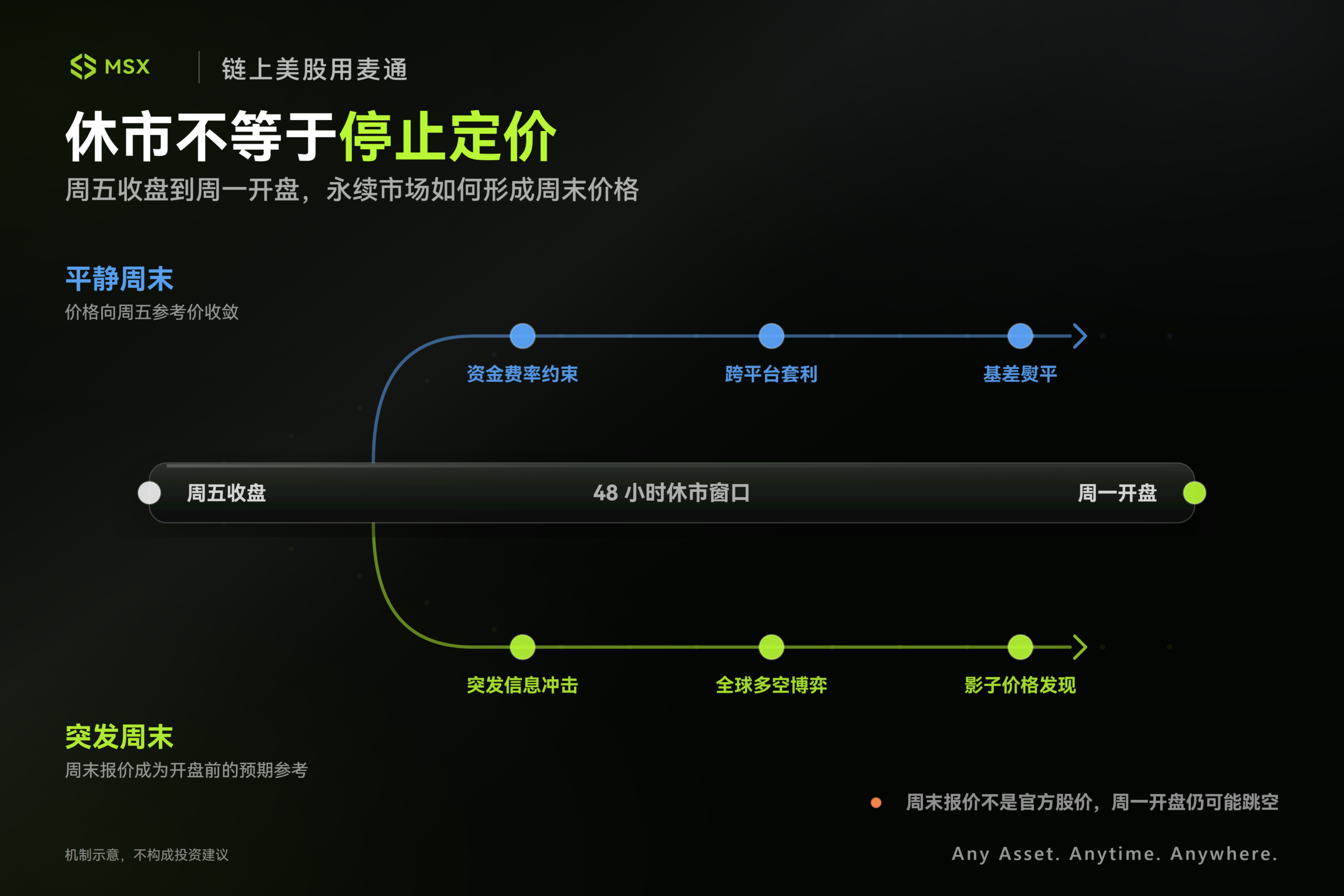
When U.S. stock exchanges close, stock perpetuals can continue trading on some crypto venues. The report describes Coinbase using external stock-market data during normal hours and an internal reference incorporating available tokenized-stock quotes and perpetual-market prices during certain closed periods. Funding payments and trading between venues may help correct price gaps, but weekend liquidity, margin requirements and the absence of continuous trading in the underlying shares limit arbitrage.
A perpetual quote may therefore show how participants on a particular venue are reacting to news before the stock market reopens. It is neither a risk-free forecast nor a Nasdaq or NYSE stock price. That distinction matters as the broader around-the-clock trading narrative develops: the report says a Nasdaq rule change for 23-hour trading on five days a week had been approved in April 2026, with a December 6 start expected, while the CFTC had scheduled a December 15 discussion on the feasibility of continuous derivatives trading. Those future steps remained plans as of the original November 5 report.