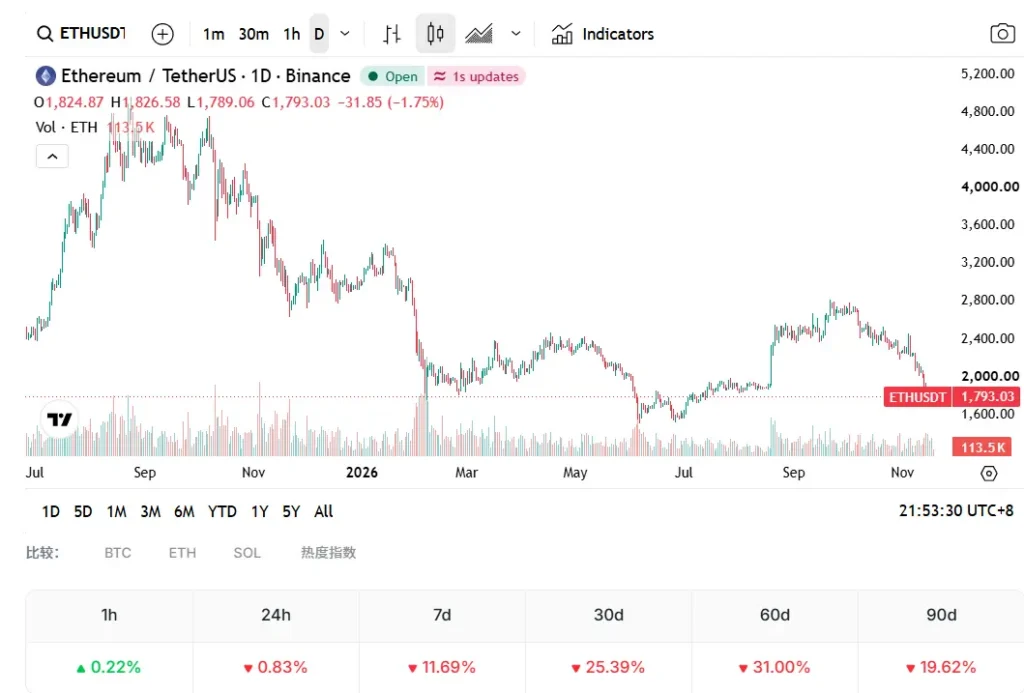
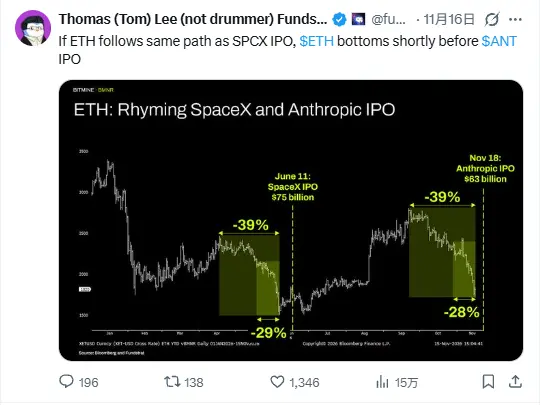
As reported on November 18, 2026, ETH’s decline was testing a familiar story in its community: that growing use of Ethereum would ultimately strengthen the case for holding its token. Tom Lee remained one of that story’s most visible advocates, even as his company, Bitmine, faced substantial unrealized losses.
ETH was trading around $1,800 at the time of the report, more than 60% below its previous $4,954 high. Bitmine held 6,070,092 ETH as of November 8 at an average cost of about $3,353 per token; its unrealized loss had at one point approached $10 billion. Lee nevertheless continued to argue that ETH could reach roughly $62,000 in a future cycle. That figure is a conditional forecast, not an established valuation: one version of his reasoning assumes ETH rises to about one-quarter of BTC’s price while BTC reaches $250,000.
A forecast becomes a credibility test
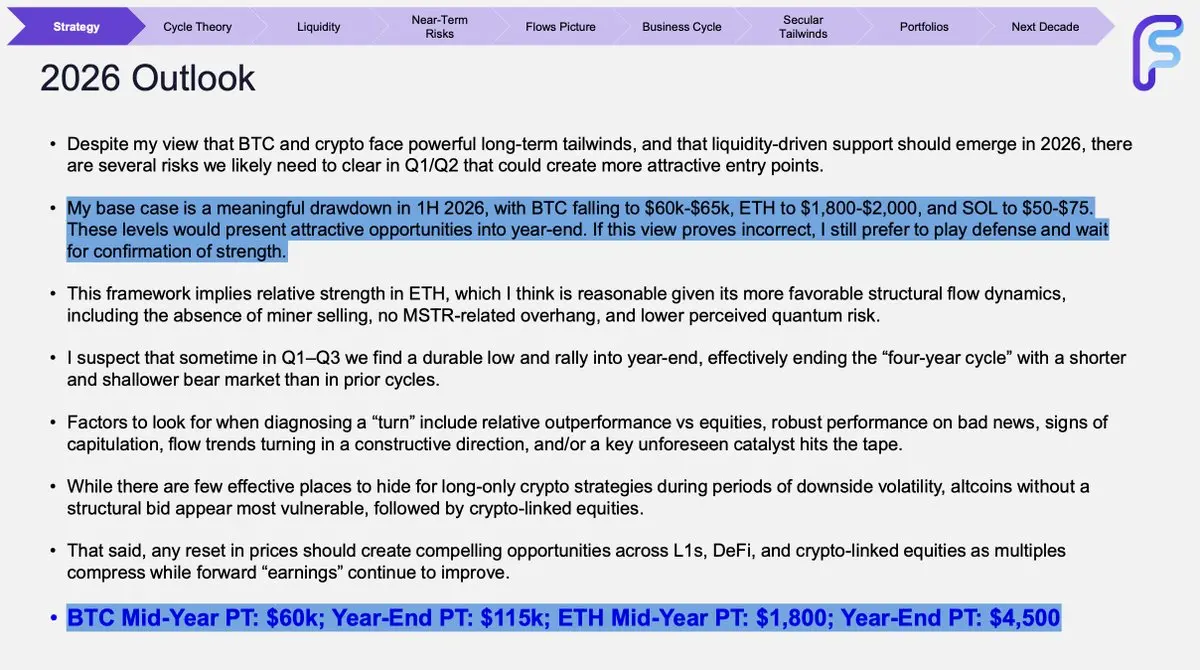
Lee’s bullish public comments drew scrutiny after Fundstrat digital-asset strategist Sean Farrell gave paying clients a different near-term scenario in a December 20, 2025 outlook. Farrell treated a substantial pullback in the first half of 2026 as his base case and set an ETH target range of $1,800–$2,000. Farrell subsequently said the report concerned risk management rather than a bearish stance; Lee said their views used different methods and time horizons. ETH later fell below $2,000 multiple times in 2026 and briefly below $1,600 in June.
Bitmine’s position also changed. According to its disclosures, the company had repurchased about 22.9 million shares for roughly $400 million by late October 2026. Its two most recent weekly ETH purchases were 9,587 and 7,653 tokens. Bitmine had not disclosed what it would do after reaching its stated goal of holding 5% of ETH; any claim that it would stop buying remained speculation. With little debt and about 86% of its ETH staked, the company was not described as facing immediate forced-liquidation pressure.
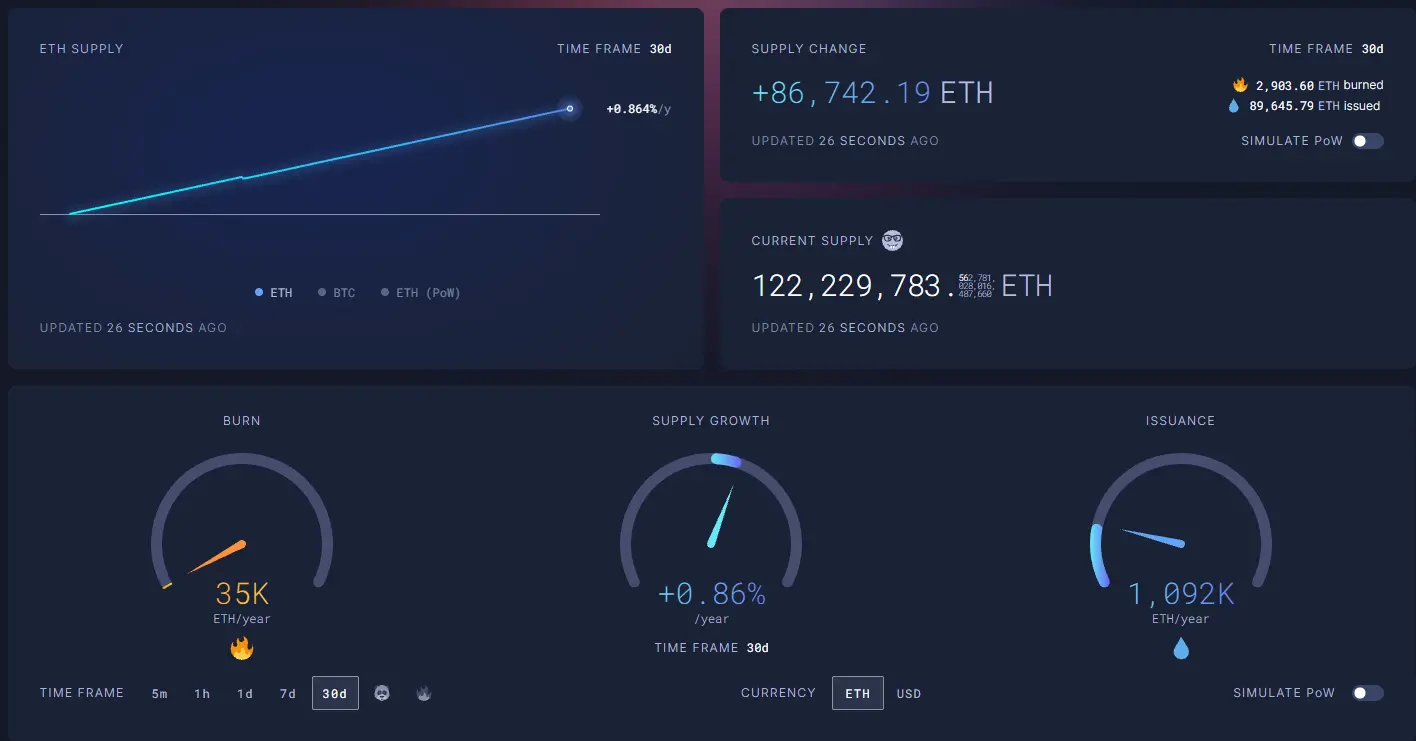
What does network growth return to ETH holders?
Lee has also pointed to tokenization as a reason to be bullish. Yet greater Ethereum use does not, by itself, settle how much value accrues to ETH. Citing Binance Research, the report said network usage grew about 50% in the first half of 2026 while falling gas fees were expected to reduce full-year network revenue by 53%. Citing ultrasound.money’s recent 30-day figures, it put annualized ETH issuance at roughly 1.09 million tokens against about 35,000 burned.

On November 8, Vitalik Buterin renewed his emphasis on ETH as a store of value while arguing that fee burning should no longer be its central valuation rationale. That is a proposed way to understand ETH, not proof that investors will value it accordingly. Arca chief investment officer Jeff Dorman offered a different calculation, estimating that Ethereum’s revenue and ETH held to pay gas explained only $45 billion–$50 billion of an approximately $246 billion market value; he attributed much of the remainder to social value and market expectations.

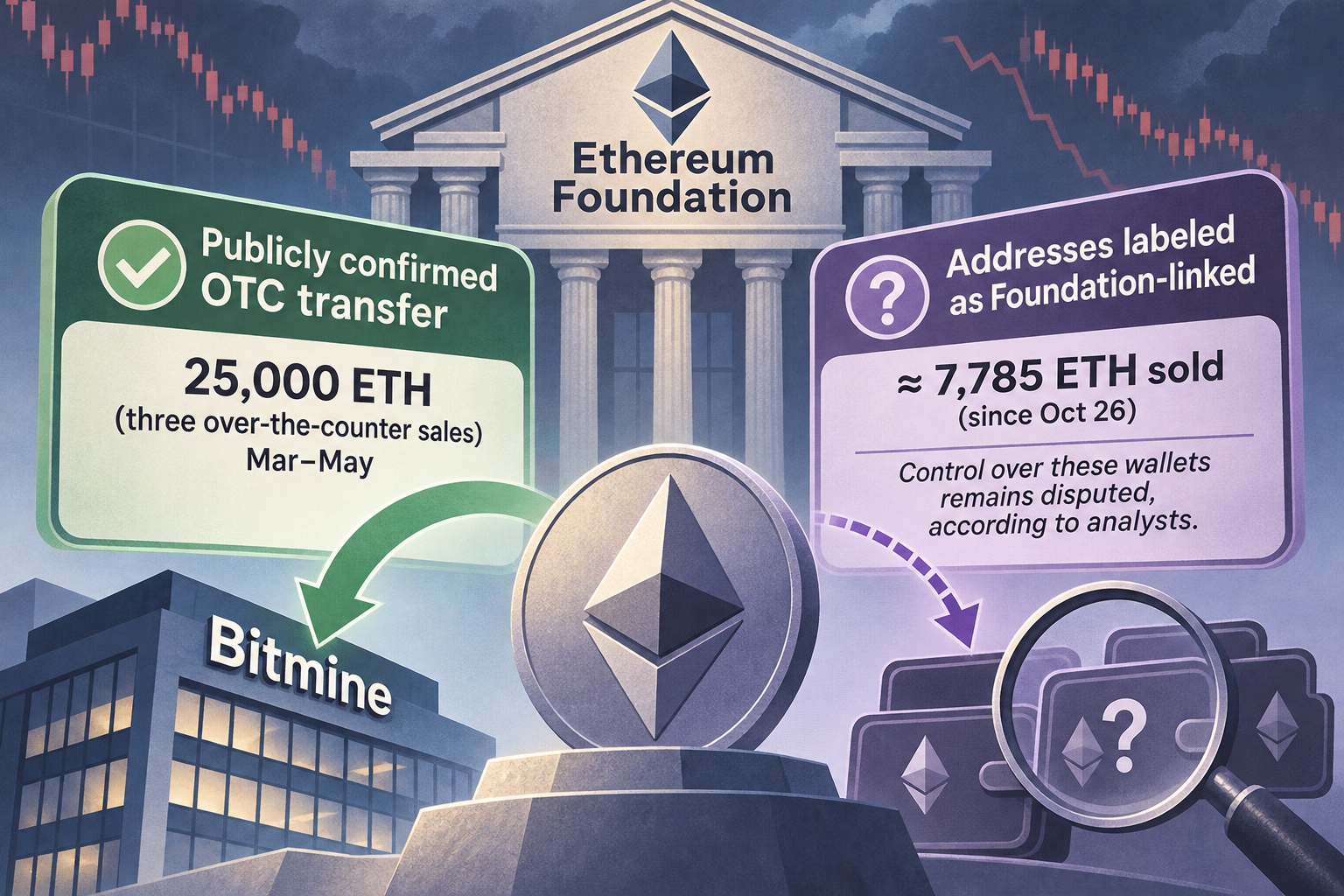
The Ethereum Foundation’s role is another point of contention. On-chain analyst Ai Yi reported that addresses labeled as Foundation-linked had sold about 7,785 ETH since October 26. Analyst Specter cautioned that some wallet labels lacked sufficient evidence of continuing Foundation control. Separately, the Foundation publicly confirmed three over-the-counter sales totaling 25,000 ETH to Bitmine between March and May.
The result is a debate about more than Lee’s next target price. Bitmine’s holdings, Ethereum’s changing fee economics and the Foundation’s reluctance to act as a token-price advocate leave supporters advancing different accounts of why ETH should command its valuation. None of those accounts resolves the question simply by being repeated.