Pearl’s pitch gives AI inference a second job: the matrix calculations used to answer a customer’s request could also help mine its proof-of-work token, PRL. In a November 20, 2026 report, BlockBeats examined the gap between that proposed use of AI infrastructure and the mining activity visible at the time.
Investment firm Syncracy had disclosed a large PRL position built over the preceding two quarters and argued that the design could make PRL a store-of-value asset. Its endorsement briefly pushed the token close to its previous high, according to the report. That is an investment thesis, not evidence that AI data centers have adopted Pearl at scale.
One computation, two possible uses
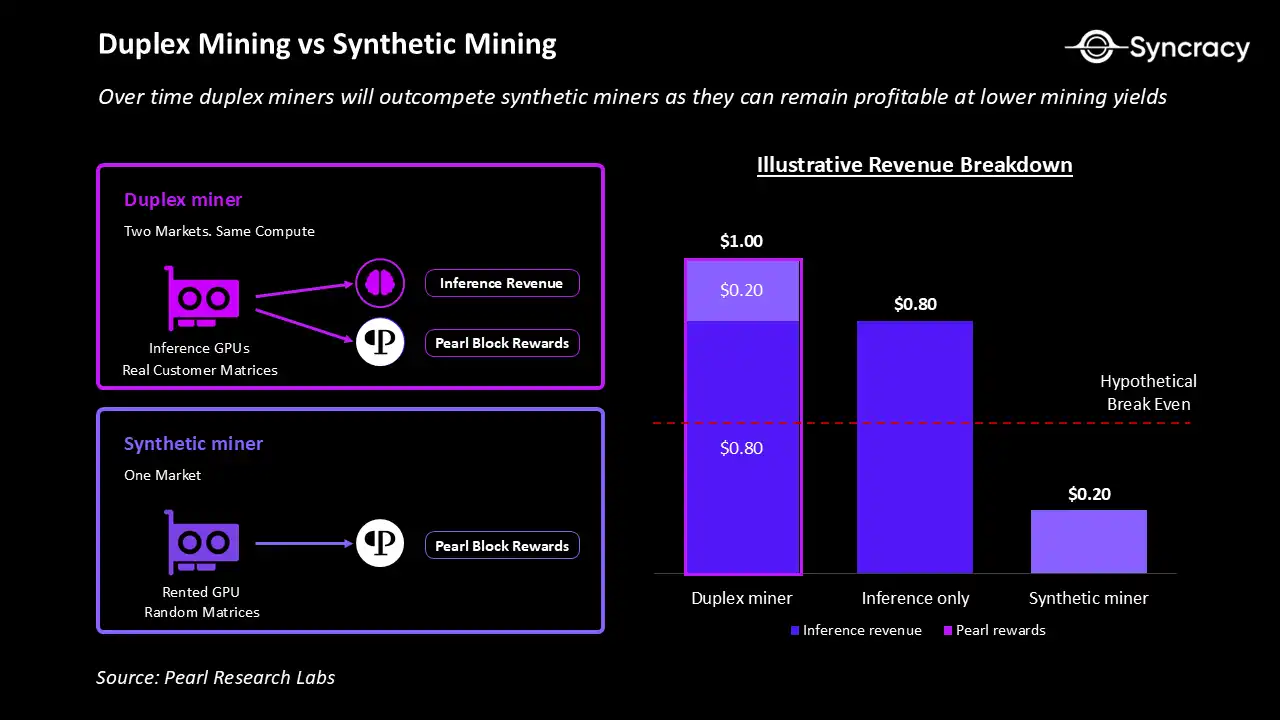
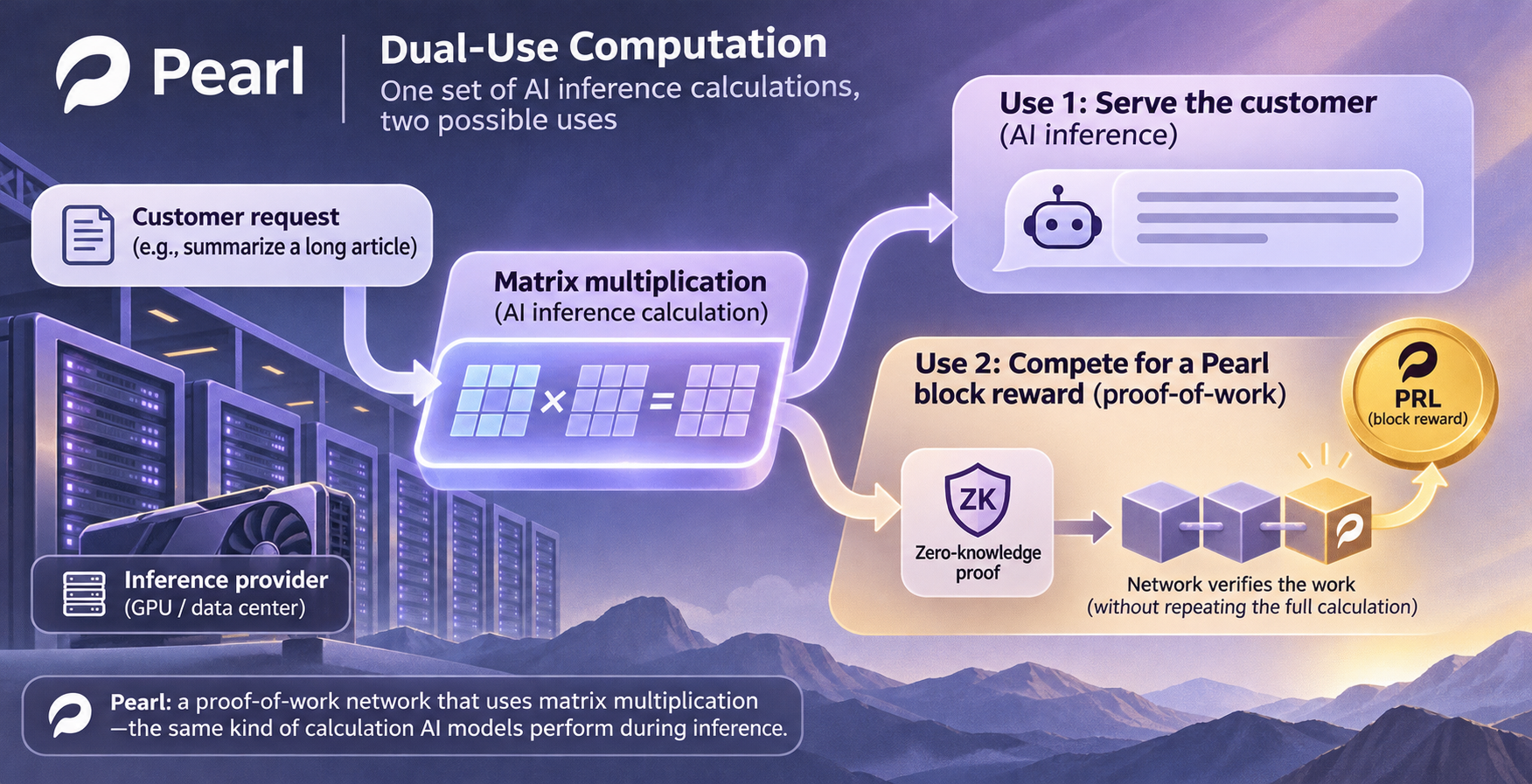
Pearl launched in April 2026. Unlike Bitcoin’s hash-based mining, its protocol uses matrix multiplication—the kind of calculation AI models perform during inference. Under Pearl’s design, an inference provider could use eligible calculations both to serve a customer and to compete for a block reward. A successful miner would submit a zero-knowledge proof so network nodes could verify the required work without repeating the full calculation.
The design grew out of a 2025 paper co-authored by Pearl co-founders Omri Weinstein and Ilan Komargodski and Nvidia researcher Itamar Schen. Weinstein previously worked as a senior research scientist at Nvidia; Komargodski is a cryptography professor at the Hebrew University. They later developed the network with co-founder Idan Sugarman.
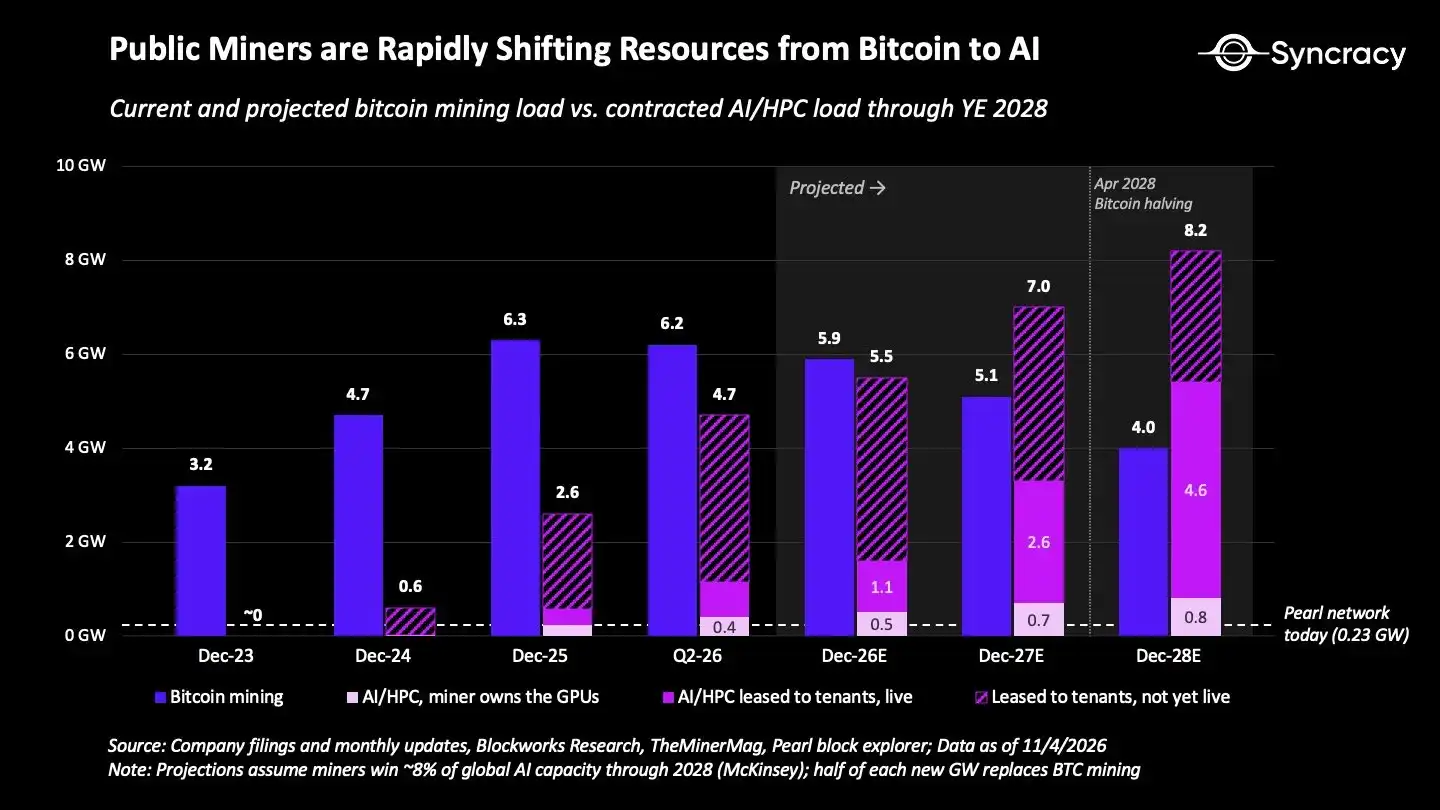
Actual mining looked different from the data-center vision. Blockworks estimated in early November that consumer GPUs supplied about 82% of Pearl’s computing power, while fewer than 1% of blocks matched computations from real AI models.
Supply and adoption risks
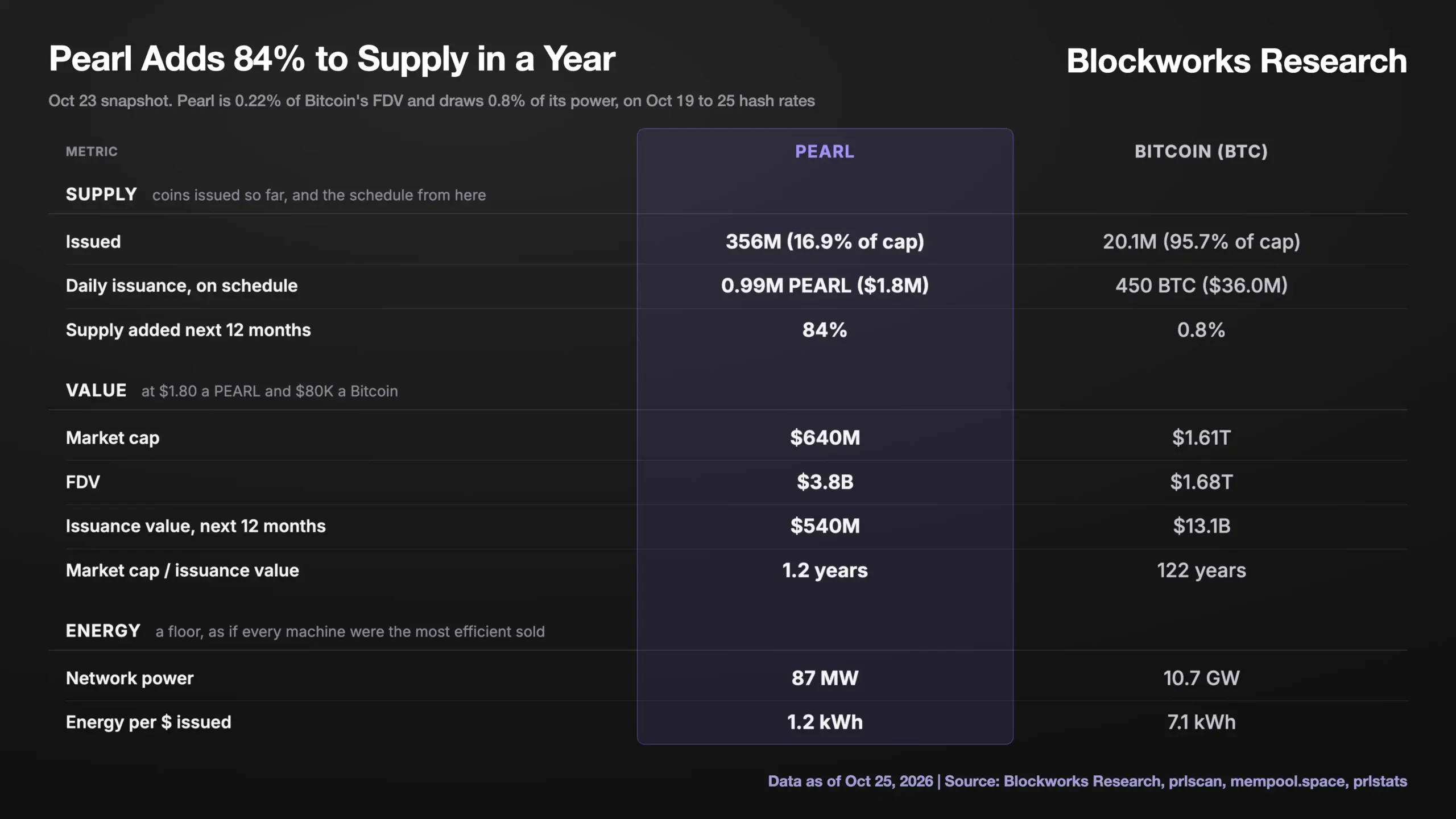
PRL has a maximum supply of 2.1 billion, with new tokens issued through block rewards. Low initial mining difficulty preceded a surge in computing power: miners produced about 122 million PRL in the first six days, nearly a third of the supply circulating at the time of the report. Pearl’s white paper said the low initial difficulty was intended in part to give the core team resources for research and infrastructure, while mining remained open to anyone prepared to participate.
According to the project’s disclosures, the company held about 72 million PRL on behalf of the team and shareholders, and shareholders directly held another 26 million. Together, those roughly 98 million tokens represented about 26% of circulating supply in mid-November. Pearl Research and the team pledged to lock at least half their holdings until May 2027. In an early-November on-chain snapshot, Blockworks found that roughly 40% of issued PRL had not moved since mining, mostly from the first weeks. The issuance schedule called for about 300 million more PRL to be mined over the following 12 months—84% of the amount issued at the time of that snapshot.
For inference providers, the key question is whether mining rewards outweigh any lost capacity and added electricity costs. A planned FP8 upgrade was intended to make more data-center calculations eligible for mining. Blockworks estimated it could reduce the inference-throughput loss associated with mining from roughly 10–15% to 0–3%; that was a projection, not a demonstrated network-wide result. The change could also leave some older GPUs unable to mine.

There had been a limited commercial test: Together AI launched a PRL-mining Gemma inference endpoint in May, pricing it with expected mining rewards in mind, but removed it from its on-demand inference service months later. Blockworks also reported that Pearl Research Labs completed a $55 million equity raise in late October and had a separate $75 million investment vehicle for expanding GPU capacity.
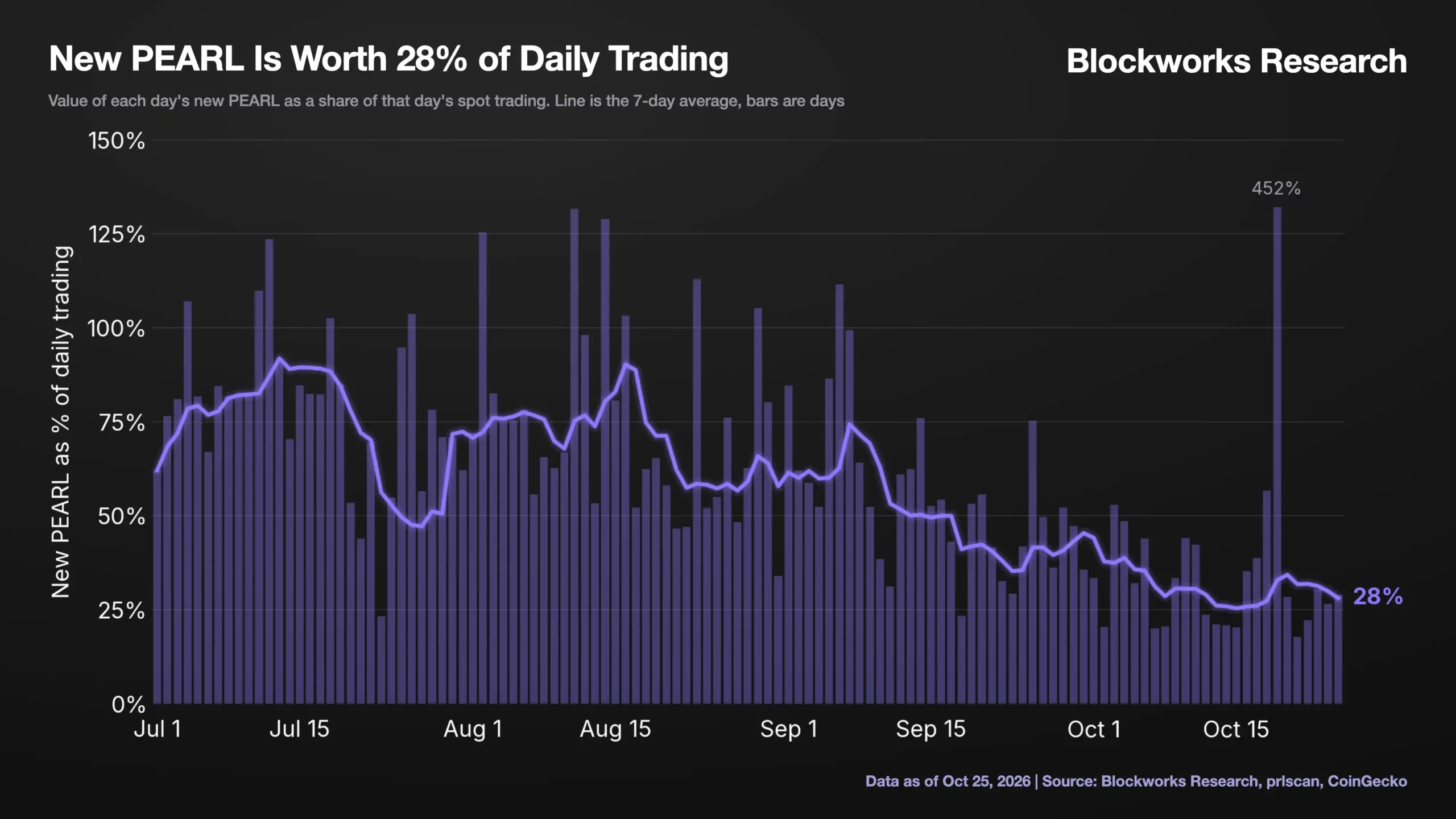
Syncracy’s bullish case depends on inference providers joining, greater computing power attracting store-of-value buyers, and a higher token price making mining more attractive. The reverse is possible too: if PRL falls, rewards may no longer cover mining’s opportunity cost. Newly mined tokens could add selling pressure as miners pay expenses; Blockworks estimated their daily value at then-current prices equaled 28% of daily PRL trading volume.
A growing inference business would not automatically create demand for PRL. Providers could sell mined tokens to fund discounts or expenses; direct token-buying demand would require customers to choose to buy PRL for computing services. For now, Pearl’s dual-use computation is a technical proposition, while its “AI-era Bitcoin” identity remains a speculative narrative whose adoption and economics have yet to be established.