A single leveraged wallet accounted for much of USDe’s recovery after an October contraction, according to an Alea Research analysis published on November 20, 2026. The episode shows why USDe supply can respond to borrowing conditions even when its savings yield looks competitive.
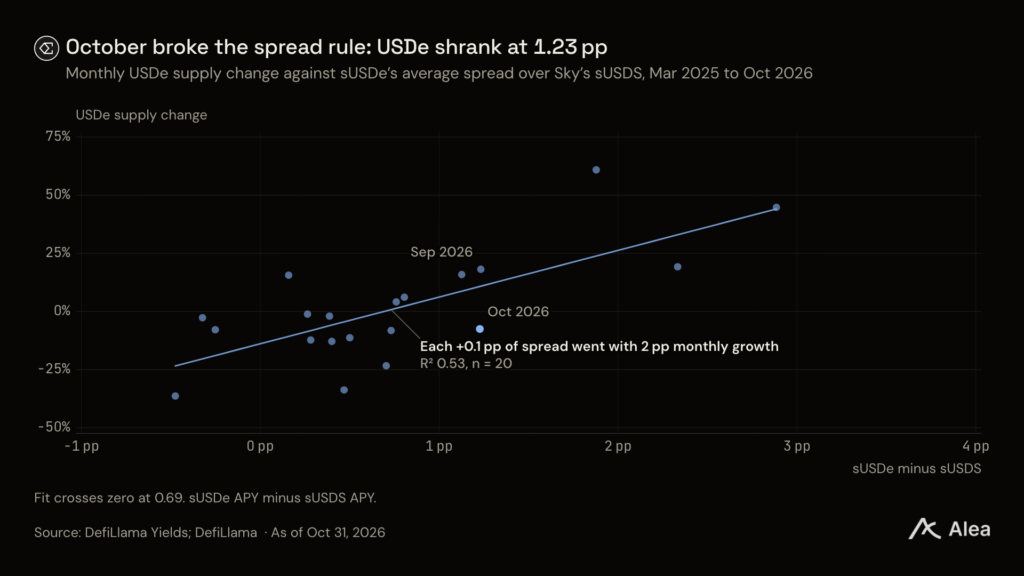
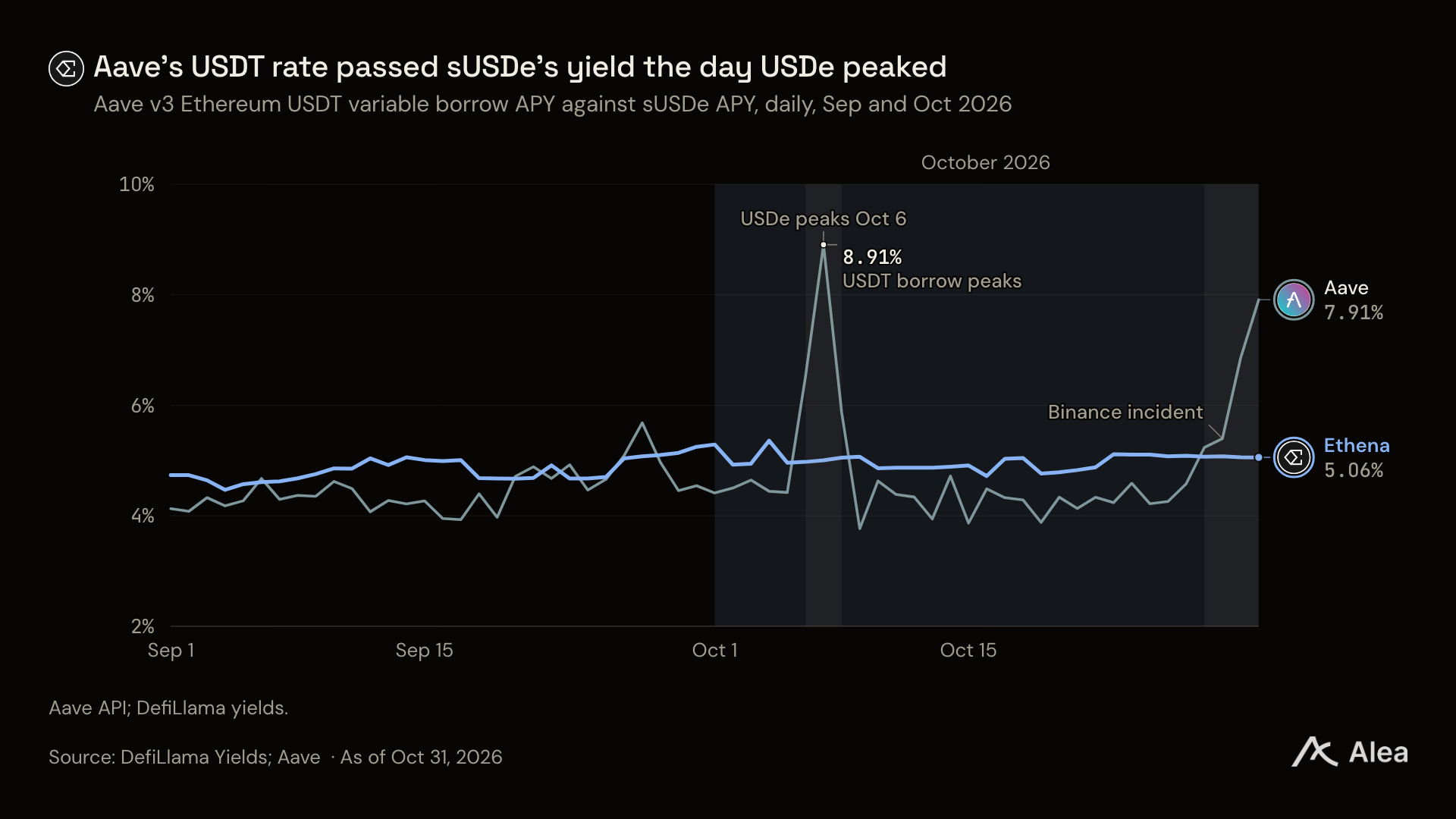
In October, USDe supply fell 7.4% despite the yield spread between Ethena’s sUSDe and Sky’s sUSDS remaining at 1.23 percentage points, the analysis found. A borrower can use USDe as collateral, borrow another stablecoin, mint more USDe and repeat the cycle. On October 6, when USDe supply peaked, Aave’s USDT borrowing rate rose above the native sUSDe staking yield, undermining that trade. Ethena also cut its weekly Aave looping-incentive budget from roughly 512,000 aEthUSDe at the end of September to 222,000 by the end of October.
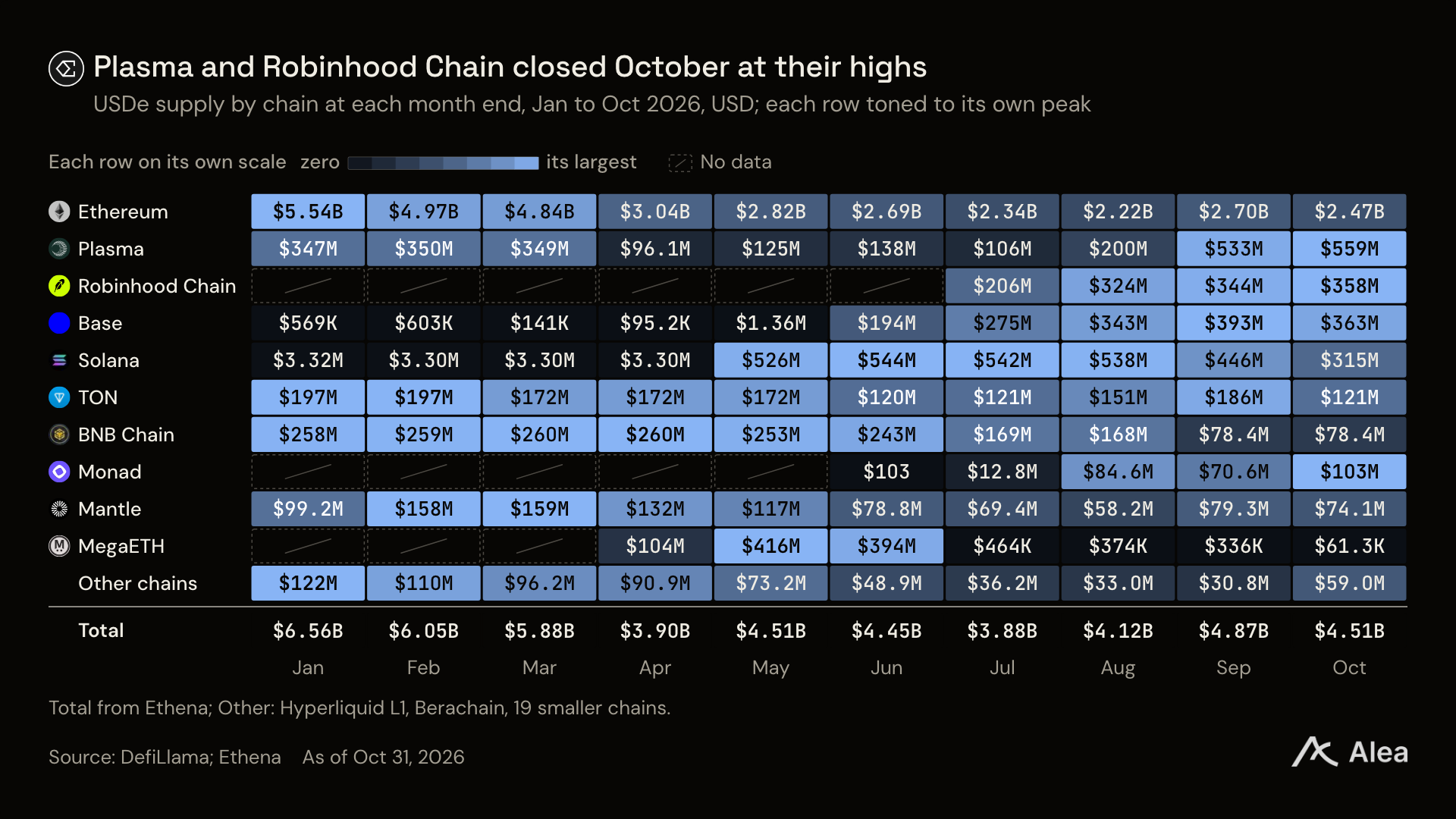
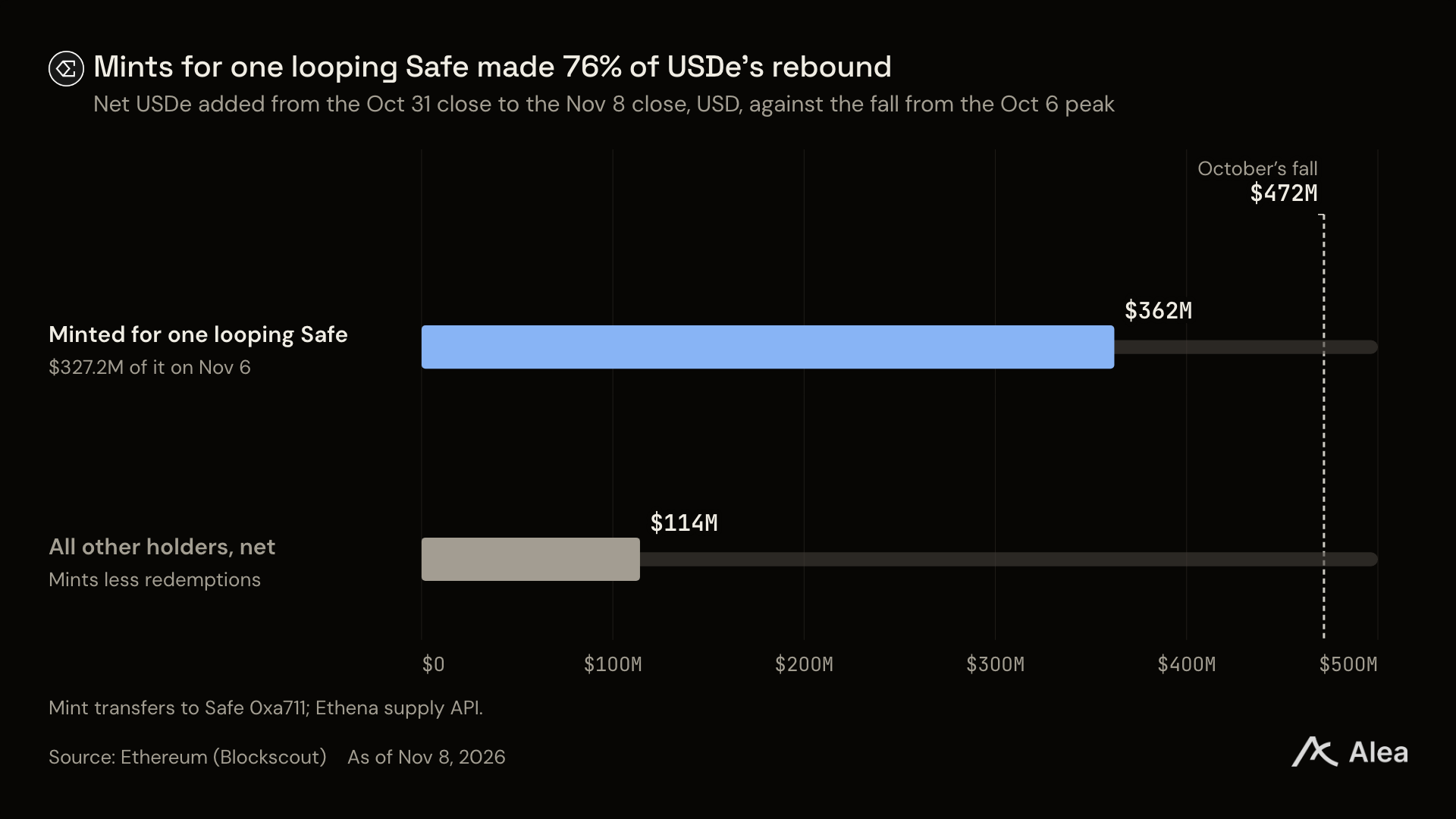
The same mechanism helped reverse the decline. On November 6, a multisignature Safe wallet ending in 0xa711 carried out 21 borrowing-and-minting cycles in four hours, the analysis reported. By November 8, USDe supply had recovered the decline recorded since October 6. But on November 12, the wallet’s Aave health factor stood at 1.02, close to the protocol’s 1.0 liquidation threshold. The analysis estimated that unwinding this position could erase three-quarters of the rebound. That is a scenario, not a confirmed liquidation.
What the rebound meant for ENA
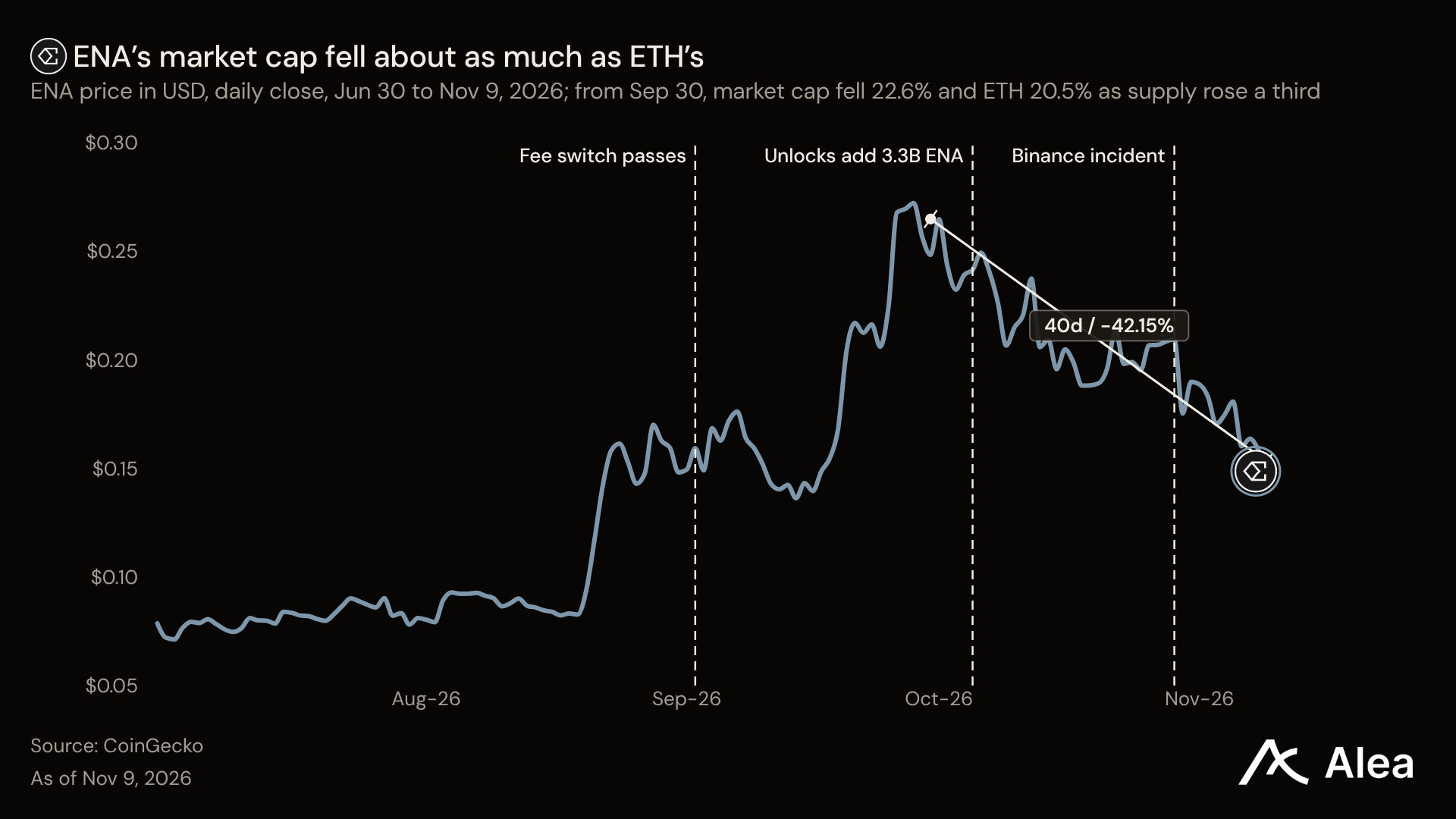
ENA holders approved a fee-switch proposal on September 2. The article describes a mechanism under which reaching a USDe supply threshold measured by a 14-day moving average would direct 20% of net reserve-asset income toward ENA purchases. An accompanying chart, however, says governance had not chosen the measure, leaving a discrepancy about whether that specific trigger was settled. The vote should not be read as evidence that buybacks had begun.
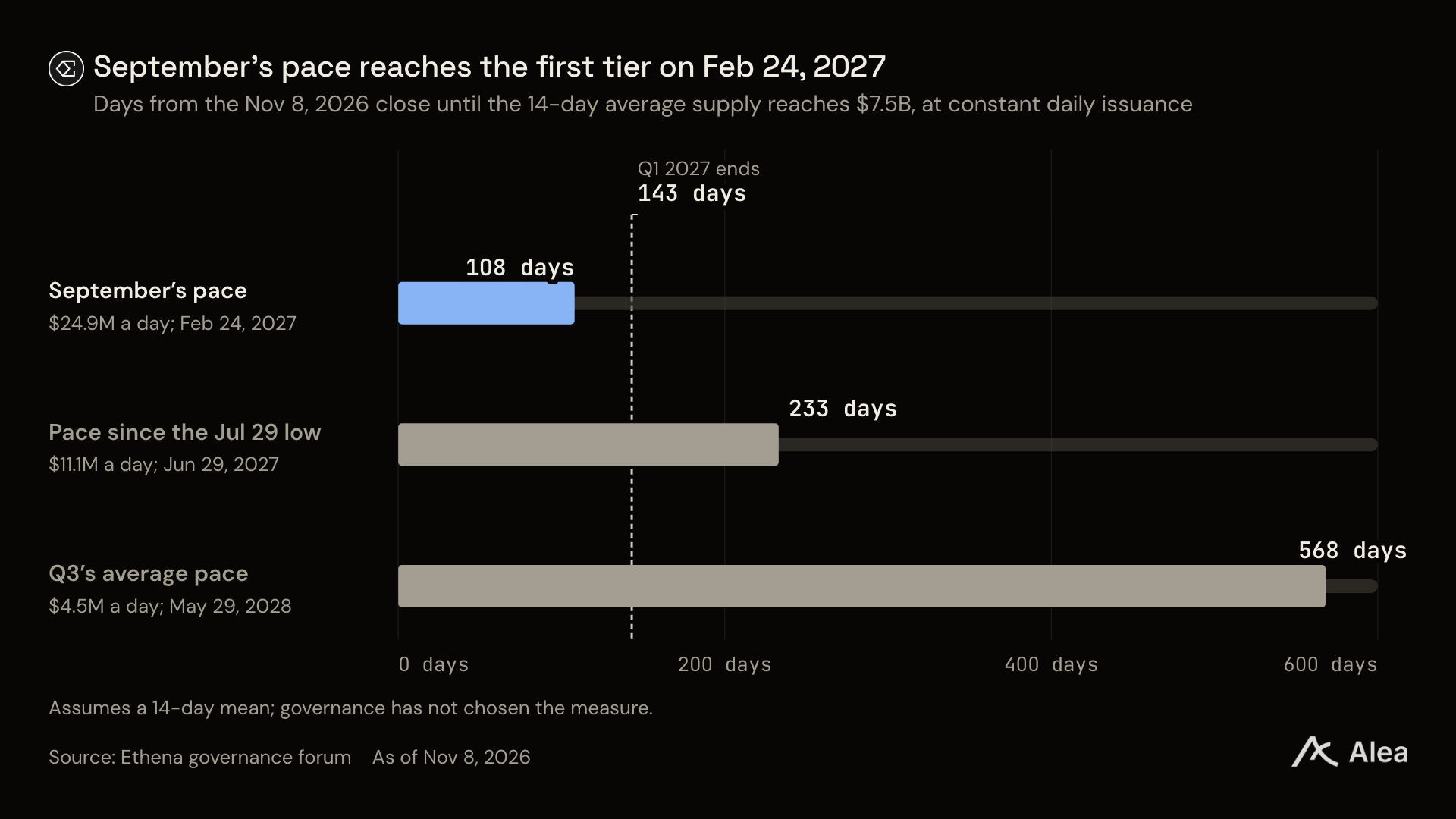
Using its stated assumptions, the analysis projected that the first threshold might be reached in February 2027 at September’s expansion pace, or after mid-2027 at the third quarter’s average pace. Those were forecasts dependent on continued supply growth—not a buyback timetable. The leveraged wallet’s size made that distinction especially important.