Originally reported by Jae for PANews on December 23, 2025, at 16:00 UTC+8.
A change to the swap service on Aave’s official app became a dispute over who controls the project’s most visible assets—and who receives the revenue they generate. The question extends beyond a fee stream: Aave Labs and DAO participants disagree over where the boundary lies between a company-built product and a community-governed protocol.
From a swap change to a revenue dispute
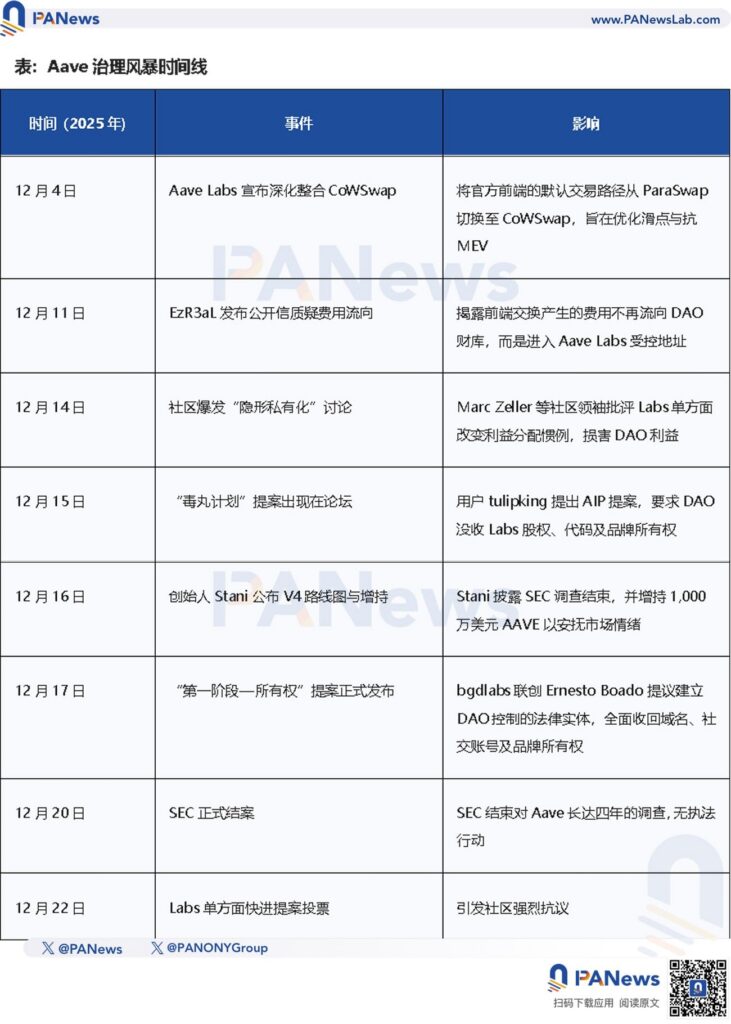
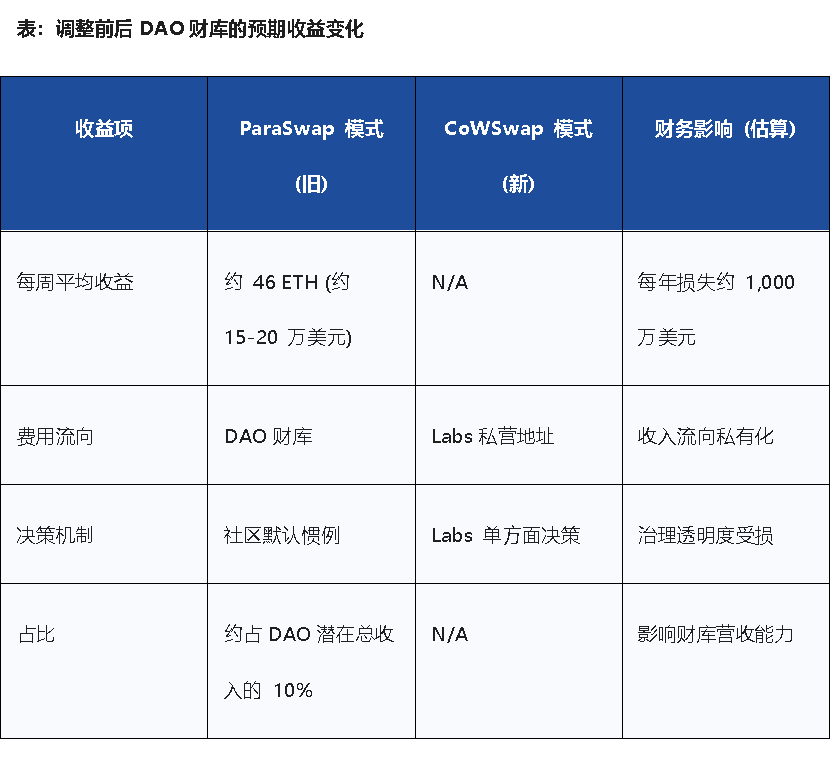
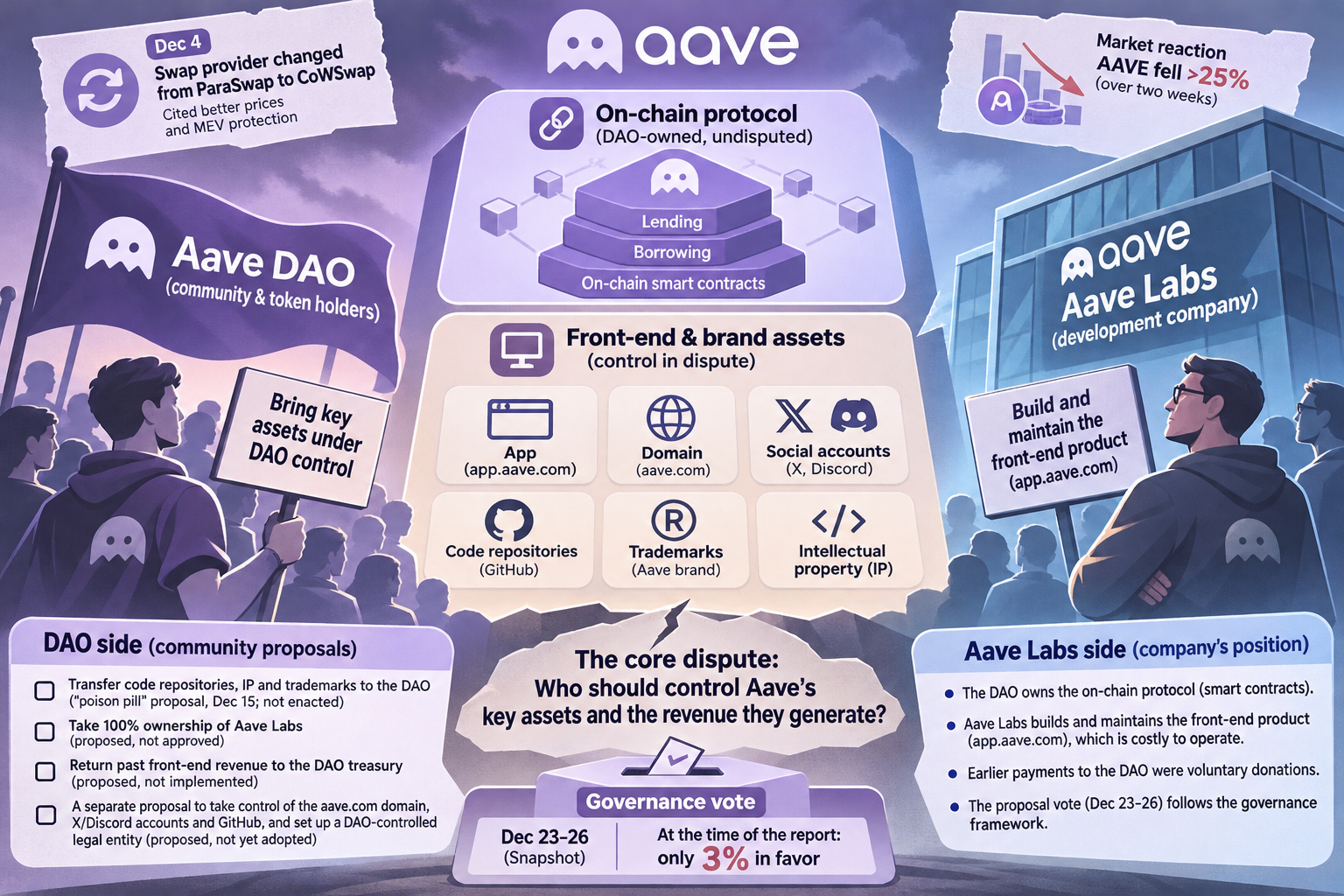
On December 4, Aave Labs announced that app.aave.com would switch its swap provider from ParaSwap to CoWSwap, citing better prices and protection against maximal extractable value, or MEV. Community representative EzR3aL subsequently said on-chain tracking showed that fees generated by user swaps were going to an address controlled by Labs rather than the DAO treasury. Based on historical figures, the disputed revenue was estimated at up to $10 million a year. That figure is an estimate, not a confirmed loss.
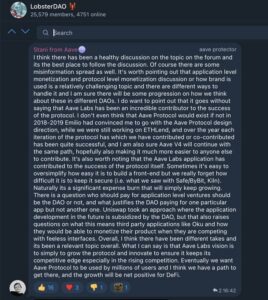
Community figure Marc Zeller characterized the change as a privatization of value associated with the Aave brand. Aave founder Stani Kulechov drew a different distinction: the DAO owns the smart-contract protocol, he argued, while Labs builds and maintains the costly front-end product. He described earlier payments to the DAO as voluntary donations.
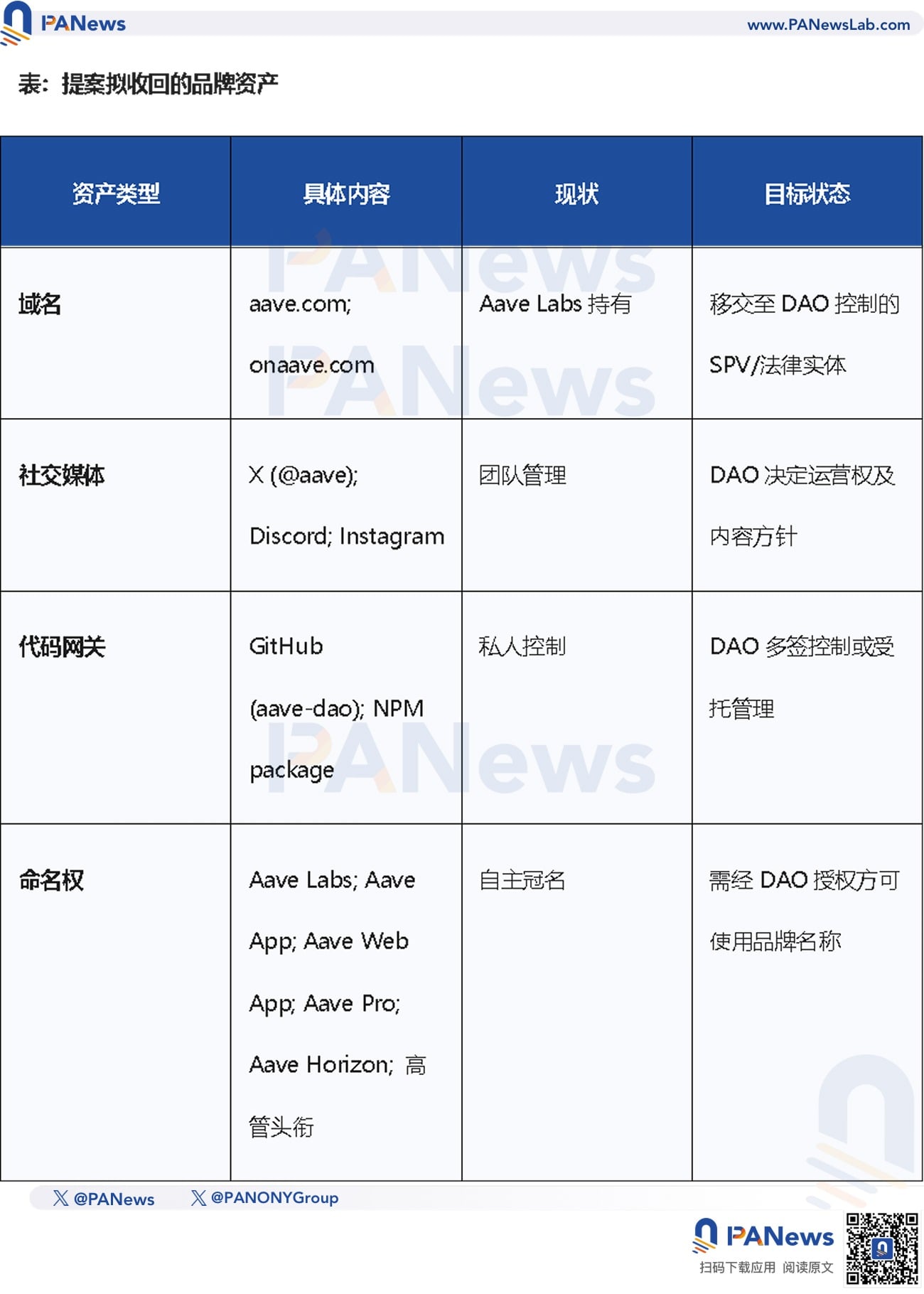
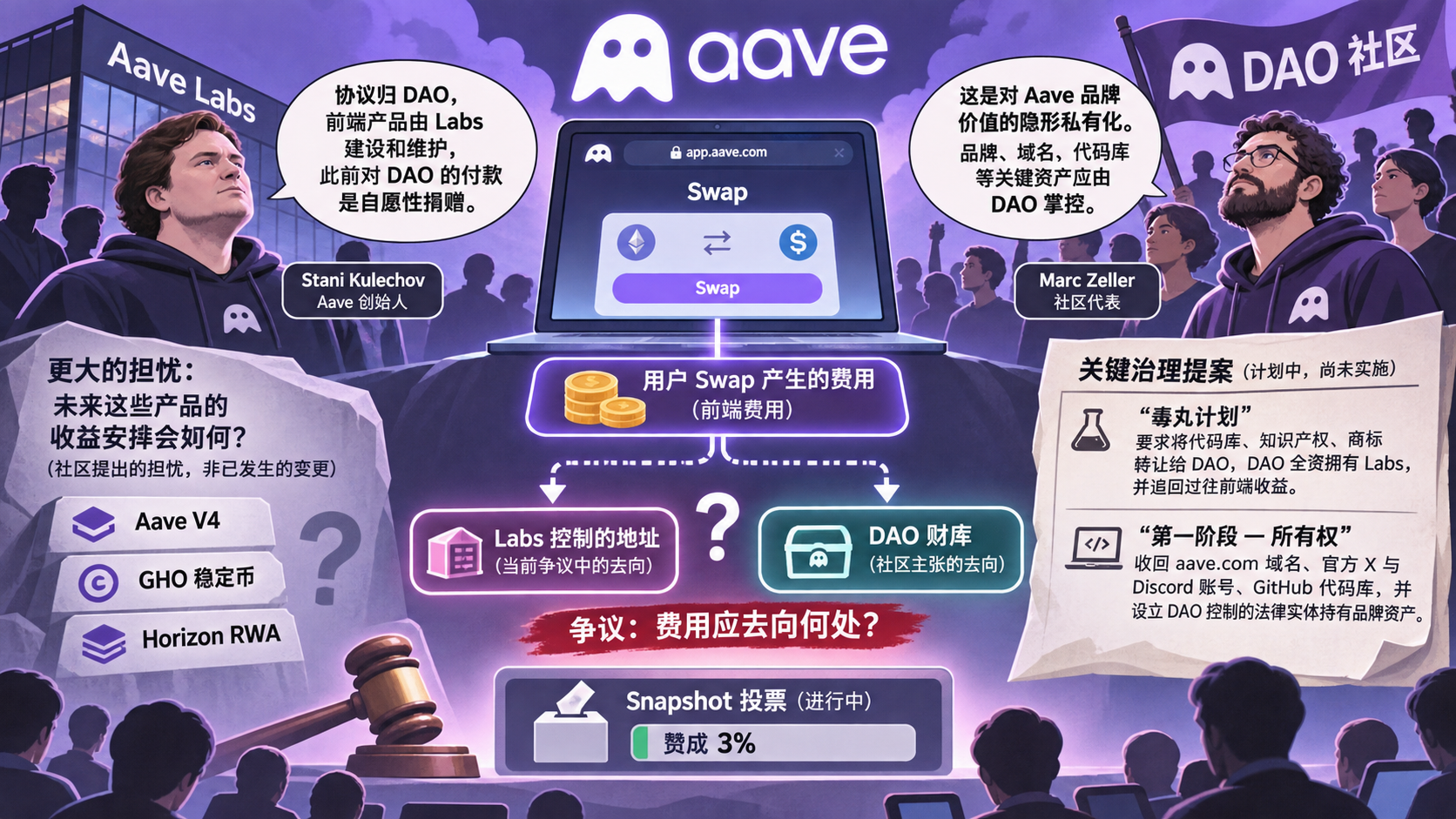
The disagreement matters because the app is a prominent route into Aave. Some community members raised questions about whether future products, including Aave V4, the GHO stablecoin and Horizon RWA, could present similar disputes over revenue. Those were concerns about potential arrangements, not reported changes to those products.
Proposals test the limits of DAO ownership
On December 15, user tulipking put forward a proposal dubbed the “poison pill.” It called for Labs to transfer its code repositories, intellectual property and trademarks to the DAO, for the DAO to take 100% ownership of Labs, and for past front-end revenue associated with the Aave brand to be returned to the treasury. The proposal was temporarily set aside over procedural issues; its demands were not enacted.
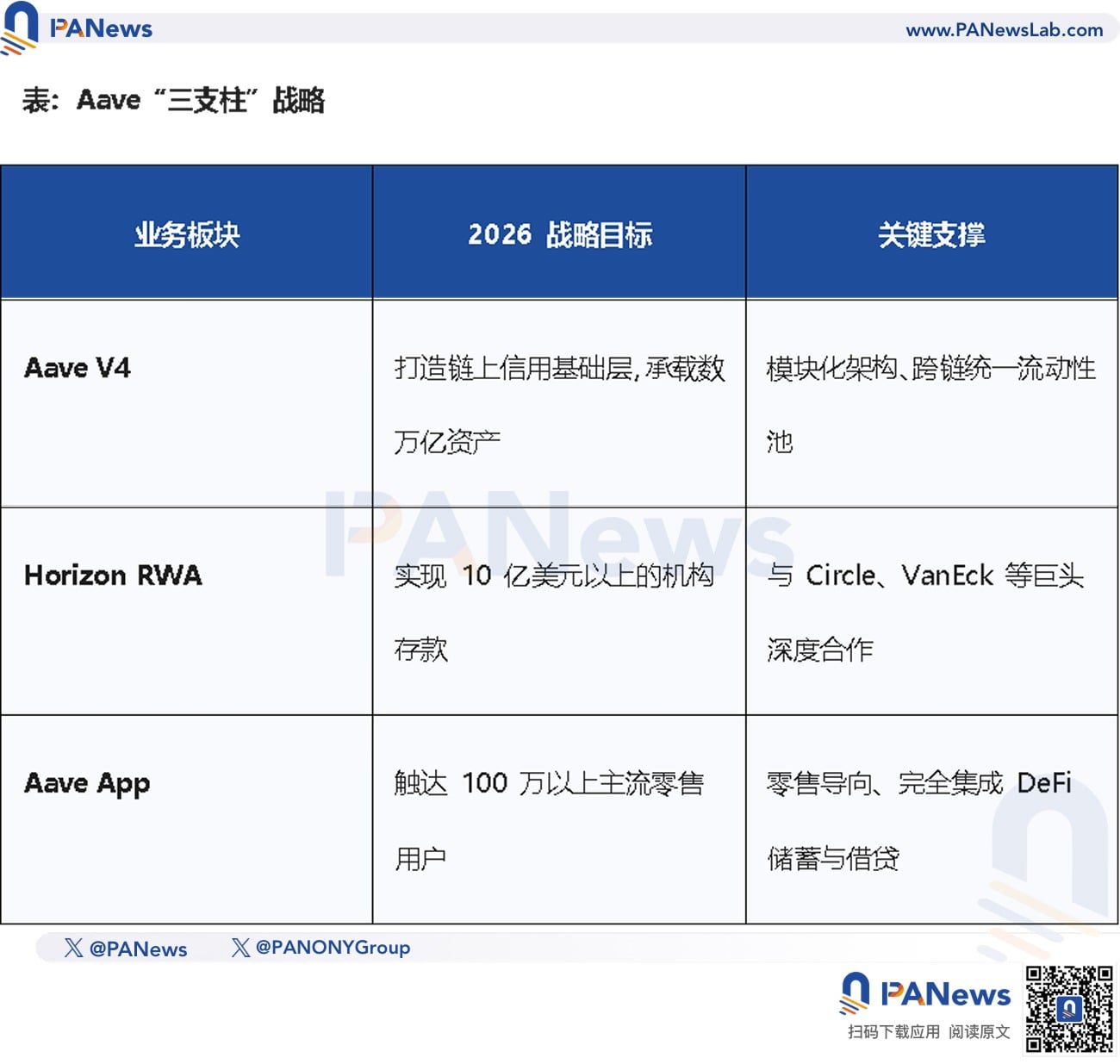
Former Aave CTO Ernesto Boado offered a separate “Phase 1—Ownership” proposal focused on control of assets including the aave.com domain, official X and Discord accounts, and GitHub repositories. He also proposed a DAO-controlled legal entity to hold brand assets. His proposal, too, was a plan for changing ownership—not a transfer that had already happened.
Procedure then became another point of contention. PANews reported that Labs advanced Boado’s proposal to a Snapshot vote without his consent. Commentator 0xTodd objected that the scheduled December 23–26 vote fell during Christmas holidays and that the proposal was still under discussion; he said discussion normally takes three to six months before a vote. Kulechov replied that voting on the new ARFC proposal complied with the governance framework. At the time of the December 23 report, votes in favor stood at just 3%, according to PANews; the article did not report a final result.
Market reaction is not a governance verdict
PANews reported that AAVE fell by more than 25% over two weeks while approximately $34 billion in assets held in the protocol showed no obvious fluctuation. It also reported that a large holder sold about 230,000 AAVE on December 22 at roughly $165 per token, after accumulating them at an average near $223, for an estimated $13.45 million loss. The sale does not, by itself, establish the holder’s reasons.
The report said Kulechov had purchased a total of $15 million in AAVE and was carrying more than $2 million in unrealized losses. Some community members questioned whether those purchases were intended to increase his voting power; that remains their interpretation, not a demonstrated motive.
PANews also reported that the US Securities and Exchange Commission ended a four-year investigation on December 20 without taking enforcement action against Aave. That outcome should not be read as regulatory approval of any particular governance model.
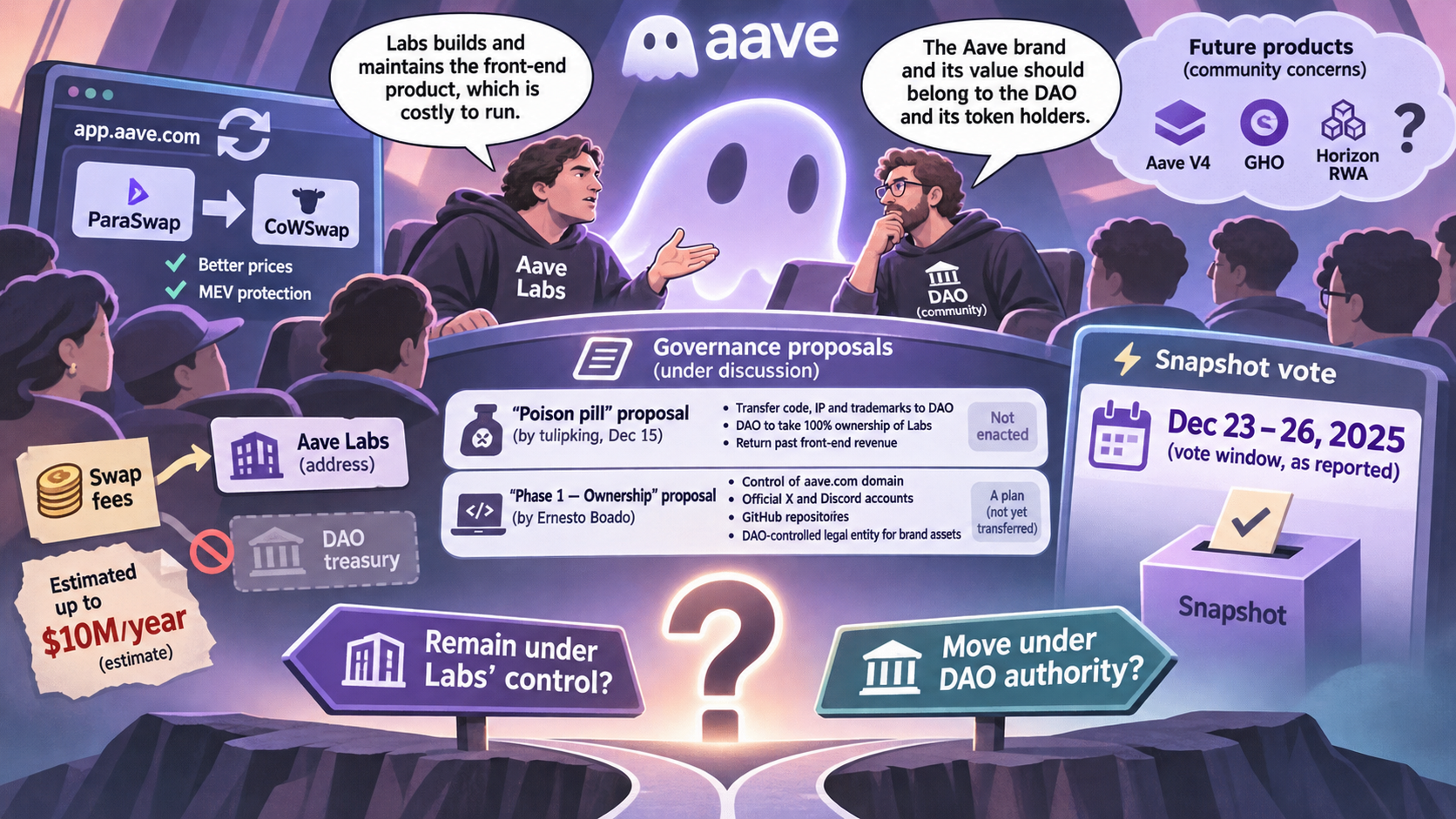
The unresolved issue is whether access points and brand assets should remain under Labs’ control or move under DAO authority—and what agreement, if any, should govern Labs’ compensation. As of the original report, competing proposals and an early vote had not settled it.
Source: panewslab.com (originally published 2025-12-23 16:00 UTC+8)