A change to Aave’s front-end swap integration became a dispute over who should receive revenue associated with the platform. In an account published on December 16, 2025, Chen Mo described Aave Labs replacing ParaSwap with CoW Swap and said fees from the new integration went to a Labs-controlled address. Anonymous Aave DAO member EzR3aL raised the issue in Aave’s governance forum, accusing Labs of “privatizing” value associated with the protocol. Labs’ position, as described by Chen, was that the fees belonged to its front-end product, not to the underlying protocol.
Where the boundary is contested
Aave DAO and Aave Labs have different roles. AAVE token holders vote through the DAO on protocol governance, while Labs develops and maintains products, including the front end and mobile app. Chen described the DAO as controlling core resources such as smart contracts and the treasury, with Labs-led protocol proposals requiring DAO approval. Labs, meanwhile, controls the user-facing product, brand, marketing and partnerships.
That division leaves room for competing interpretations of the swap fees. Supporters of Labs argued that choosing a front-end integration is a product decision, so its revenue belongs to Labs. DAO supporters argued that value generated through Aave should benefit token holders or enter the DAO treasury for a governance decision. Chen reported that revenue from the previous ParaSwap integration had flowed to the DAO, making the change particularly contentious to that side of the debate.
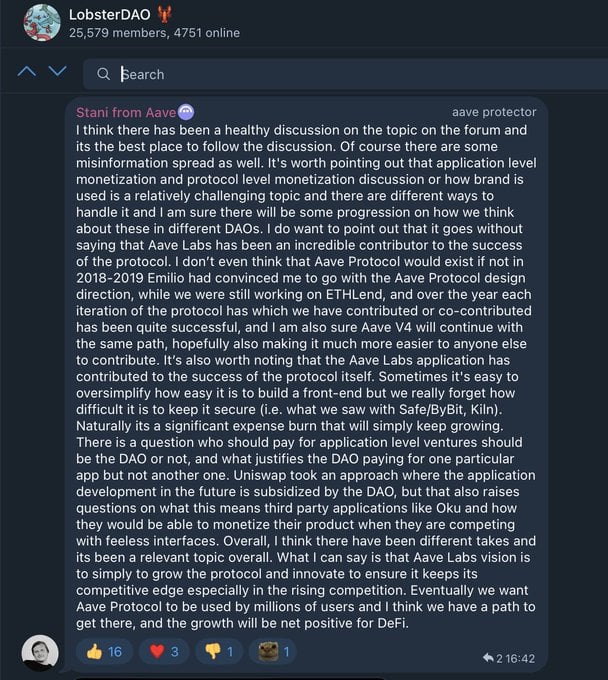
The disagreement is not simply about whether Labs contributes to Aave. Chen pointed to its continuing development role and quoted Aave founder Stani’s account of Emilio persuading him in 2018–2019 to pursue the Aave protocol design while the team was still working on ETHLend. The question is how that contribution should translate into control over revenue from products built around a DAO-governed protocol.
Calls for clearer terms
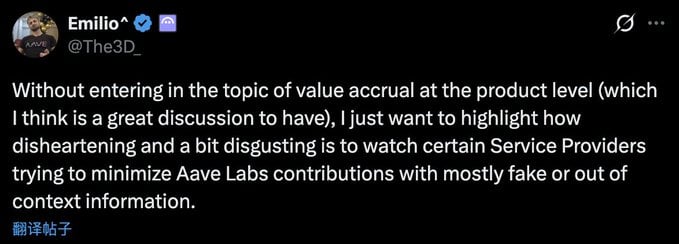
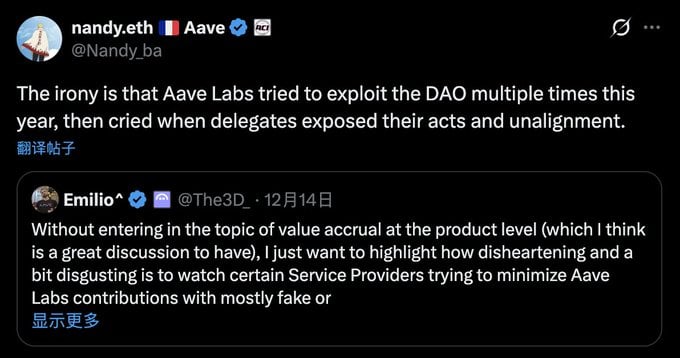
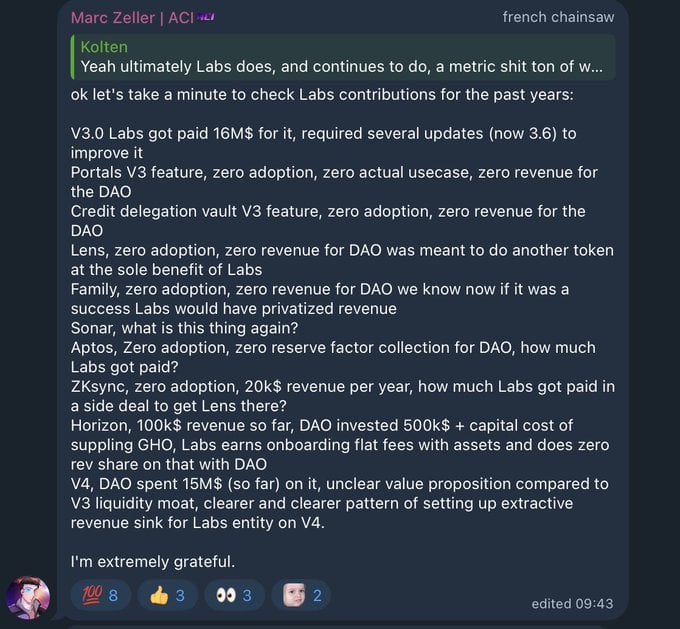
The discussion also included sharper, disputed claims. Chen reported that Emilio believed some participants were unfairly diminishing Aave Labs’ contribution, while a member of the ACI team accused Labs of repeatedly trying to take advantage of the DAO. Chen also recounted Zeller’s criticism of Labs initiatives including Portals, Credit Delegation Vault and Lens, and Zeller’s concern about the value proposition for V4 after, according to that criticism, the DAO had spent $15 million on it. Those assessments are participants’ claims, not settled findings.
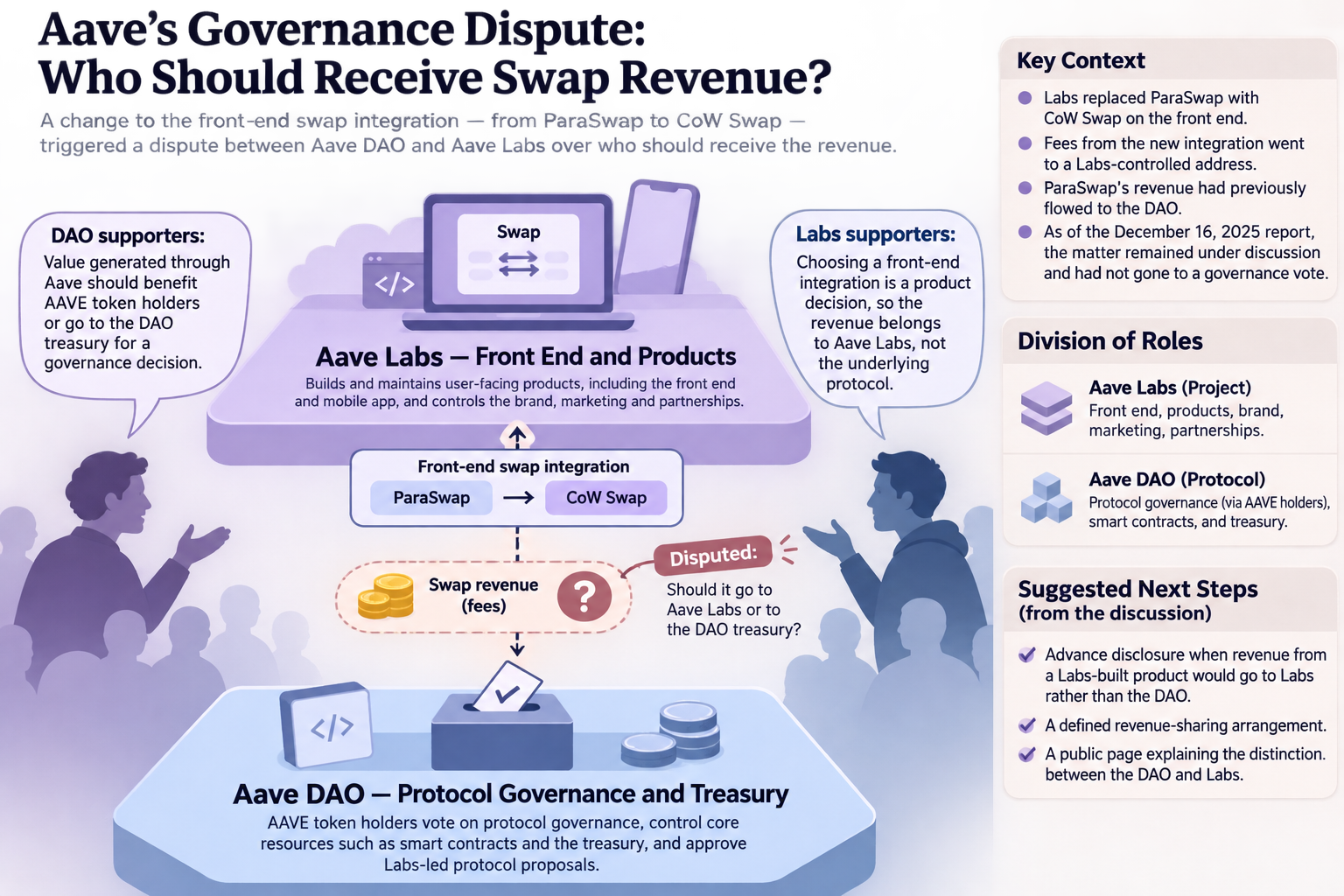
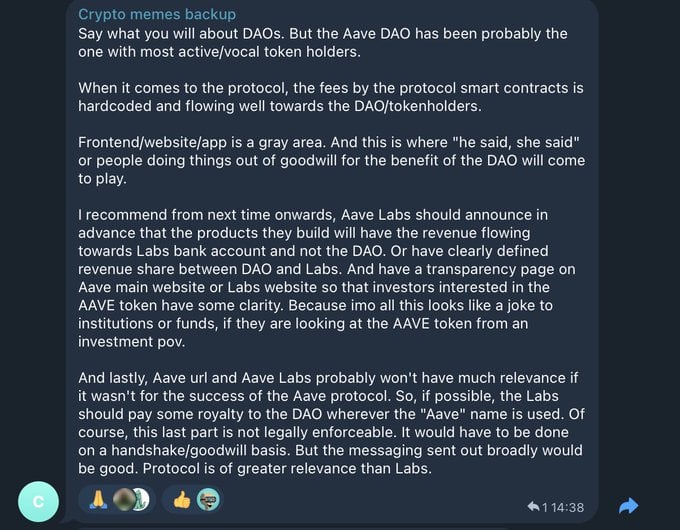
Among the suggestions Chen relayed were advance disclosure when revenue from a Labs-built product would go to Labs rather than the DAO, a defined revenue-sharing arrangement, and a public page explaining the distinction. As of the December 16 report, the matter remained under discussion and had not gone to a governance vote. The dispute illustrated a practical gap between voting authority over a protocol and control of the products through which people use it.