ZetaChain plans to retire its independent Layer 1 and move native ZETA to Solana, changing the token’s role from paying for network activity to accessing features in a planned financial AI product. As reported by PANews on November 12, 2026, the migration was expected at block 20,755,000, around December 9. The shift followed a second governance proposal approved on November 7.
What changes for holders
At the snapshot, ZetaChain plans to stop its Layer 1 and issue SPL-format ZETA on Solana at a 1:1 ratio. Holders of native ZETA would claim through the official migration process by signing a message specifying a Solana receiving address; the stated minimum is 10 ZETA per address. ZetaChain says the claim will not require a fee or an advance SOL balance. The snapshot is intended to include wallet balances, delegated stake, unstaking balances and unclaimed rewards. Staking rewards would stop accruing at the snapshot height.
Exchange-held ZETA is to be handled by the respective exchanges, subject to their announcements. Holders of wrapped ZETA or liquidity-pool positions need to unwrap or exit before the snapshot so the assets sit in a wallet that can sign a claim. ZRC-20 assets on ZetaChain are instead slated for return to their original chains through ZetaHub, across nine origin networks, with a $5 minimum claim per asset. The existing ERC-20 version of ZETA on Ethereum is not part of this migration.
ZetaChain said the distribution and claim systems were undergoing an independent Hacken audit, with a report due before claims open. That was a stated plan at the time of reporting, not a completed audit result.
Supply and the proposed new use for ZETA
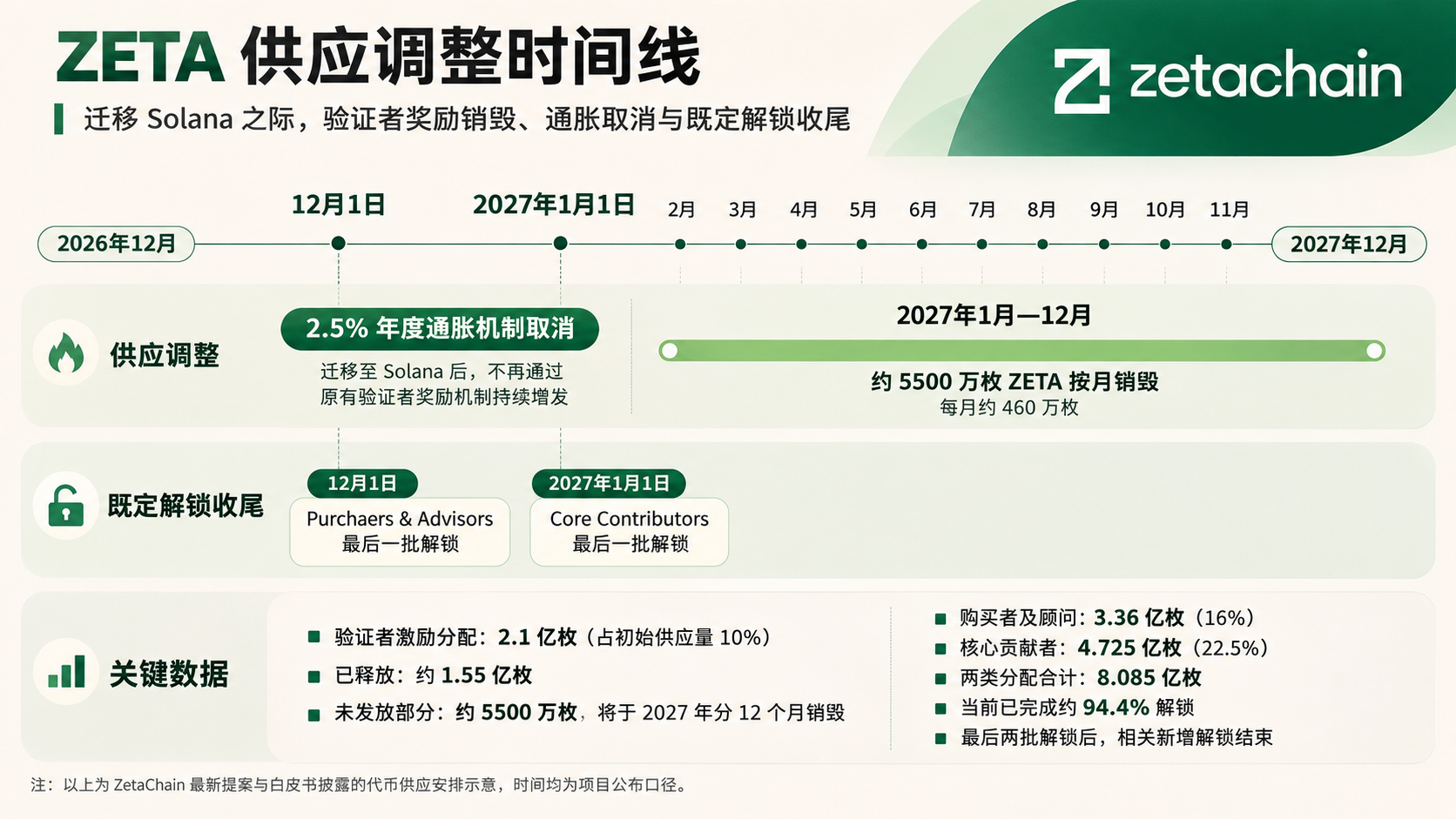
Of the 210 million ZETA originally allocated to validator incentives, about 155 million had been released through block rewards, according to the reported plan. ZetaChain intends to burn the roughly 55 million unissued tokens in monthly installments of about 4.6 million throughout 2027, rather than distribute them. It also plans to cancel the previously scheduled 2.5% annual inflation mechanism. Separate allocations to purchasers, advisers and core contributors were about 94.4% unlocked; their final scheduled releases were set for December 1, 2026, and January 1, 2027. The foundation also pledged not to sell newly released tokens from four specified foundation-controlled allocations in 2027.
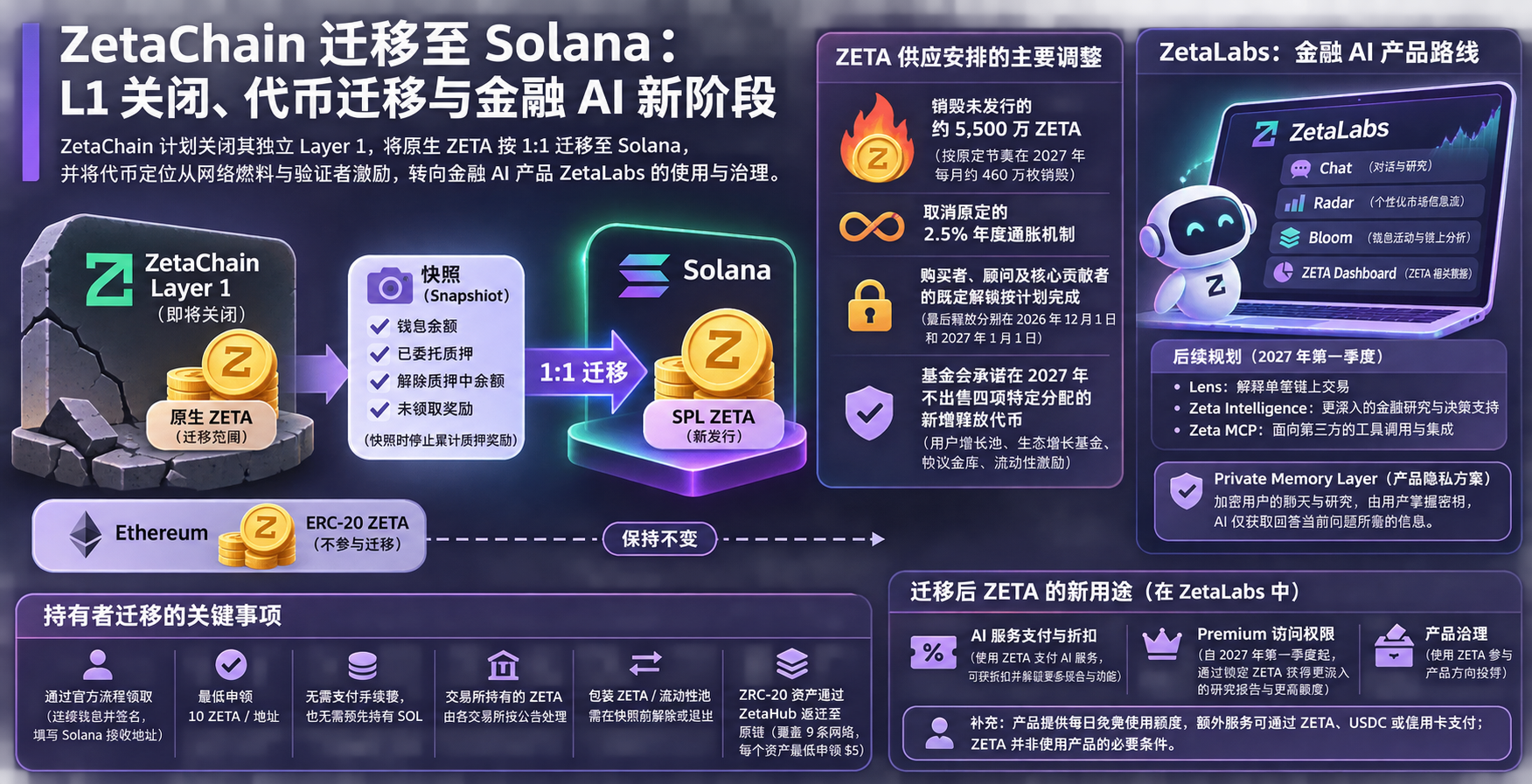
On Solana, SOL—not ZETA—would pay network transaction fees. ZetaChain’s proposed application-level uses for ZETA are discounts on ZetaLabs AI services, access to more reports and features, Premium access through token locking from the first quarter of 2027, and votes on product choices. ZETA would not be required to use the product: the plan includes a daily free allowance and payment for additional services by ZETA, USDC or credit card. Those proposed uses do not, by themselves, establish demand for the token.
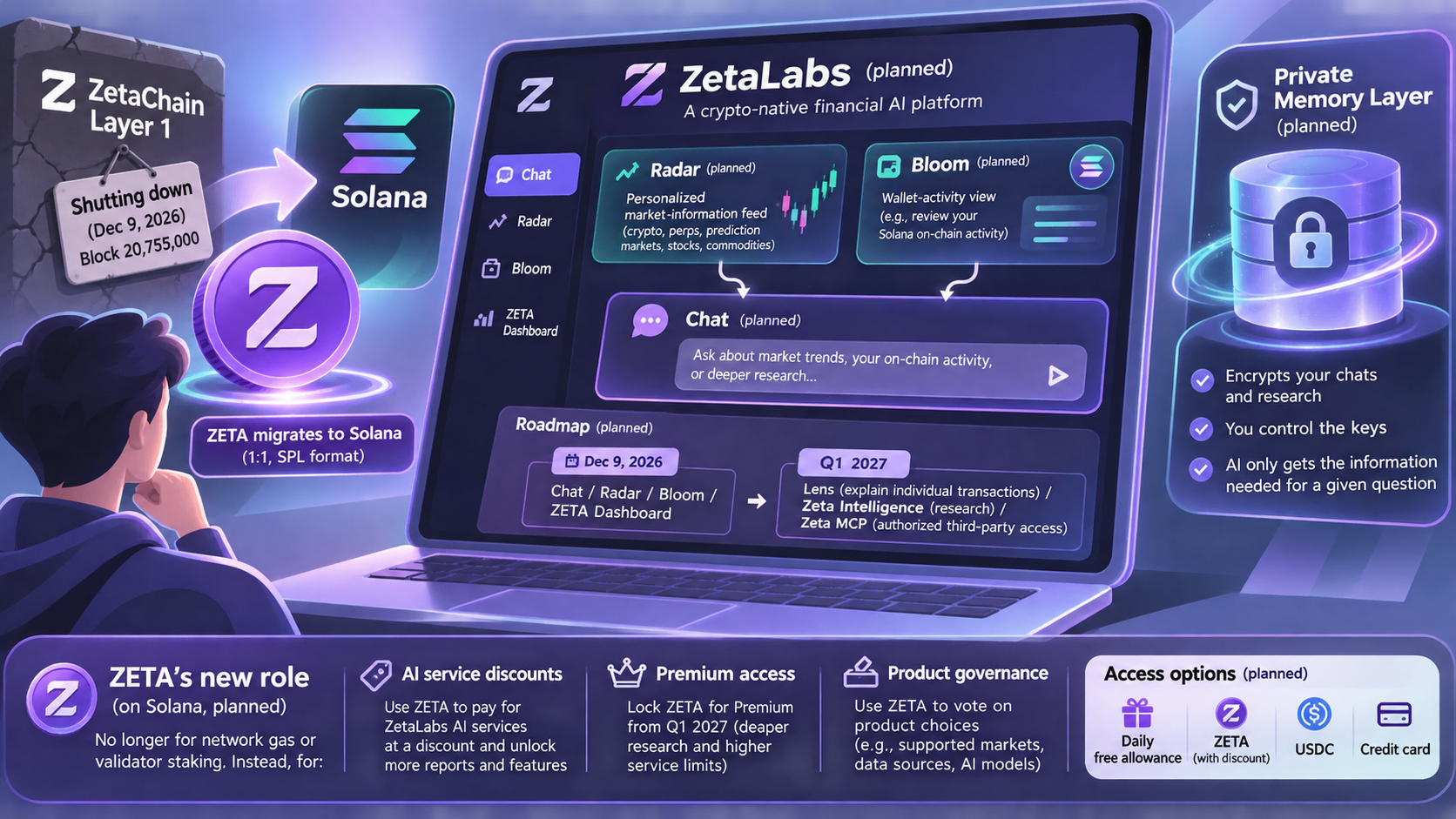
The ZetaLabs roadmap
ZetaLabs builds on Anuma Chat, which ZetaChain launched in February 2026. Its roadmap targeted December 9 for Chat, a personalized market-information feed called Radar, a wallet-activity feature called Bloom, and a ZETA dashboard. Planned first-quarter 2027 features include Lens, for explaining individual on-chain transactions, and Zeta Intelligence and Zeta MCP for research and authorized third-party access to tools.
The project says its Private Memory Layer would encrypt users’ chats and research, leave users in control of the keys, and give AI models only the information needed for a given question. These are product and privacy claims, not independently demonstrated outcomes in the report. The transition’s test will be whether the planned tools attract sustained use after ZetaChain’s original network—and ZETA’s validator and gas functions—are gone.