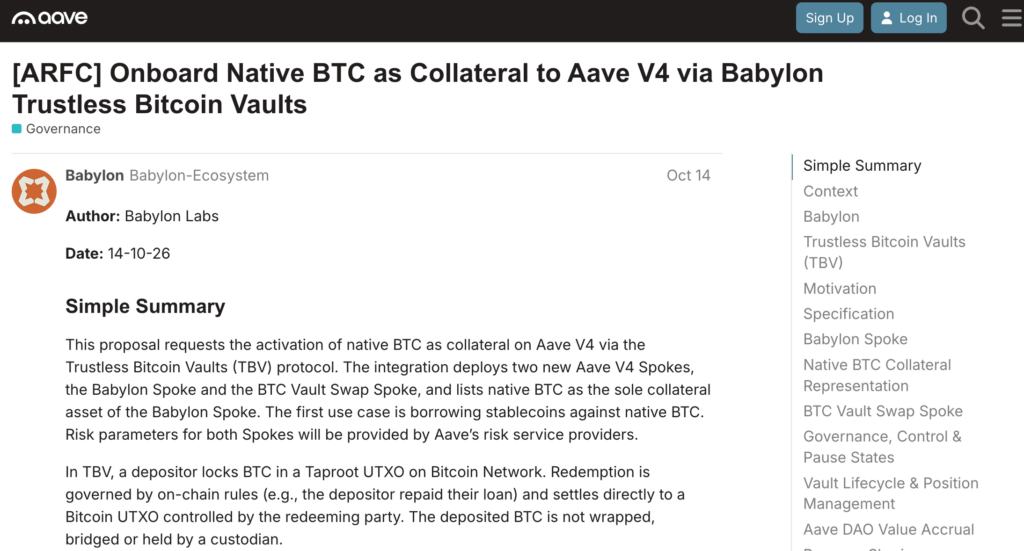
Aave DAO voted unanimously on November 9 to advance a proposal for using native bitcoin as collateral in Aave V4 through Babylon’s Trustless Bitcoin Vaults. The vote approved the ARFC proposal, not a live lending market. As reported on November 10, 2026, the plan still faced a final on-chain AIP vote and targeted a phased mainnet launch by the end of 2026.
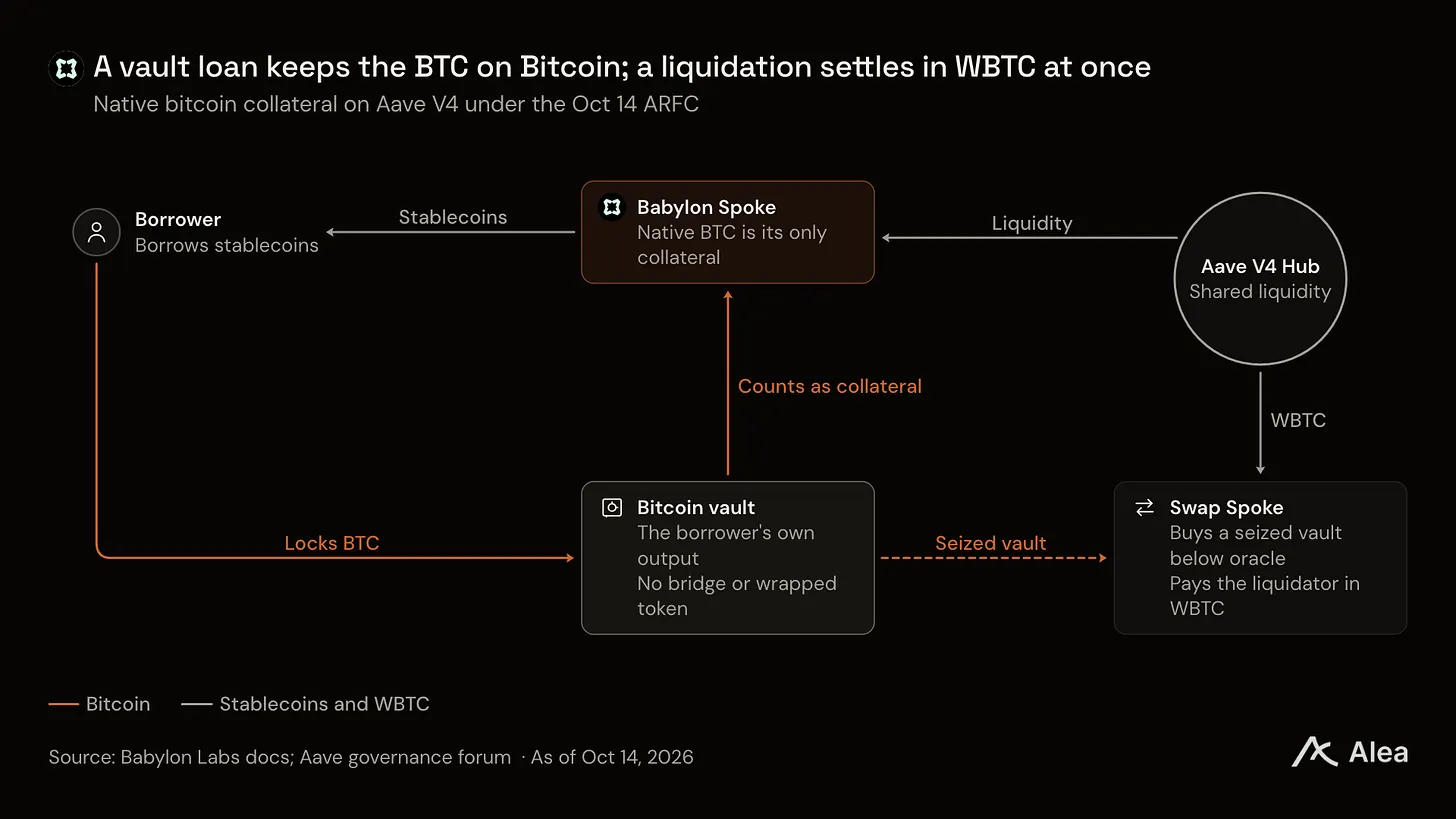
The proposed route would let borrowers lock BTC in a Taproot vault on Bitcoin while retaining control of their private keys. A non-transferable accounting token on Ethereum, matching the amount locked, would serve as the Aave V4 collateral record. Borrowers could then access assets including USDT and USDC without first wrapping their BTC or handing it to a custodian. The proposal was first submitted in May and passed a June community temperature check with 299,743 AAVE votes in favor and none against.
The custody distinction has a limit
LlamaRisk proposed a 78% collateral ratio and a maximum liquidation bonus of 5.55%. The distinction from wrapped BTC matters because collateral such as WBTC and cbBTC depends on custody of the underlying bitcoin. It does not, however, remove wrapped assets from the entire process: under the proposed liquidation mechanism, a liquidator would use WBTC to buy a seized vault, and an arbitrageur would redeem its BTC on Bitcoin.
The proposed initial credit lines total about $21 million: $8 million each for USDT and USDC, $2 million each for USDG and RLUSD, and $1 million for GHO. Native BTC collateral would initially be capped at 300 BTC. Raising limits would require further Aave DAO approval, and the launch plan calls for participation and scale to expand in stages.
What the revenue terms would—and would not—do
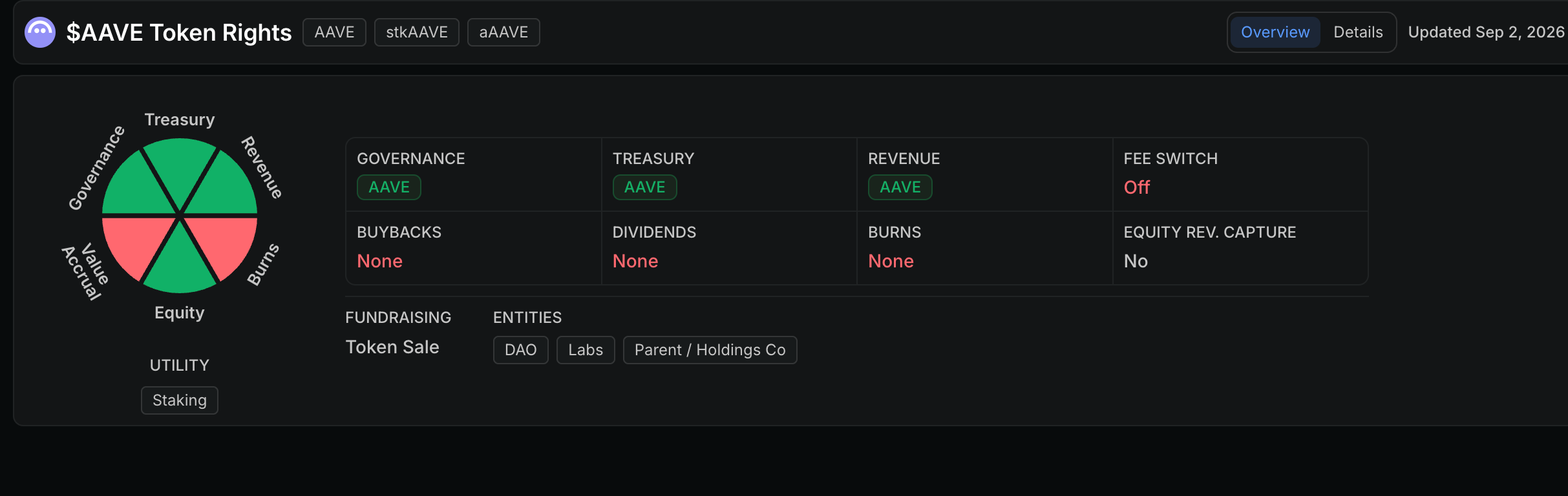
The proposed sharing arrangement applies to Aave’s liquidity fees on borrowing through this market and fees generated in liquidations. Aave DAO would receive the first $500,000 each year. On revenue between $500,000 and $2 million, Aave DAO would receive 78%, Babylon 18%, and 4% would fund token buybacks. For revenue above $6 million, the respective shares would be 61.5%, 31.5%, and 7%.
Buyback funds would purchase AAVE and BABY in an 85-to-15 split, with the purchased tokens divided equally between Aave DAO and the Babylon Foundation. Alea Research estimated that if annual revenue reached $10 million, the arrangement would allocate roughly $6.92 million to Aave DAO, $2.52 million to Babylon, and $560,000 to buybacks—including about $84,000 in BABY purchases. That is a scenario, not realized revenue. The report also noted that Aave’s existing annual AAVE buyback budget had been reduced from $50 million to $30 million, while Alea Research estimated BABY issuance at about 1.58 million tokens a day.
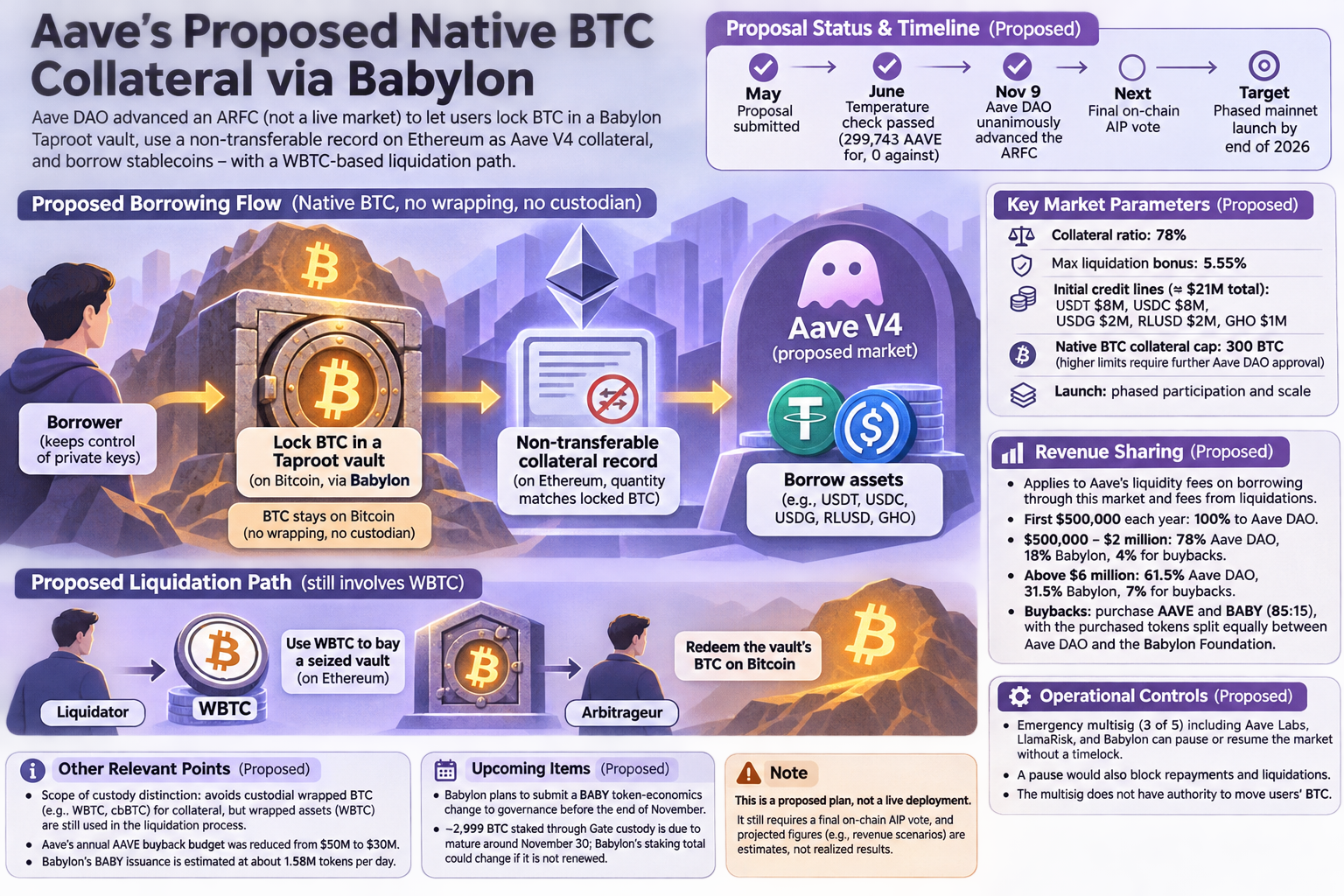
Operational controls remain consequential. A proposed three-of-five emergency multisignature group including Aave Labs, LlamaRisk, and Babylon could pause or resume the market without a timelock. A pause would also block repayments and liquidations, although the group would not have authority to move users’ BTC.
At the time of the report, Babylon planned to submit a BABY token-economics change to governance before the end of November. Alea Research also flagged that approximately 2,999 BTC staked through Gate custody was due to mature around November 30; Babylon’s staking total could change if it was not renewed. Neither that prospective change nor projected buybacks establishes how much demand the proposed lending market will attract.