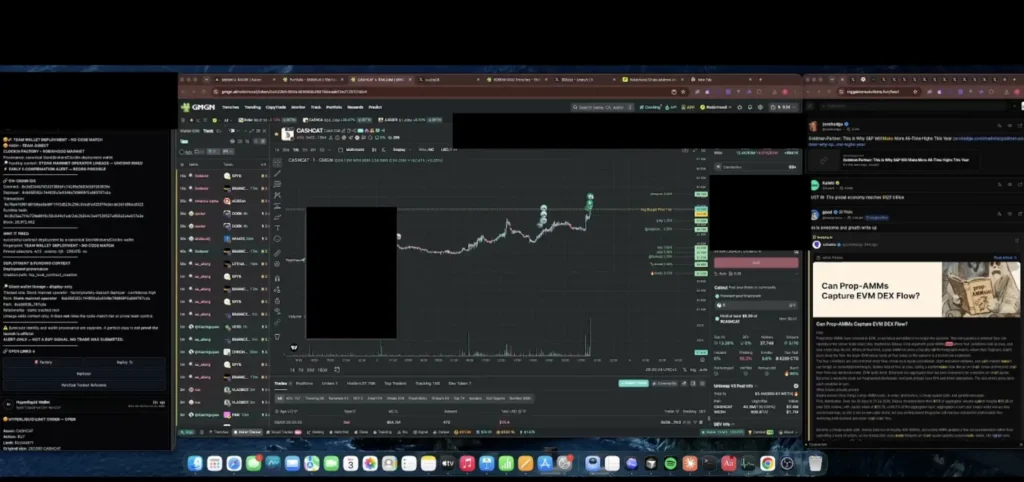
A public code update, a market-maker’s trading approval and an unfilled $11,000 buy order became clues in a bet on a cashcat listing. In an account published on November 16, 2026, a trader described how he and a partner used those signals to build a position before Robinhood listed the token. He said they made more than $4 million on cashcat; that profit figure is his account, not independently verified here.

From infrastructure clues to a larger position
The trader said he began looking for advance signals after noticing that market maker Wintermute had transferred a token to a Robinhood hot wallet about an hour before an earlier listing announcement. He reported seeing the same sequence in other listings, then started monitoring Wintermute’s activity on Robinhood Chain and public updates from custody partner BitGo.
On July 27, cashcat appeared in a public BitGo code update. The trader said that alone was inconclusive because BitGo serves multiple exchanges. A July 29 BitGo release included cashcat alongside 99 stock tokens on Robinhood Chain, which he took as stronger evidence of a Robinhood connection. By then, he said, he and his partner held 1.5% of cashcat’s supply.
At 17:48 UTC on August 3, their tracker detected Wintermute’s approval of a cashcat/WETH trading pool. They planned to buy gradually to avoid drawing attention. At 18:19 UTC, however, a wallet they suspected belonged to a Robinhood insider placed an unfilled $11,000 cashcat limit buy order. The trader said the wallet had appeared ahead of previous listings and that other traders were watching it. Its owner and motive were not established.
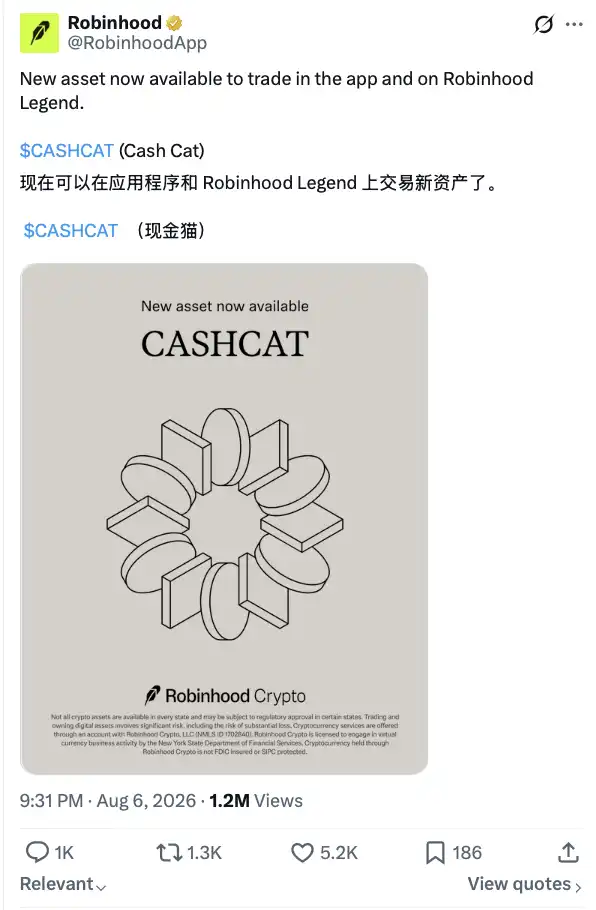
Fearing that the visible order would bring in other buyers, the pair abandoned their gradual-buying plan. The trader said they bought more than $1 million of cashcat, bringing their combined holdings to just over 4% of supply. Their concentrated buying pushed up the price, and accounts soon posted their wallet addresses, fueling listing speculation. Robinhood listed cashcat three days later, according to the account.
What the PONS follow-up does—and does not—show
The trader said he began buying PONS on August 28 after seeking clues earlier in the same process. He did not disclose those signals. He said BitGo added PONS three days later, Wintermute subsequently began making a market in it, and PONS was purportedly “listed” on September 2. He and friends made $2 million on that trade, he claimed.
He also speculated that the PONS episode might have been a Robinhood trap to identify an insider. That is his suspicion, not a confirmed explanation. Likewise, the cashcat limit order does not establish insider trading.
The episode illustrates how public infrastructure activity can become part of a token-listing narrative before any announcement. It also shows how quickly that narrative can spread once traders’ own wallets and purchases become visible. The reported profits are claims about these trades, not evidence that the signals would reliably predict another listing.