A token representing a share of one building is only one way to put real estate on-chain. In a report published on November 13, 2026, xparadigms of Four Pillars argued that the more promising models represent housing debt or property-price exposure instead. That distinction matters when assessing claims that real estate could become a major category of tokenized real-world assets.
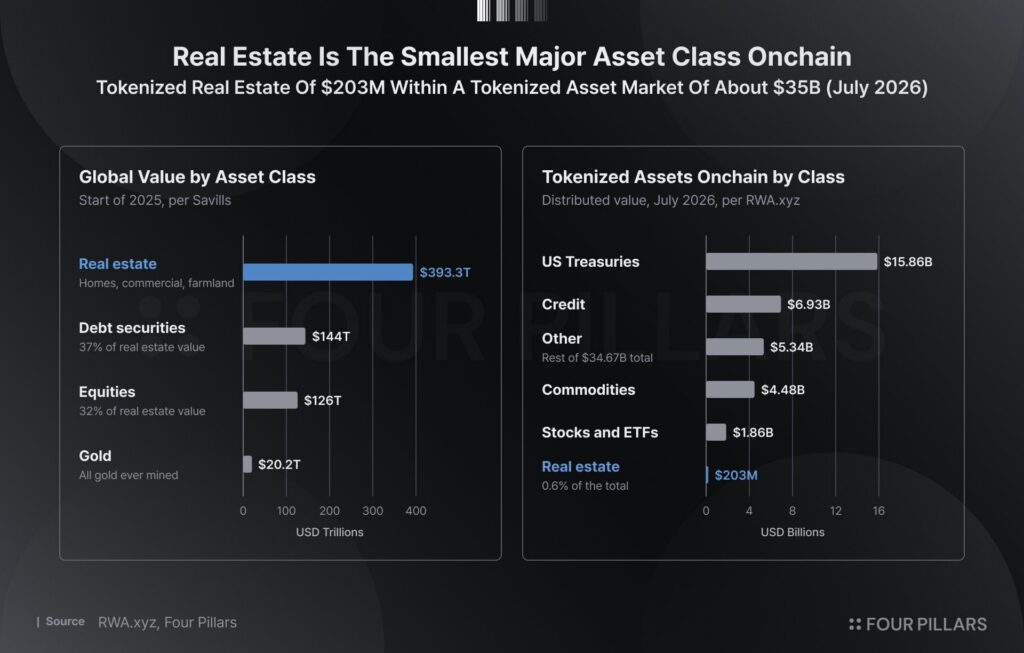
The gap was striking in the figures cited by the report: RWA.xyz counted about $203 million in distributed tokenized real estate as of July 2026, against roughly $35 billion in tokenized assets overall. But that narrow real-estate category excluded approximately $20 billion in on-chain housing credit, which RWA.xyz classified as private credit.
Five models, different rights
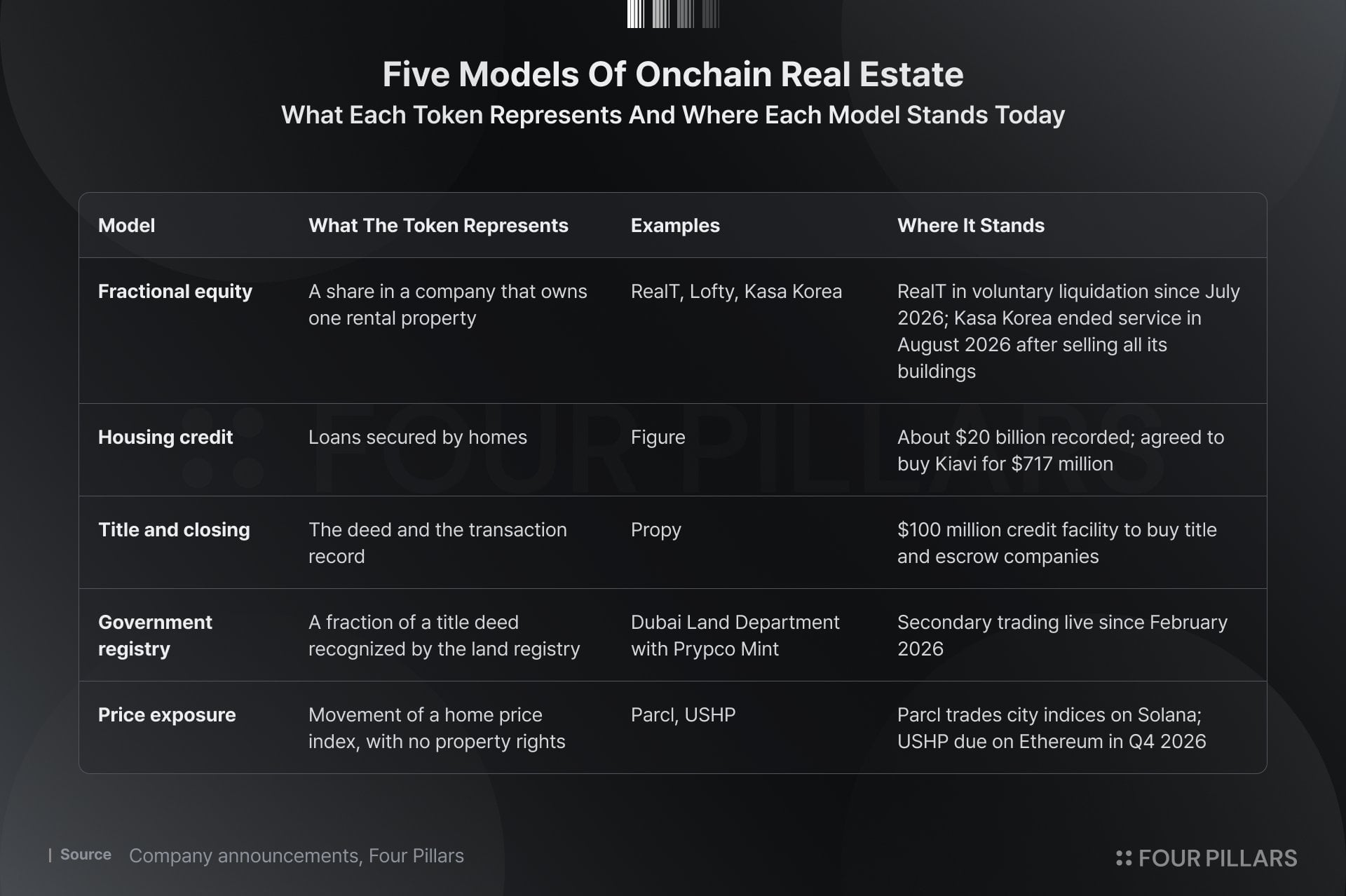
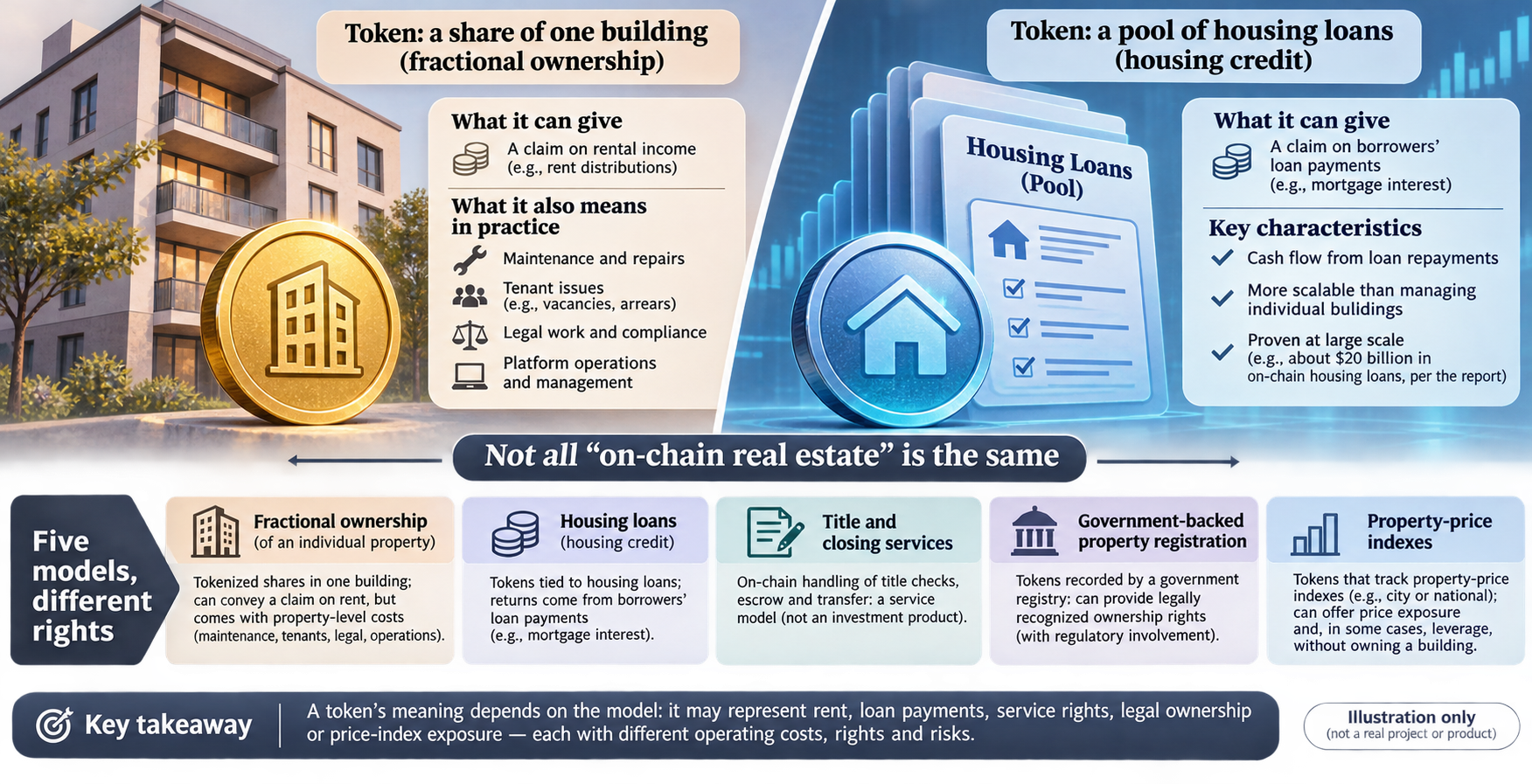
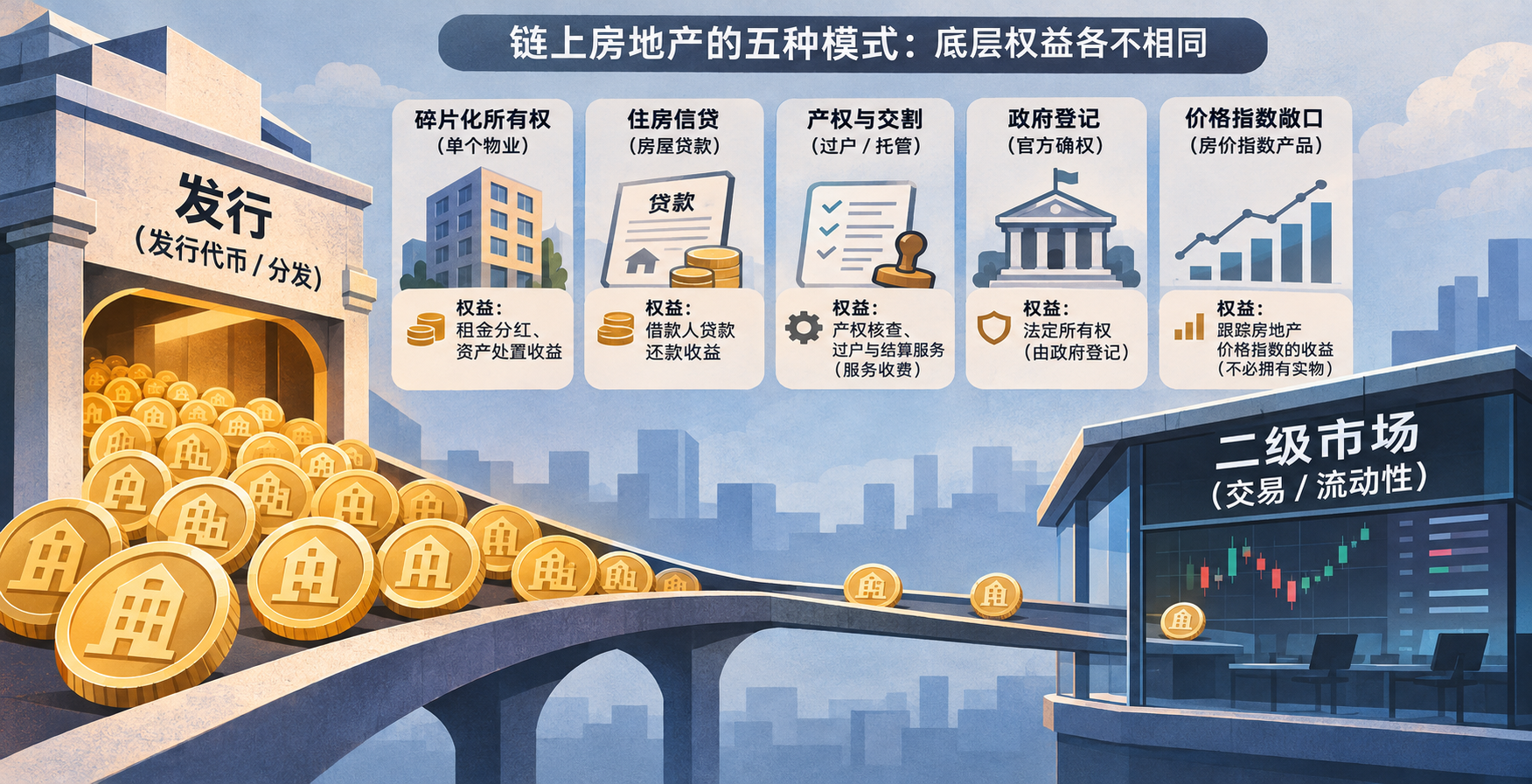
The report separated on-chain real estate into five models: fractional ownership of an individual property; housing loans; title and closing services; government-backed property registration; and products tracking property-price indexes. A token in one model does not give its holder the same rights as a token in another. Some convey a claim on rent, others on loan payments, while an index product need not convey ownership of a building at all.
The author identified property-level costs—maintenance, tenant issues, legal work and platform operations—as obstacles for fractional-ownership businesses. The report said RealT, Kasa Korea and Funble had ceased operations or entered liquidation. It also said RealT stopped most payments before the end of 2025, halted distributions in February 2026 and announced voluntary liquidation that July. Those reported outcomes should not be treated as proof that every fractional-property project will fail, but they show why a token alone does not remove the work of managing a building.
The credit model has a different source of cash flow: borrowers’ loan payments. According to the report, Figure had recorded about $20 billion in housing loans on-chain. It cited Figure’s $393 million in net revenue and $132 million in net profit for the first half of 2026, while noting that scale matters: Pineapple Financial had put more than $1 billion in mortgages on-chain but reported only $2.1 million in revenue over nine months.
Issuance is not the same as liquidity
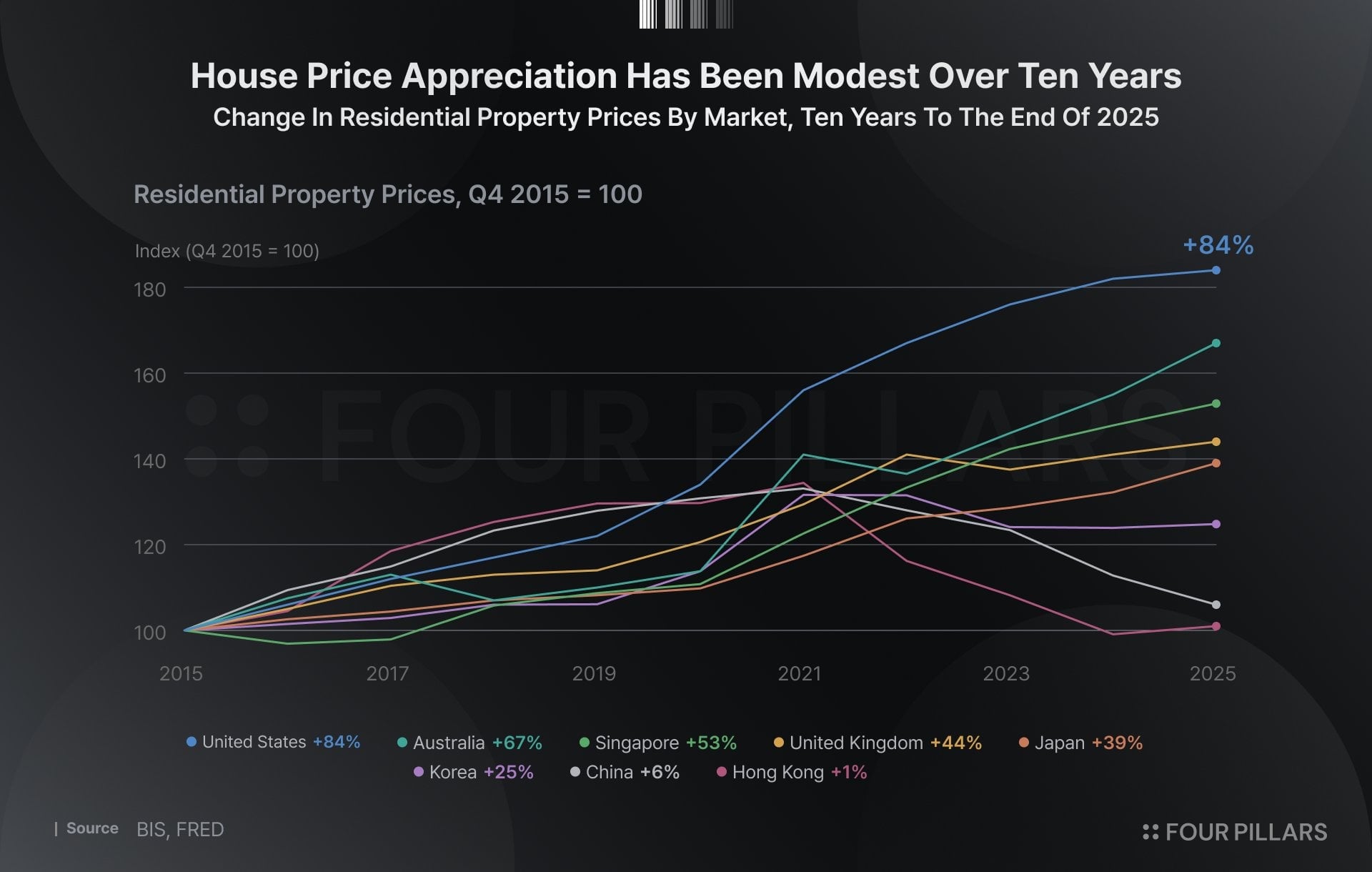
Japan offered another caution in the report. Real-estate security-token issuance reached ¥140.8 billion in fiscal 2025, about 85% of the country’s security-token issuance. Yet, as of March 2026, the Osaka Digital Exchange listed only eight token products, with a combined market value of ¥33.6 billion; settlement still took two business days. The example illustrates the difference between distributing tokenized assets and building an active secondary market.
Price-index products avoid direct management of individual properties, but their trading prospects remained unproven in the report. It described Parcl’s leveraged city-level price-index contracts and said USHP, built around an Index Industries housing-price index, was planned for the fourth quarter of 2026. The report also cited a $50 million seed round for Index Industries and $100 million in subscription commitments before USHP’s proposed launch. Commitments and plans are not evidence of subsequent trading liquidity.
The central lesson is less a prediction of an inevitable real-estate boom than a question about what a token actually represents. Loan payments, closing services, legal ownership and index exposure each carry different operating costs, rights and risks. Calling all of them “on-chain real estate” can obscure those differences.