On Pump.fun, the first hour of a meme coin’s life matters far more to platform revenue than its chances of becoming a lasting community token. That is the central argument of a Sparsity Research analysis translated by Saoirse for Foresight News and published on November 11, 2026. Its figures describe the market at the time of that report, not current conditions.
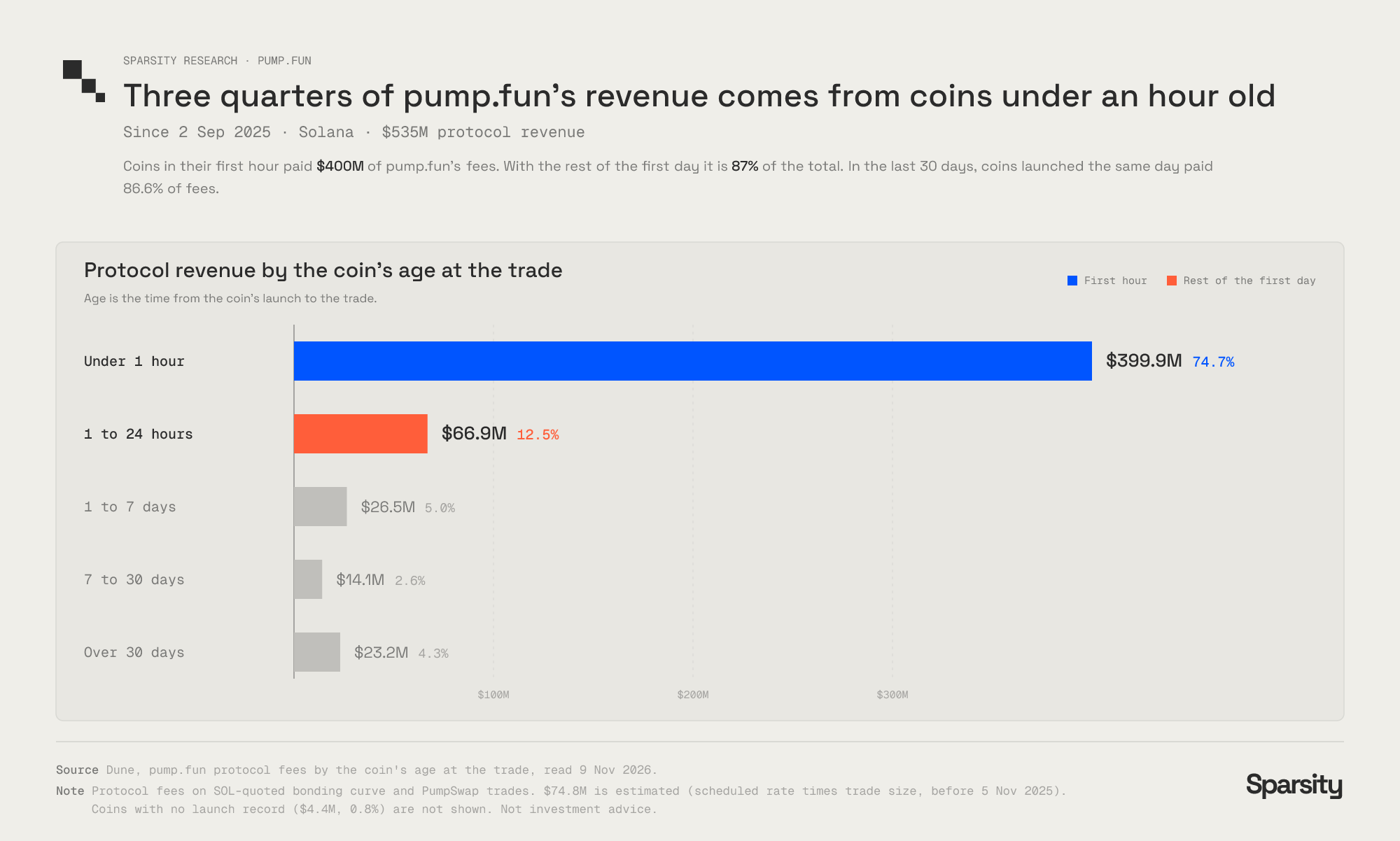
The analysis argues that familiar complaints about bundled launches, mass token creation and paid promotion cannot be understood by looking only at individual traders. Its focus is the platform’s fee structure—and the behavior that structure may reward.
Revenue follows early trading
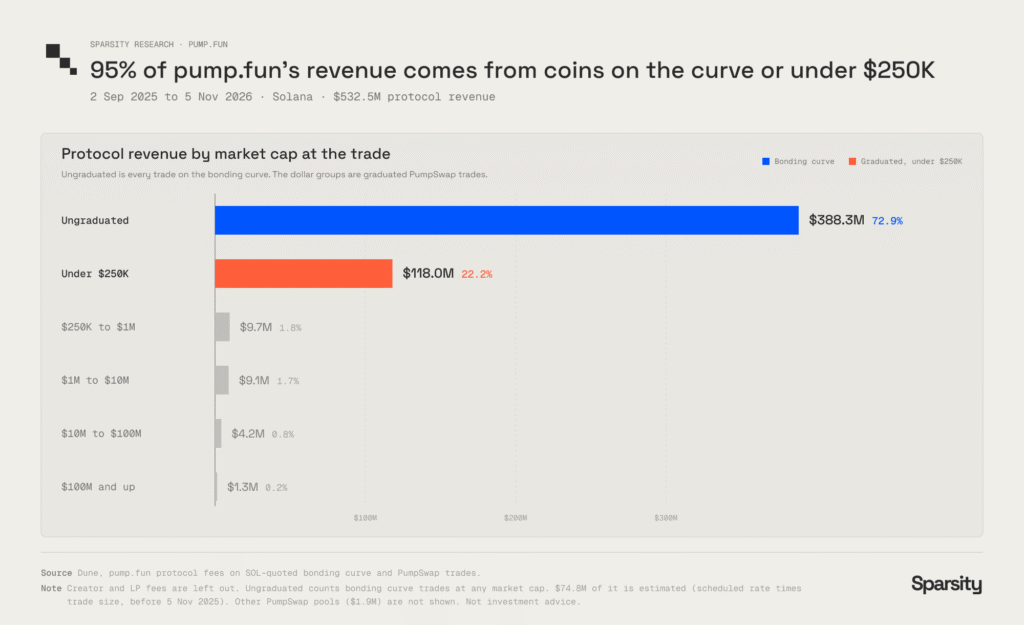
According to the analysis, Pump.fun accounted for 92% of token launches and 84% of trading volume across meme-coin launch platforms in the preceding 30 days. It says 95% of Pump.fun’s protocol revenue came from tokens still on the bonding curve or valued below $250,000. Bonding-curve trades carried a 1.25% fee on each buy or sell: 0.95% for Pump.fun and 0.30% for the token creator. A buy followed by a sale therefore incurred 2.5% in fees before any price change.
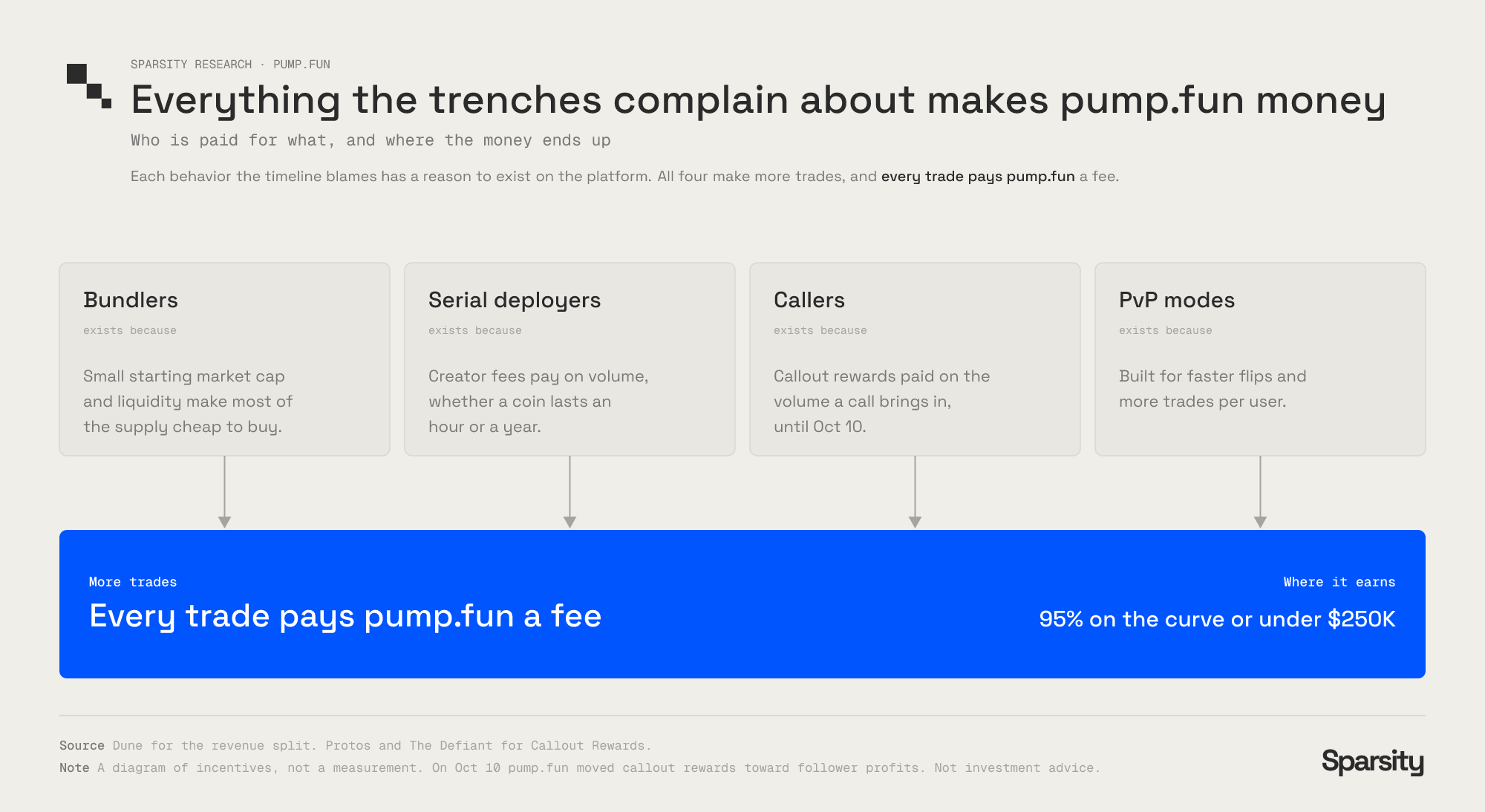
The study reports that roughly three-quarters of platform revenue came from tokens less than an hour old, and 87% from tokens less than a day old. By comparison, it says 15 tokens with a combined peak market value of $1.4 billion generated about $1.5 million in fees, while bonding-curve and sub-$250,000 tokens generated $506 million. Sparsity Research’s interpretation is that repeated early trading offers the platform a stronger immediate incentive than the long-term success of a few breakout coins.
Launches, promotion and participation
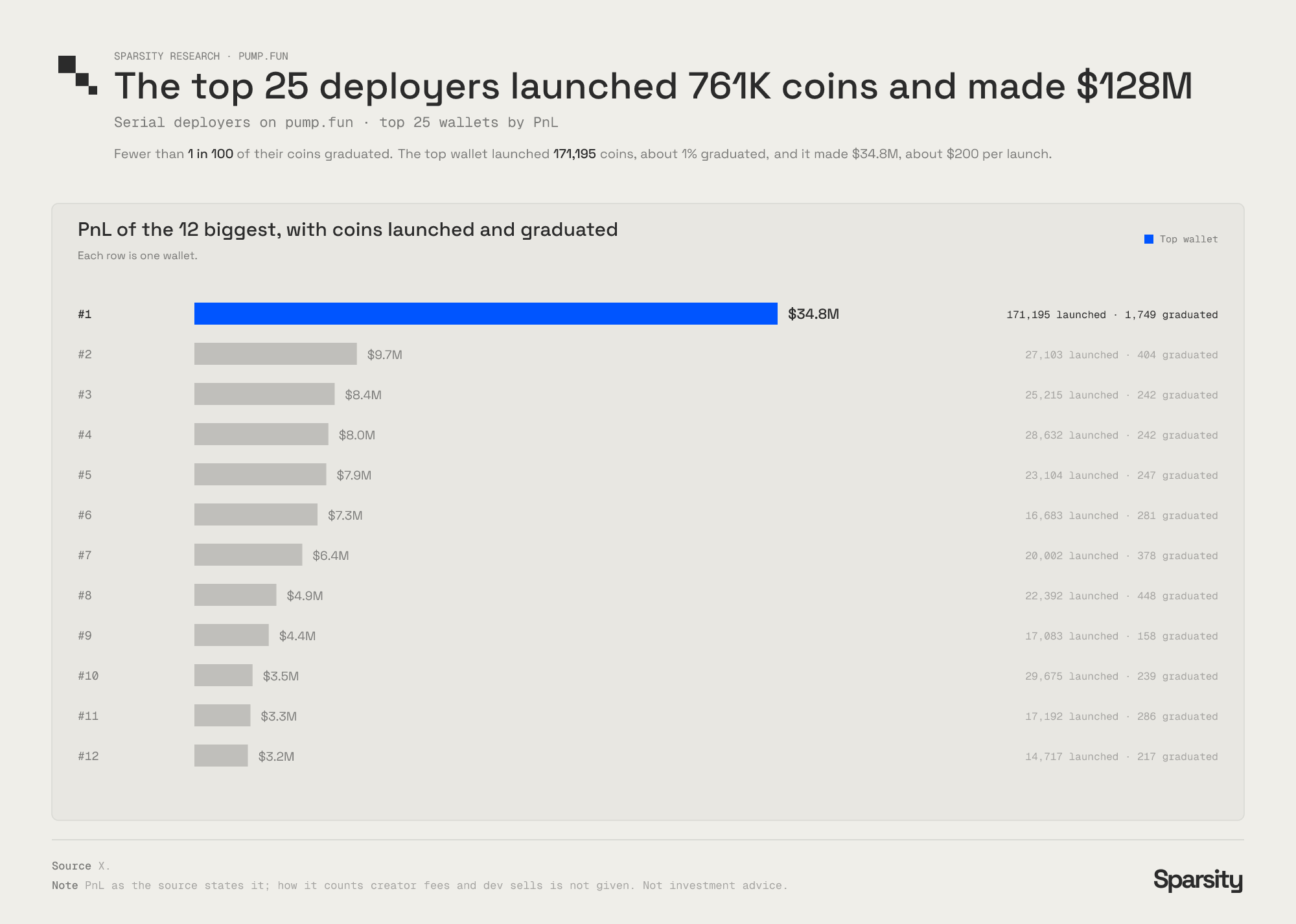
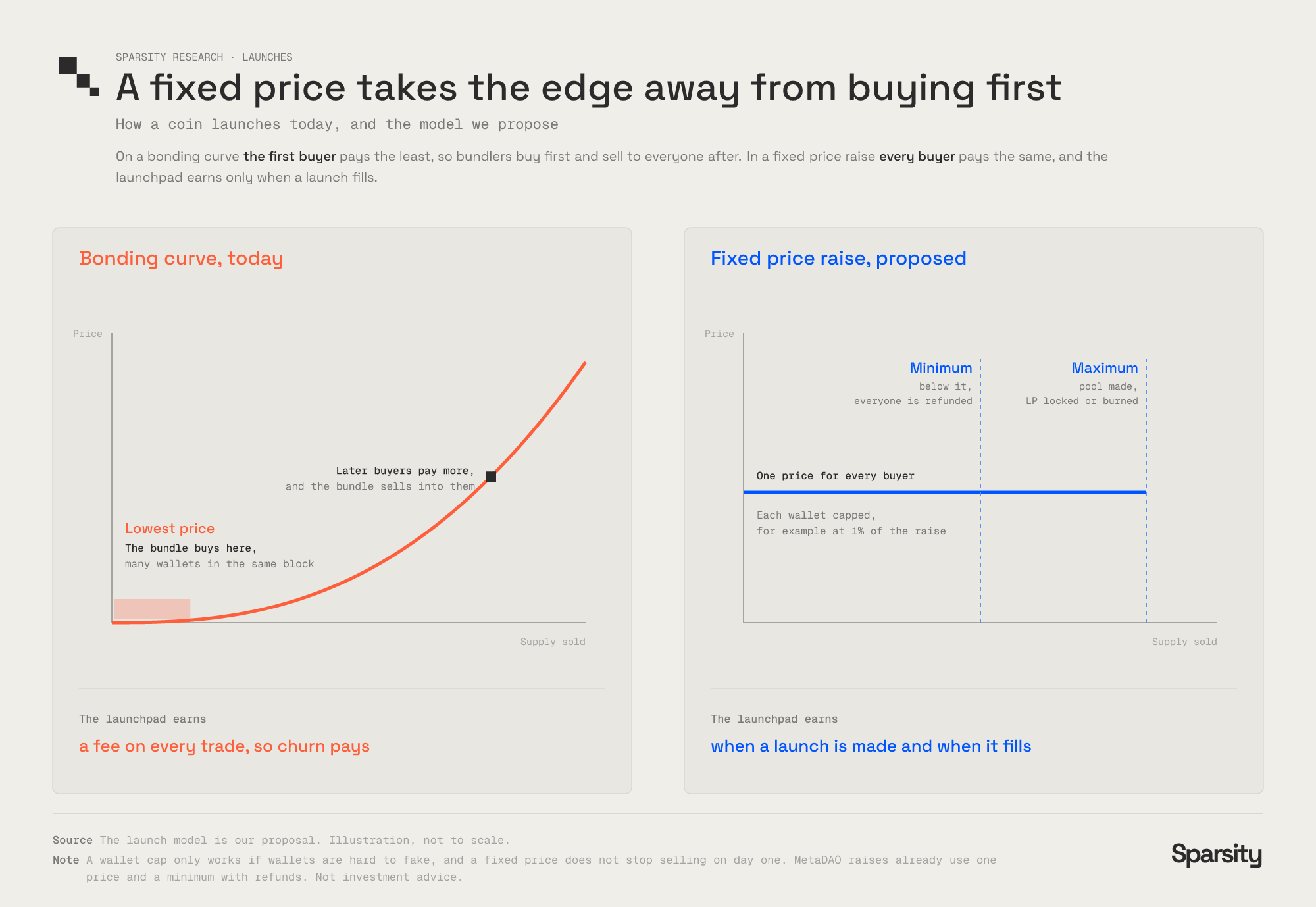
The report connects that incentive to several practices. It argues that low initial valuations and liquidity make it cheaper for bundlers to spread purchases across wallets at launch and sell to later buyers. It also says creator fees reward trading in newly issued tokens regardless of how long those tokens survive. Its top 25 issuing addresses had launched a combined 761,000 tokens, with fewer than 1% reaching the platform’s graduation threshold, and had earned a reported $128 million.
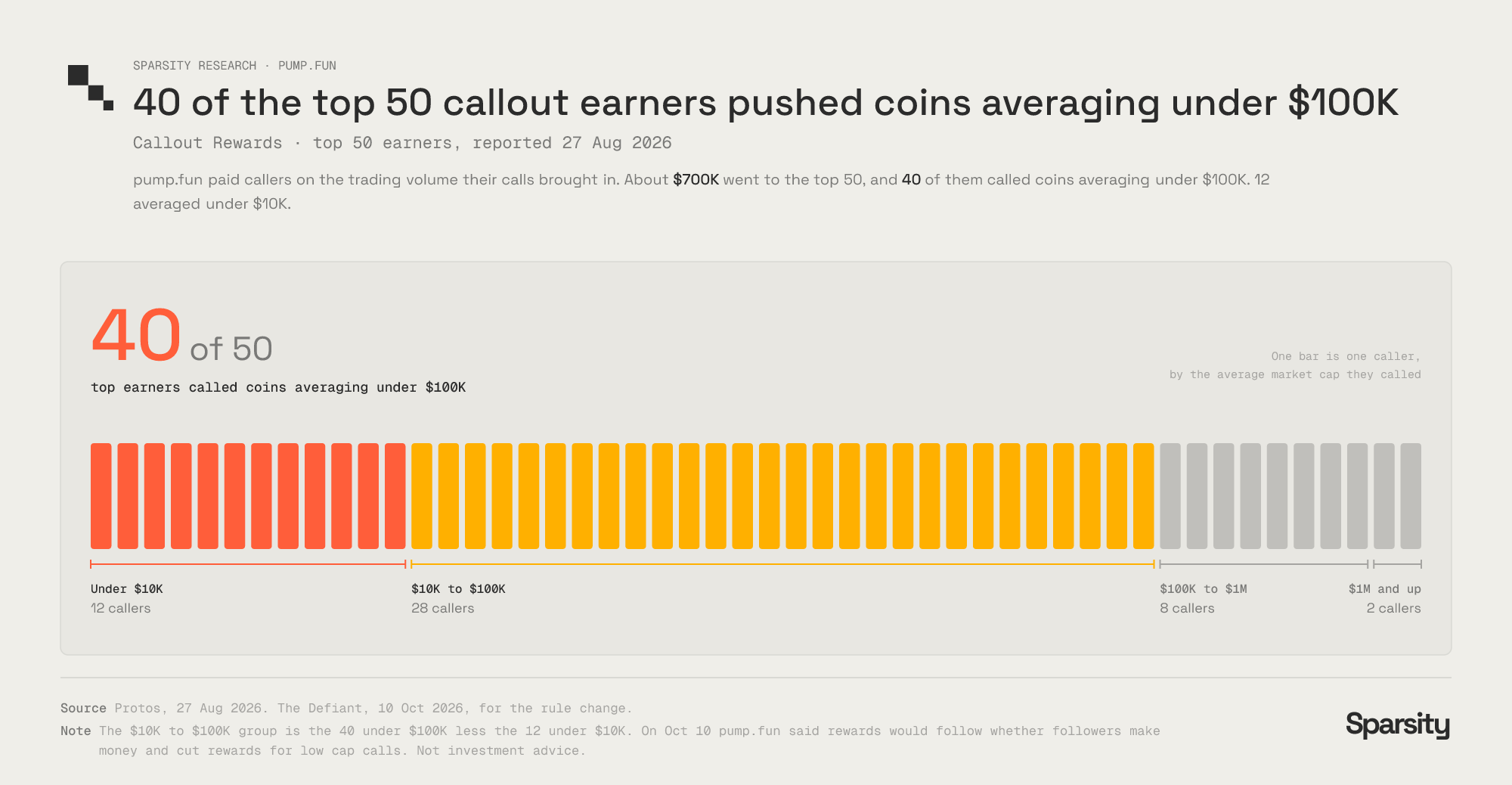
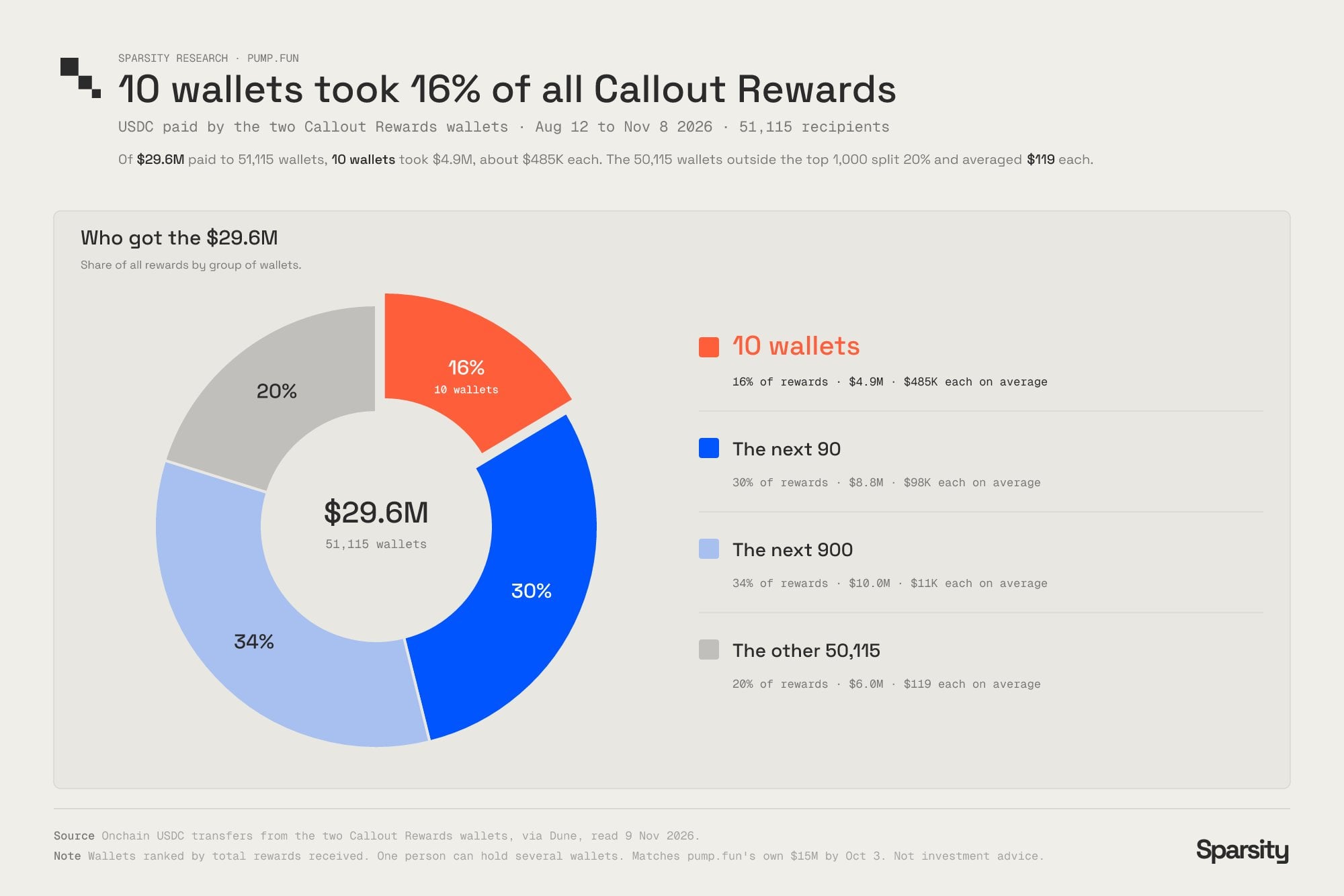
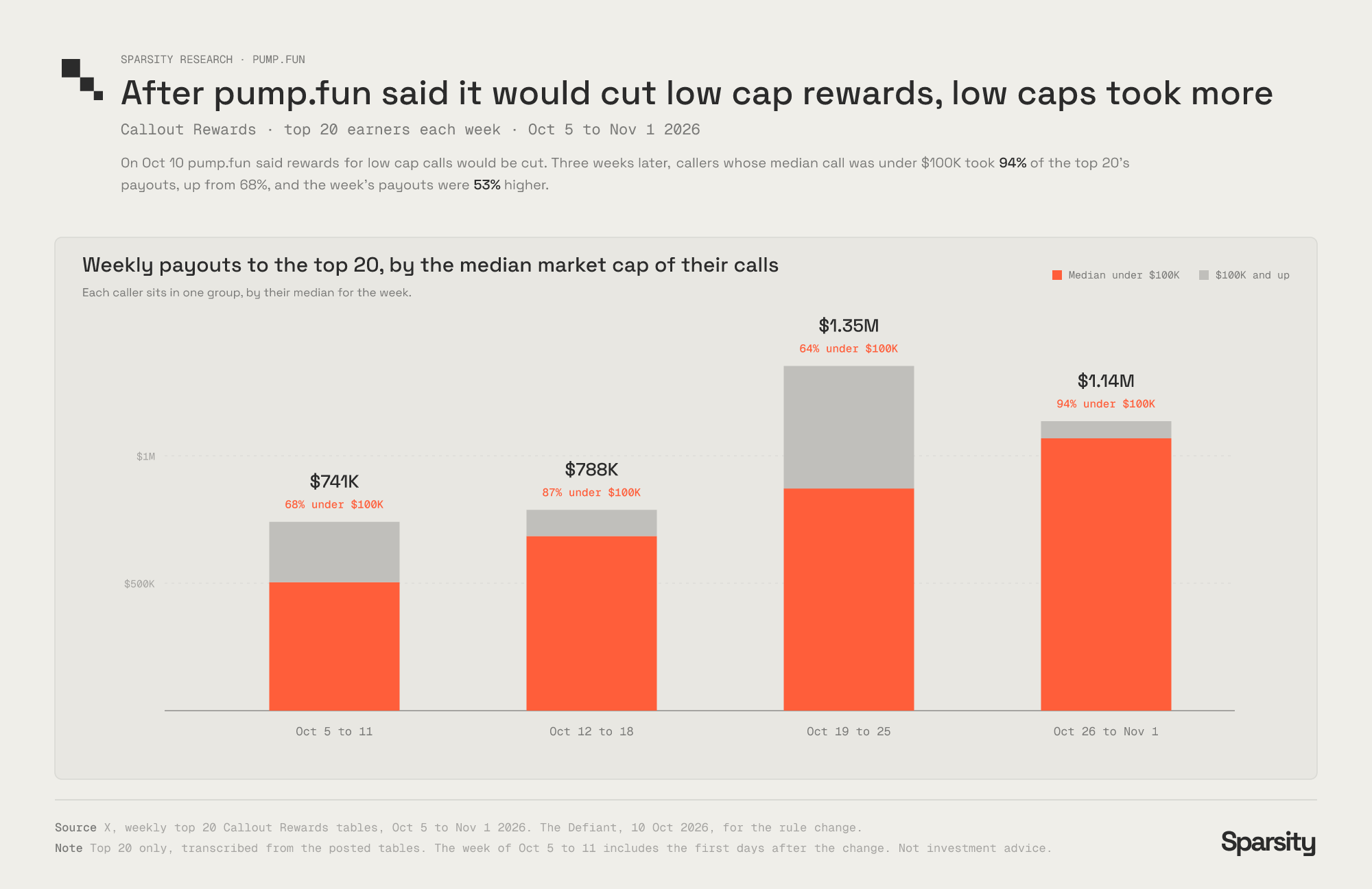
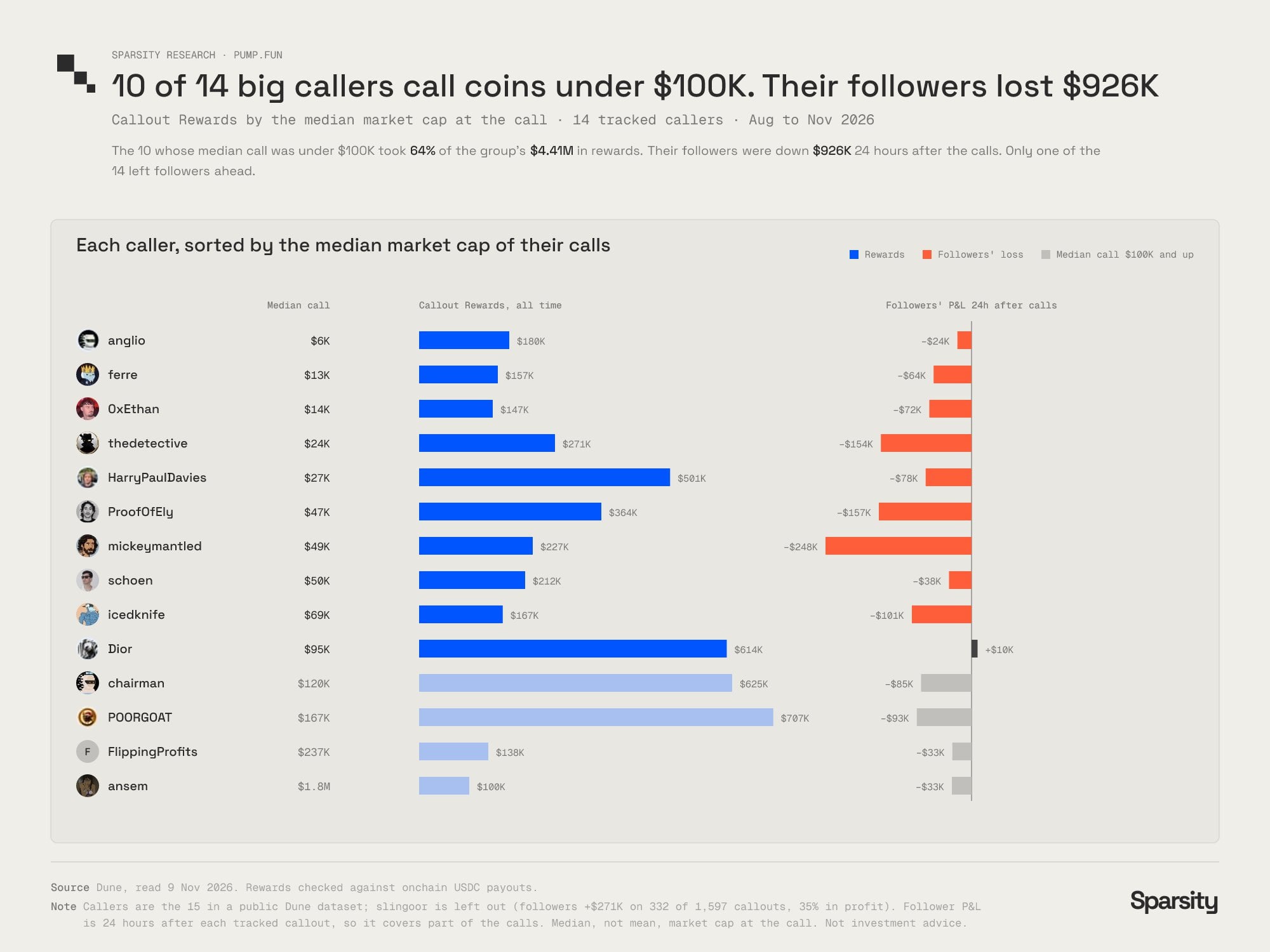
Paid promotion is another focus. From August 12 to November 8, 2026, the analysis says Pump.fun distributed $29.6 million in promotional rewards to 51,115 wallets; ten wallets received 16% of the total. Pump.fun said on October 10 that future incentives would take followers’ gains and losses into account and reduce the reward weight of small-cap tokens. Yet, in the three weeks after that statement, the report says the share of rewards going to the top 20 promoters for tokens with a median market value below $100,000 rose from 68% to 94%. That reported outcome does not, by itself, establish how every promoter was paid under the revised rules.
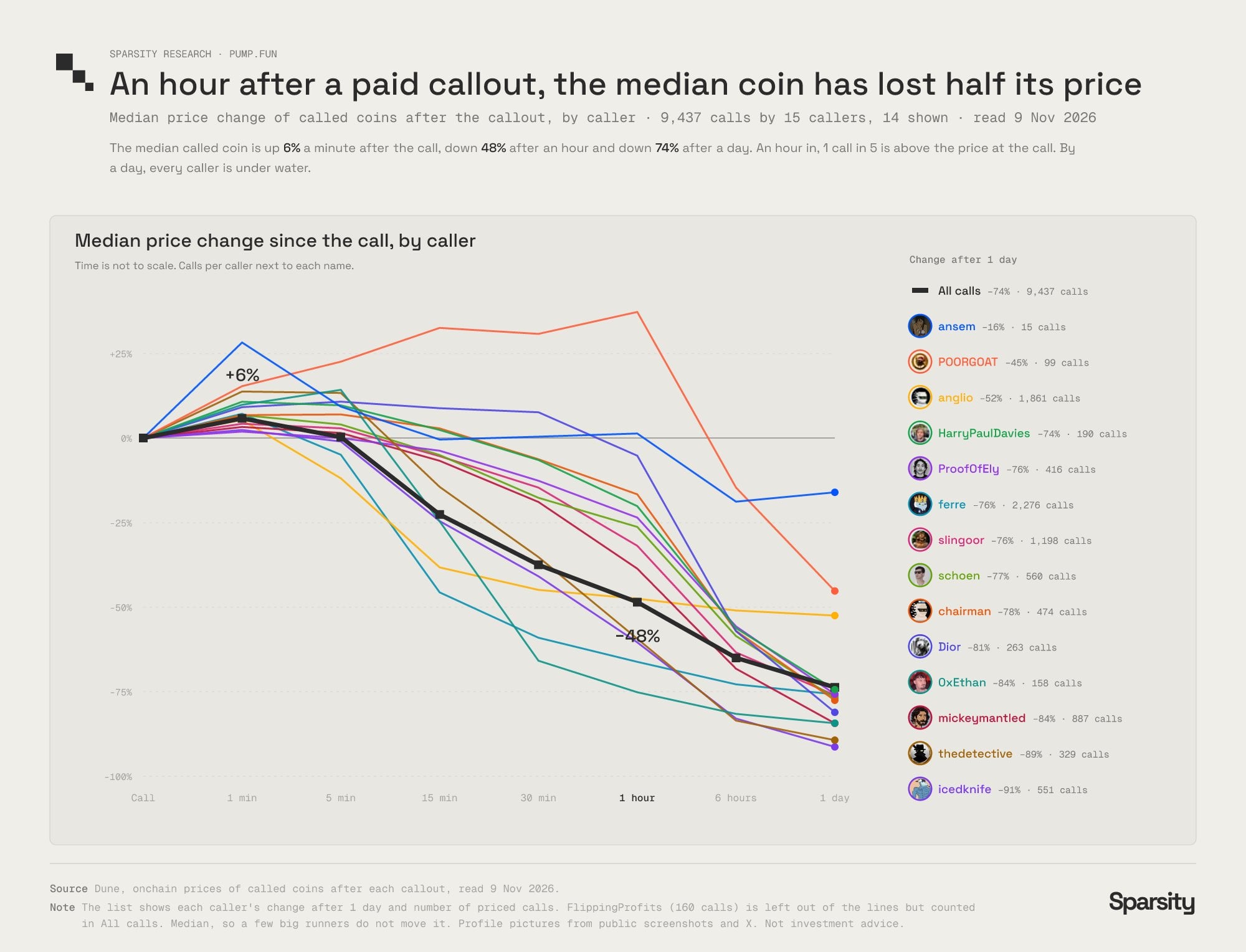
For 14 promoters it tracked, the research found that ten mainly promoted tokens with a median market value below $100,000. It reports that their followers lost a combined $926,000 by the following day. Across the promoted tokens studied, median prices rose 6% one minute after a post, then fell 48% after an hour and 74% after a day. These are findings from the study’s sample, not a result for every promoted token or follower.
The authors also assign responsibility to participants: launches, promotion and rapid trading generate fees only when others provide the trades and attention. That is a critique of an incentive loop, rather than evidence that every creator or community member behaves alike.
A proposed alternative, not an existing rule
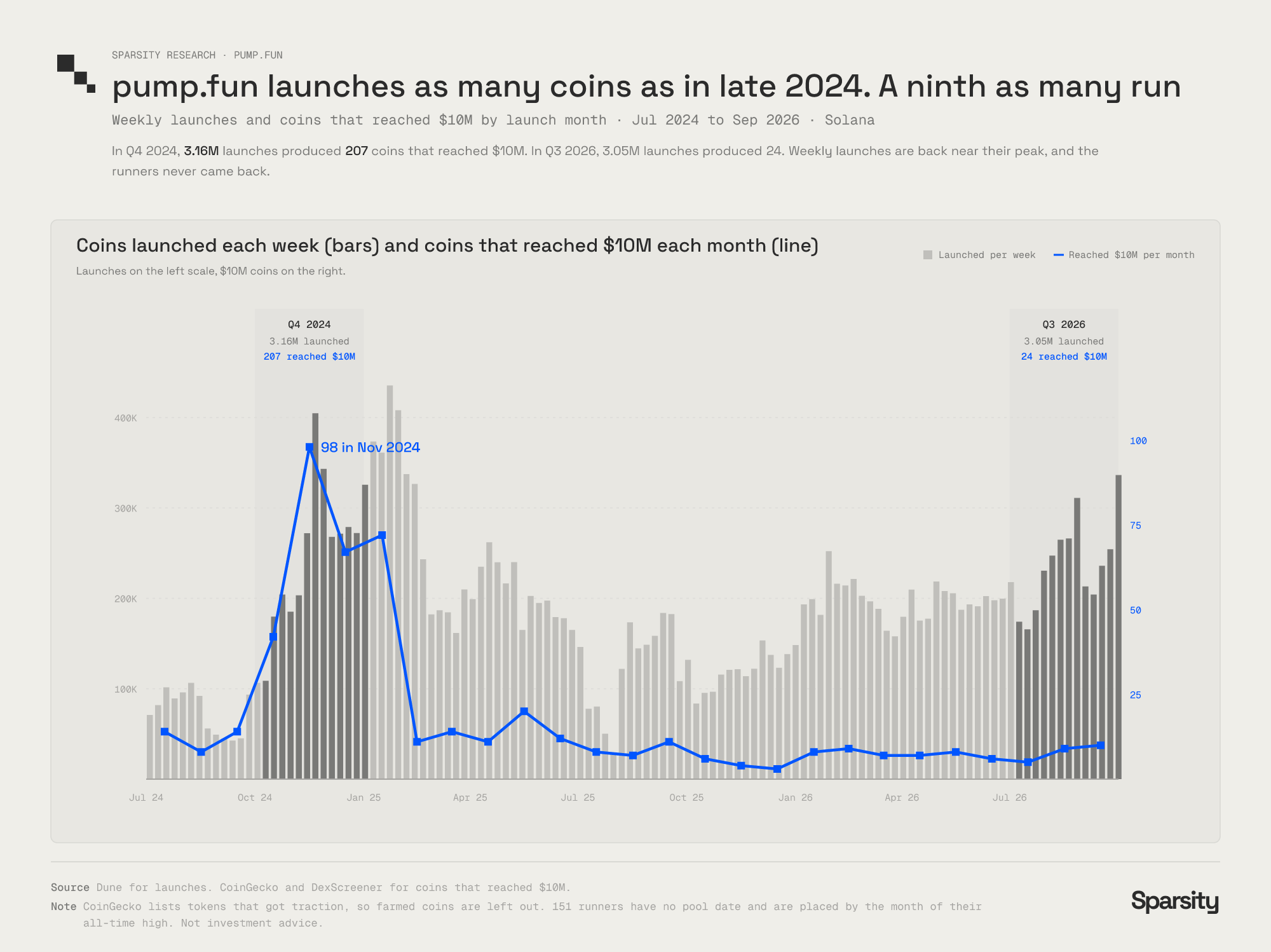
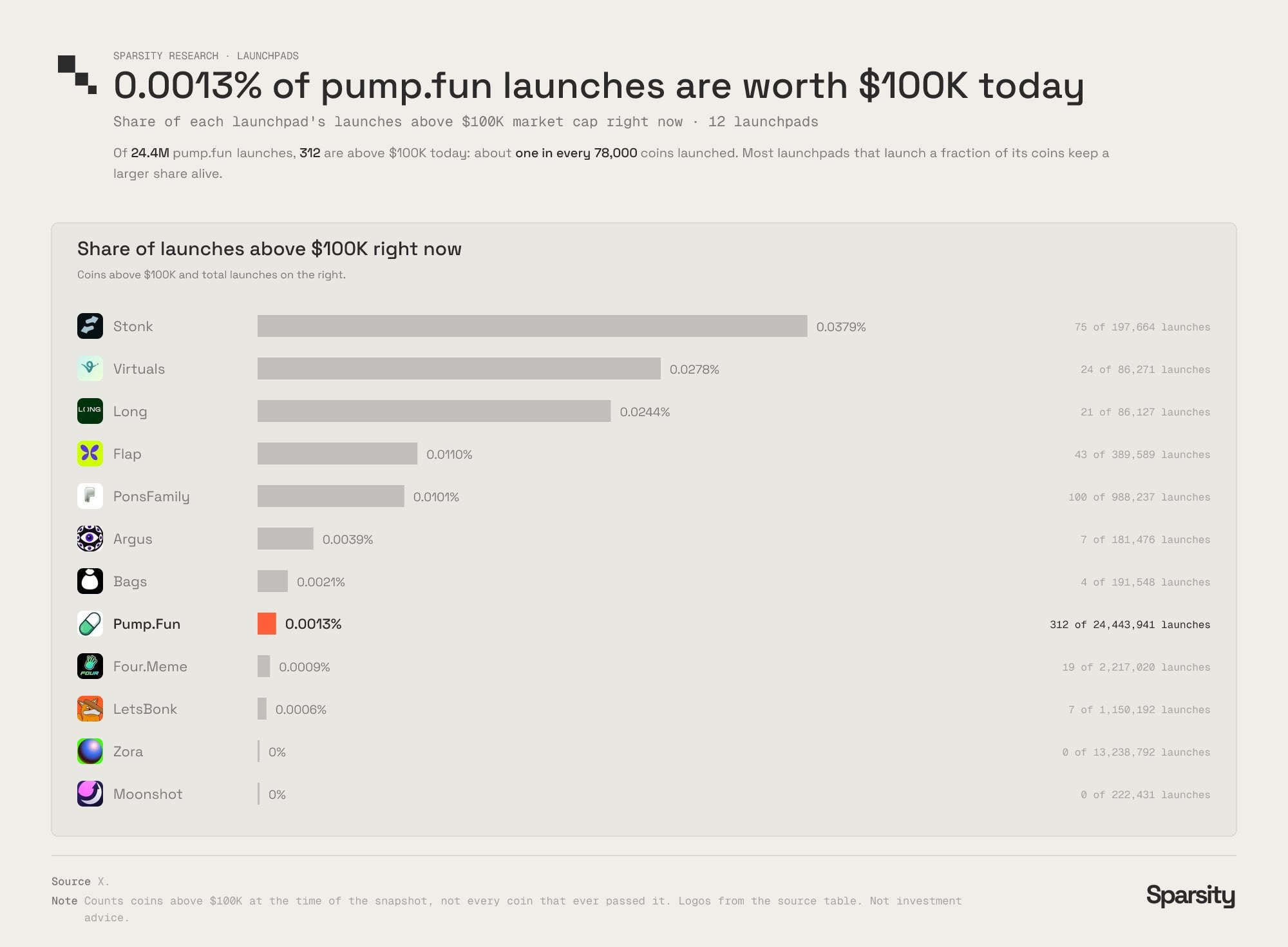
Sparsity Research points to a widening gap between launches and larger tokens. It counts 3.16 million launches and 207 tokens that exceeded a $10 million market value in the fourth quarter of 2024, versus 3.05 million launches and 24 such tokens in the third quarter of 2026. Of 24.4 million cumulative Pump.fun launches, it says just 312 tokens remained above a $100,000 market value on its measurement date—about 0.0013%.
The authors propose shifting incentives away from first-hour volume. Their suggestions include deeper initial liquidity, creator fees that unlock over time and promotional rewards tied to whether followers remain profitable after several days. They go further with a proposed, fixed-price fundraising model: buyers would subscribe at the same price, unsuccessful raises would be refunded after a set 24- or 48-hour window, and the platform would collect a fee only when a raise succeeded. None of this is presented as an enacted Pump.fun policy.
The report acknowledges limits to its proposal. Per-wallet purchase caps could be bypassed with multiple wallets, and an equal subscription price would not prevent selling after launch. Its broader question remains: can a launch platform make durable participation more rewarding than a constant stream of brief, heavily traded tokens?
Source: techflowpost.com (originally published 2026-11-11 13:53 UTC+8)