Tokenized stocks offered several ways to hold and trade equity-linked assets by late 2026, but trading on the platforms RootData studied remained dominated by perpetual contracts. In a report published on November 13, 2026, RootData compared activity from August through October across eight exchanges and reviewed the product designs of five tokenized-stock issuers. The contrast matters for the real-world asset narrative: adding stocks to a platform is not the same as attracting sustained spot trading.
Contracts dominated activity
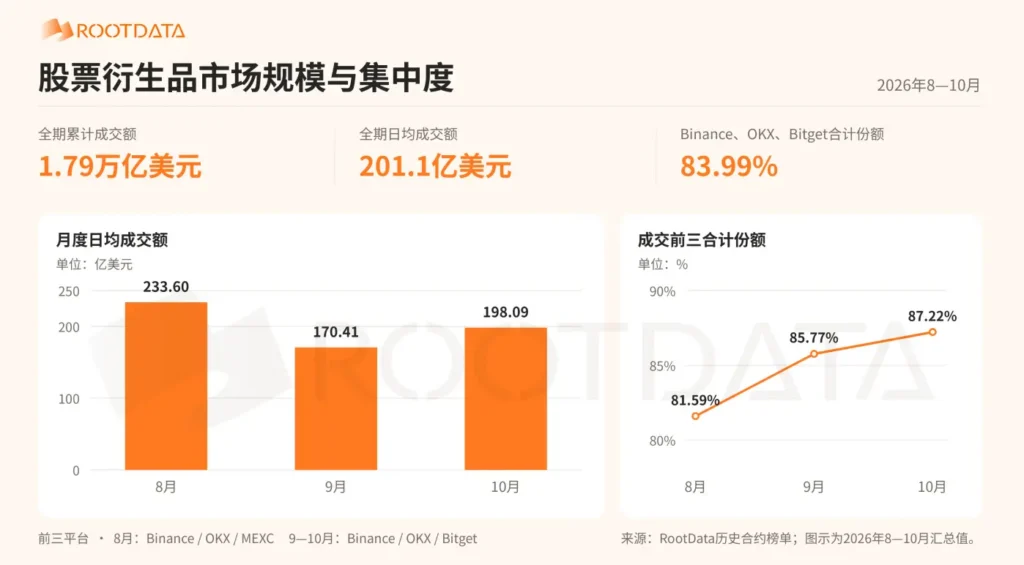
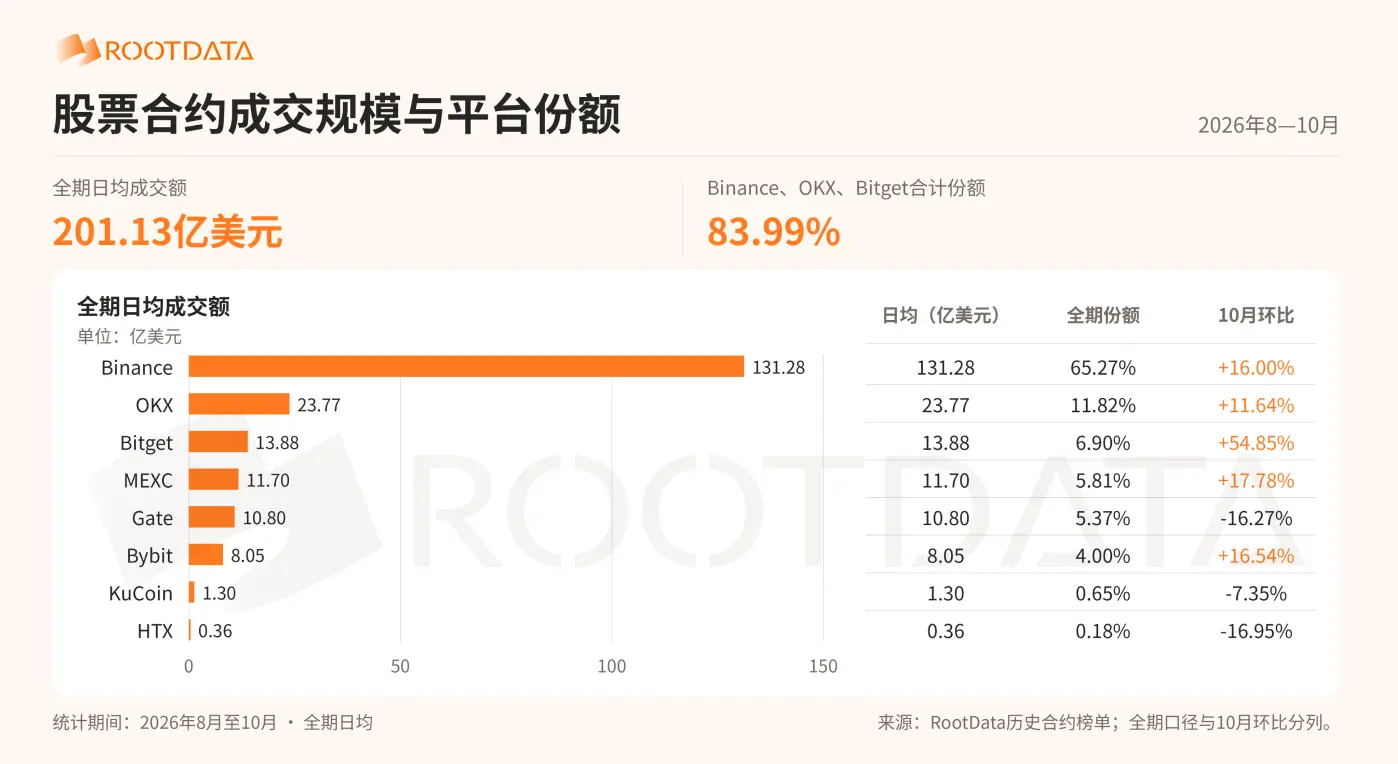
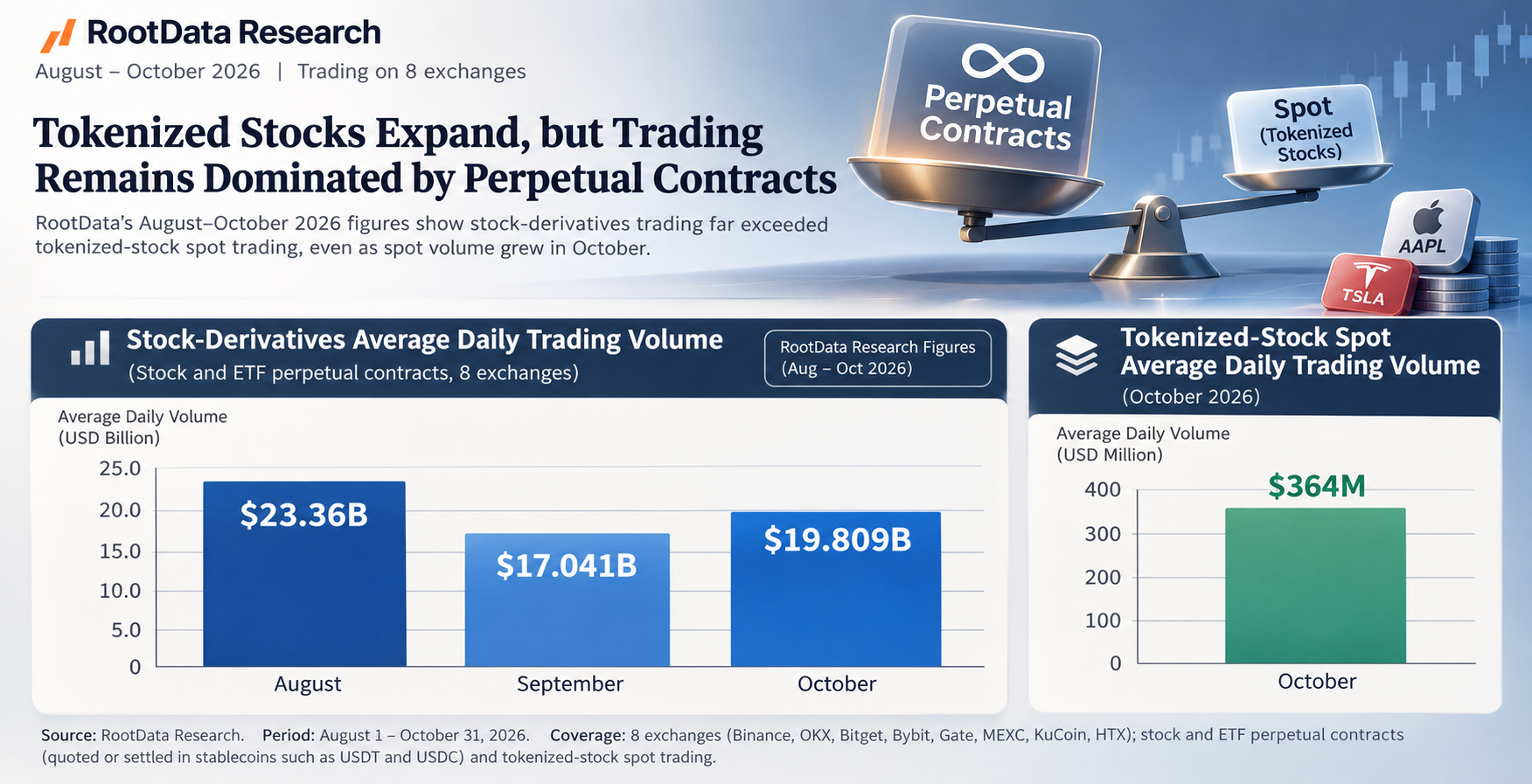
Across Binance, OKX, Bitget, Bybit, Gate, MEXC, KuCoin and HTX, RootData measured approximately $1.79 trillion in stock and ETF perpetual-contract volume over the three months. Average daily volume fell from $23.36 billion in August to $17.041 billion in September, then recovered to $19.809 billion in October—still below August’s level. The report’s contract sample covers products quoted or settled in stablecoins such as USDT and USDC.
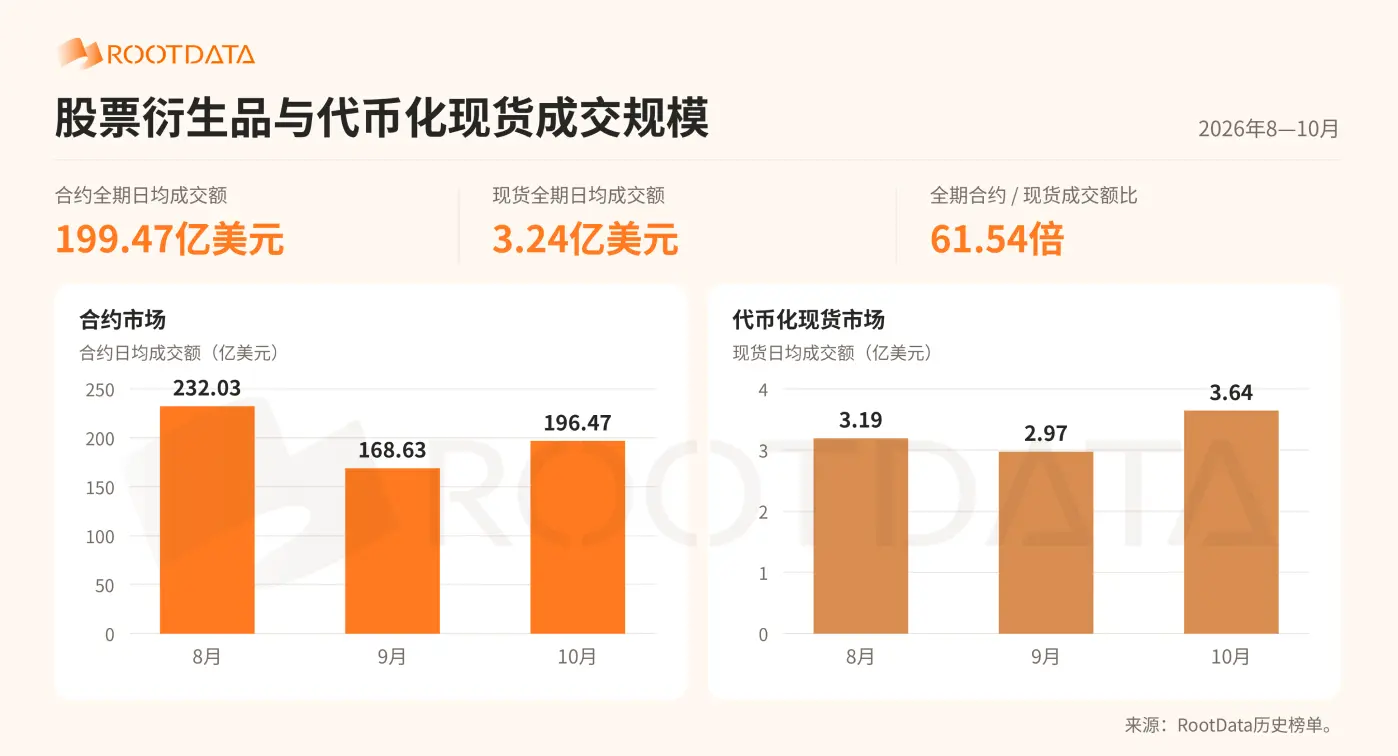
For its spot-versus-derivatives comparison, RootData reported average daily tokenized-stock spot volume of about $324 million, against $19.947 billion in stock-derivatives volume on the platforms used for that comparison: roughly 61.5 times as much. Spot volume reached a daily average of $364 million in October, up 22.72% from September, but remained far smaller than contract volume.
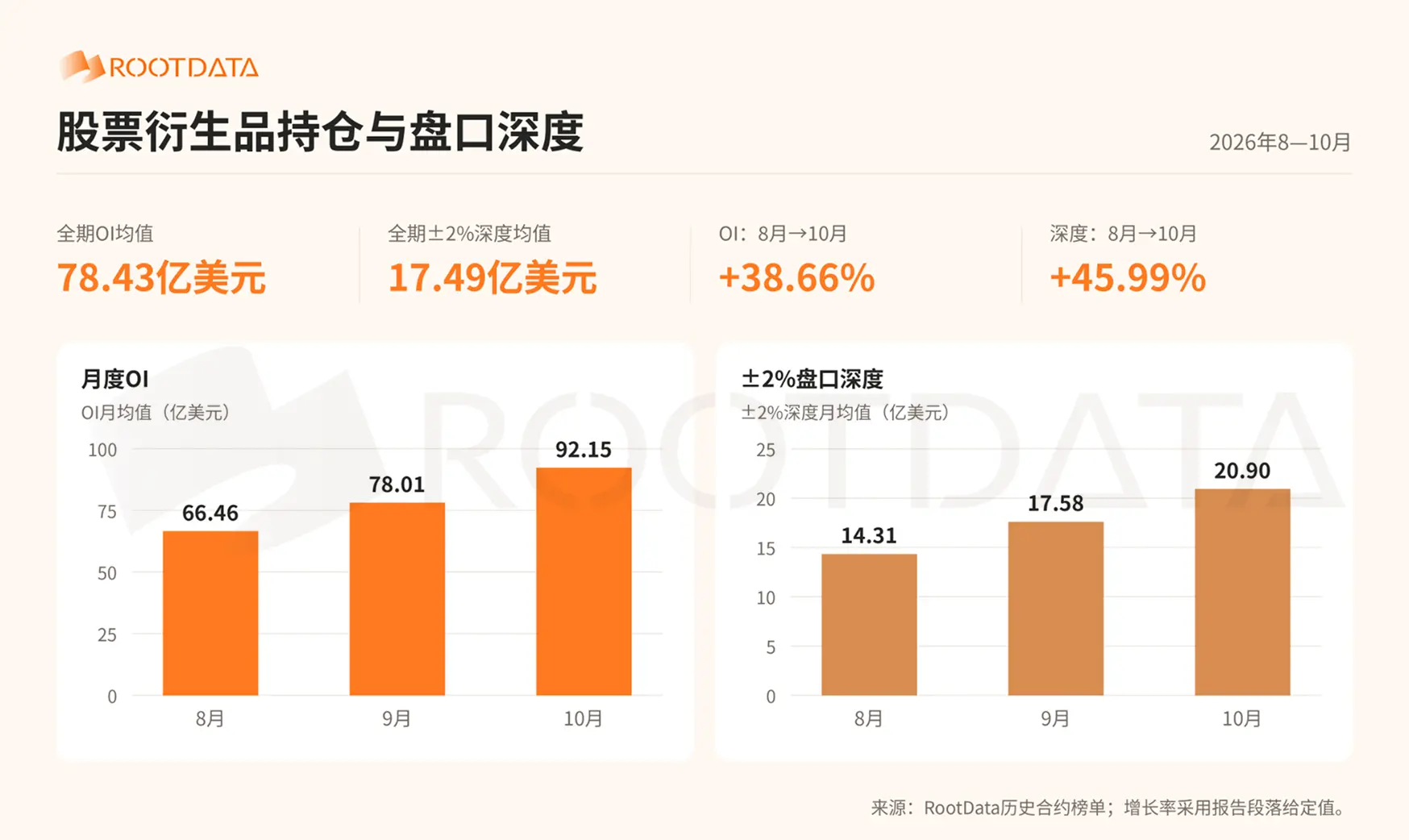
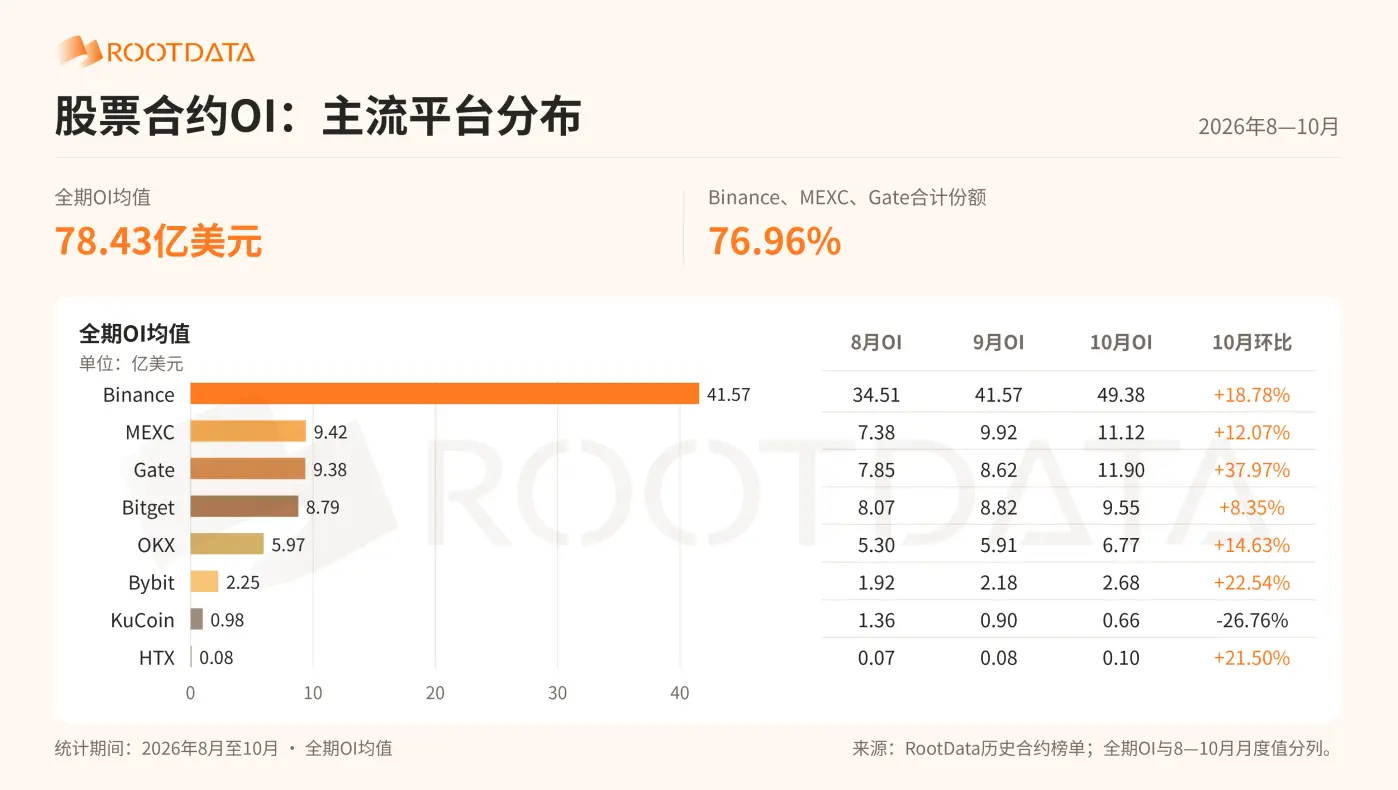
Trading volume, open interest and visible order-book depth did not move together. RootData said average daily open interest reached $9.215 billion in October, up 38.66% from August, while average visible depth within 2% of the quoted price reached $2.09 billion, up 45.99%. RootData interpreted that divergence as a sign that positions and posted liquidity continued to grow through September’s volume decline; those measures alone do not establish why individual traders held positions.
Scale was not the only measure of liquidity
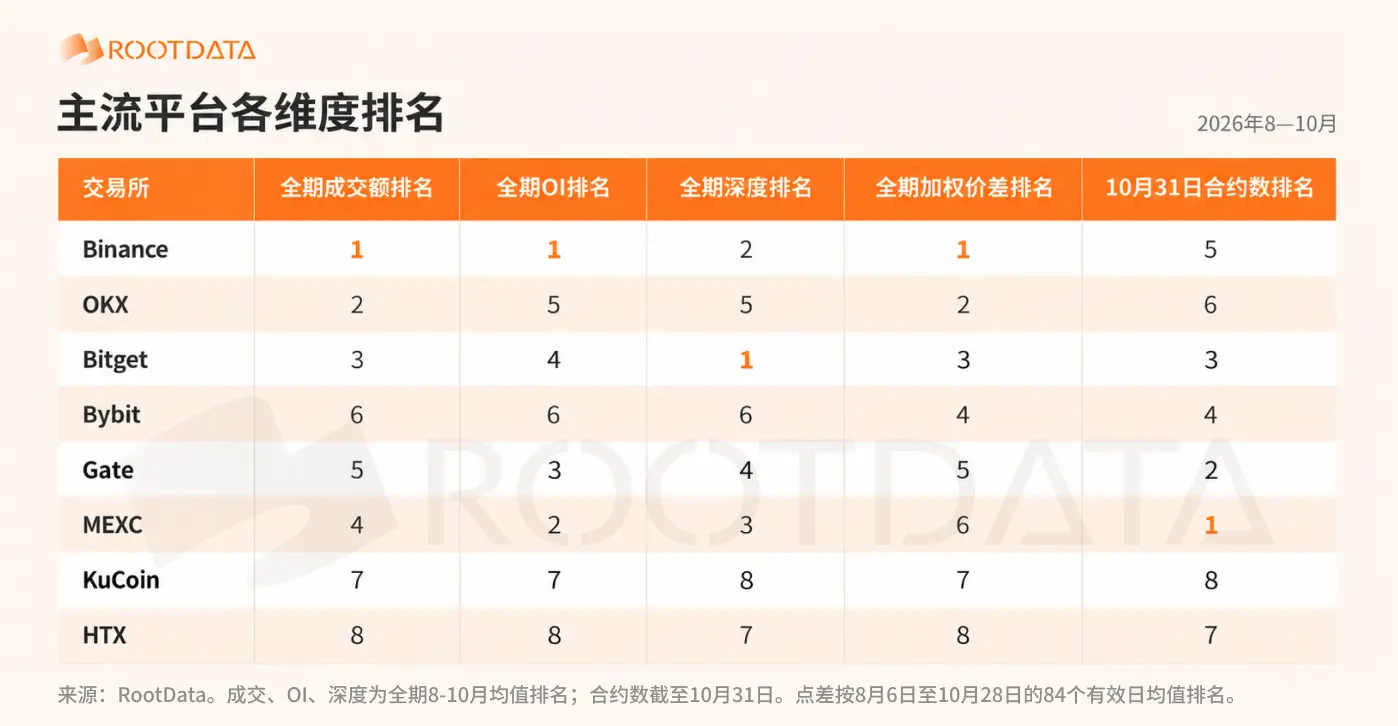
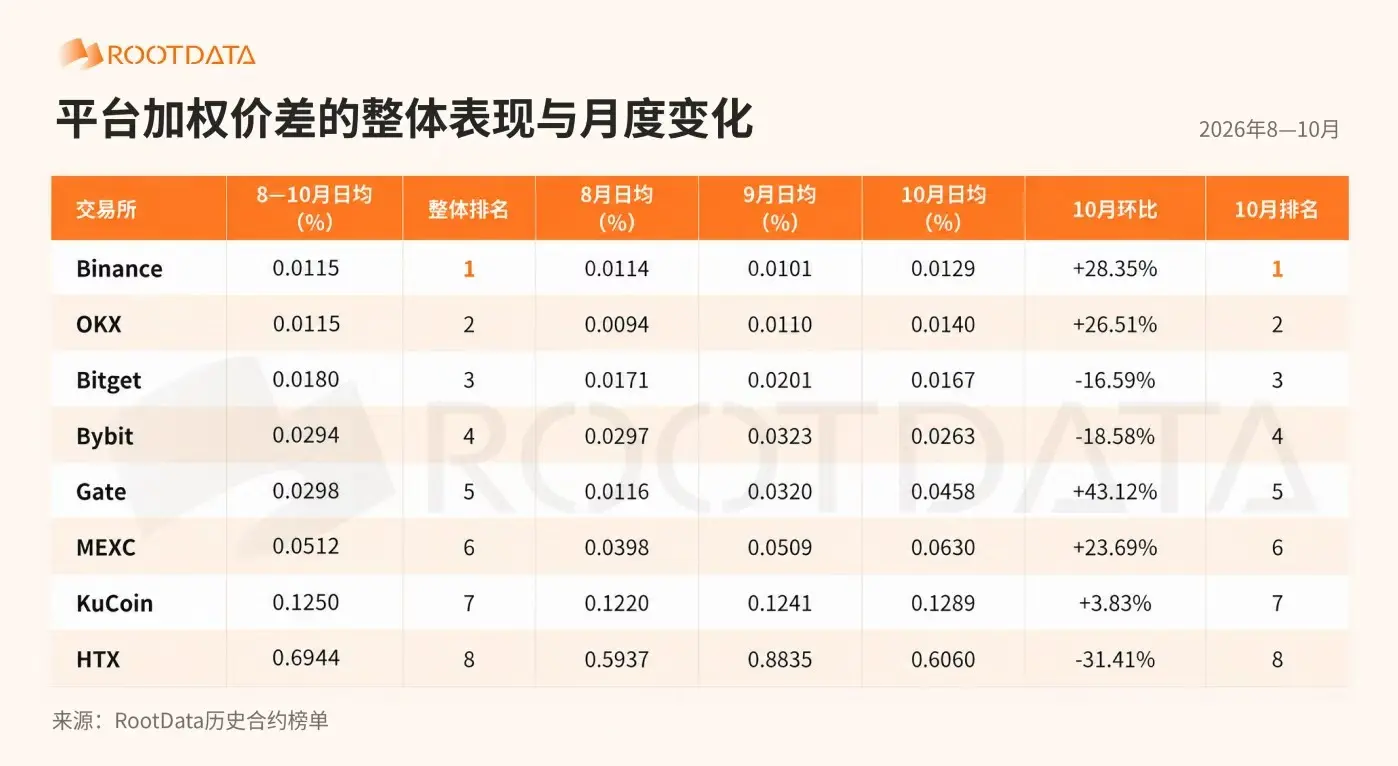
Binance accounted for 65.27% of the eight-platform derivatives volume measured over August–October and led in average open interest. OKX ranked second by volume. Bitget, however, had the largest average visible depth within 2% of the price, at $418 million versus Binance’s $407 million. RootData reported the same average daily weighted spread for Binance and OKX—0.0115%—with Bitget next at 0.018%.
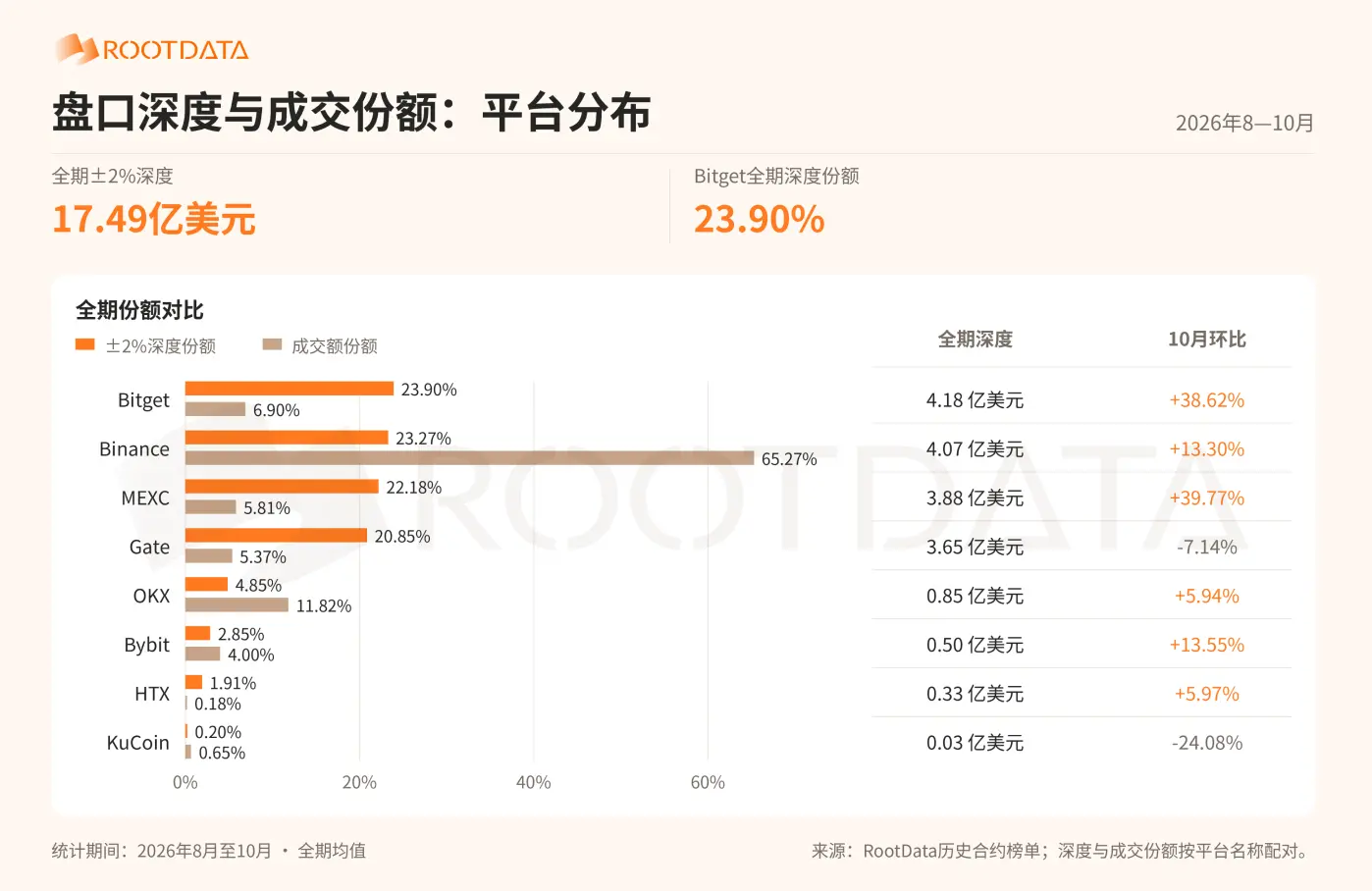
Those rankings describe different aspects of trading rather than one overall winner. RootData argued that maintaining quotes and reasonable spreads during market-moving events would be a more demanding test than liquidity measured in quieter periods.
The spot products offered different holding experiences
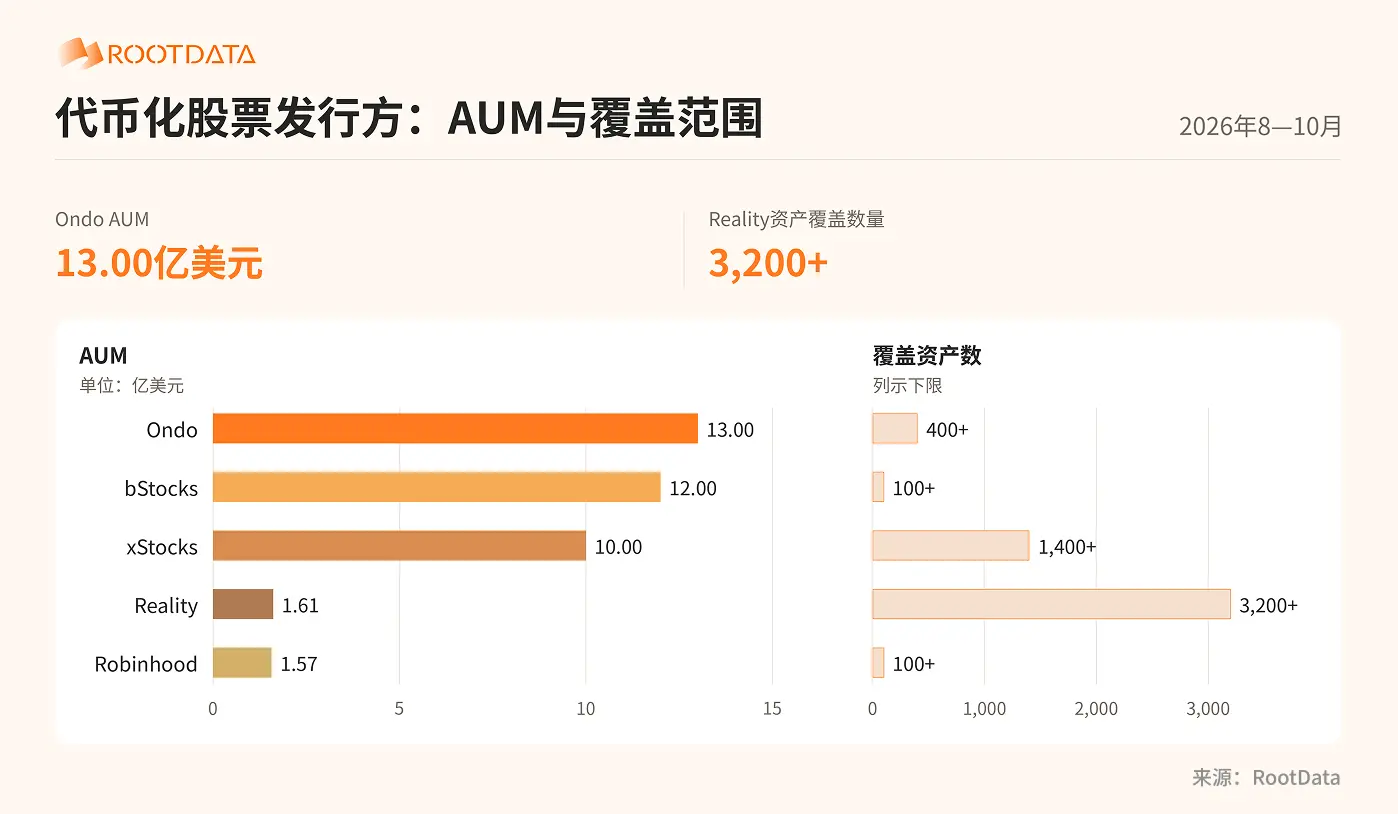
RootData’s issuer comparison covered Ondo, bStocks, xStocks, Reality and Robinhood Stock Tokens. Its table put their assets under management at approximately $1.3 billion, $1.2 billion, $1 billion, $161 million and $157 million, respectively. It listed Reality as covering more than 3,200 assets—the broadest range in the comparison—but said whether that breadth would produce sustained trading and holdings remained unproven.
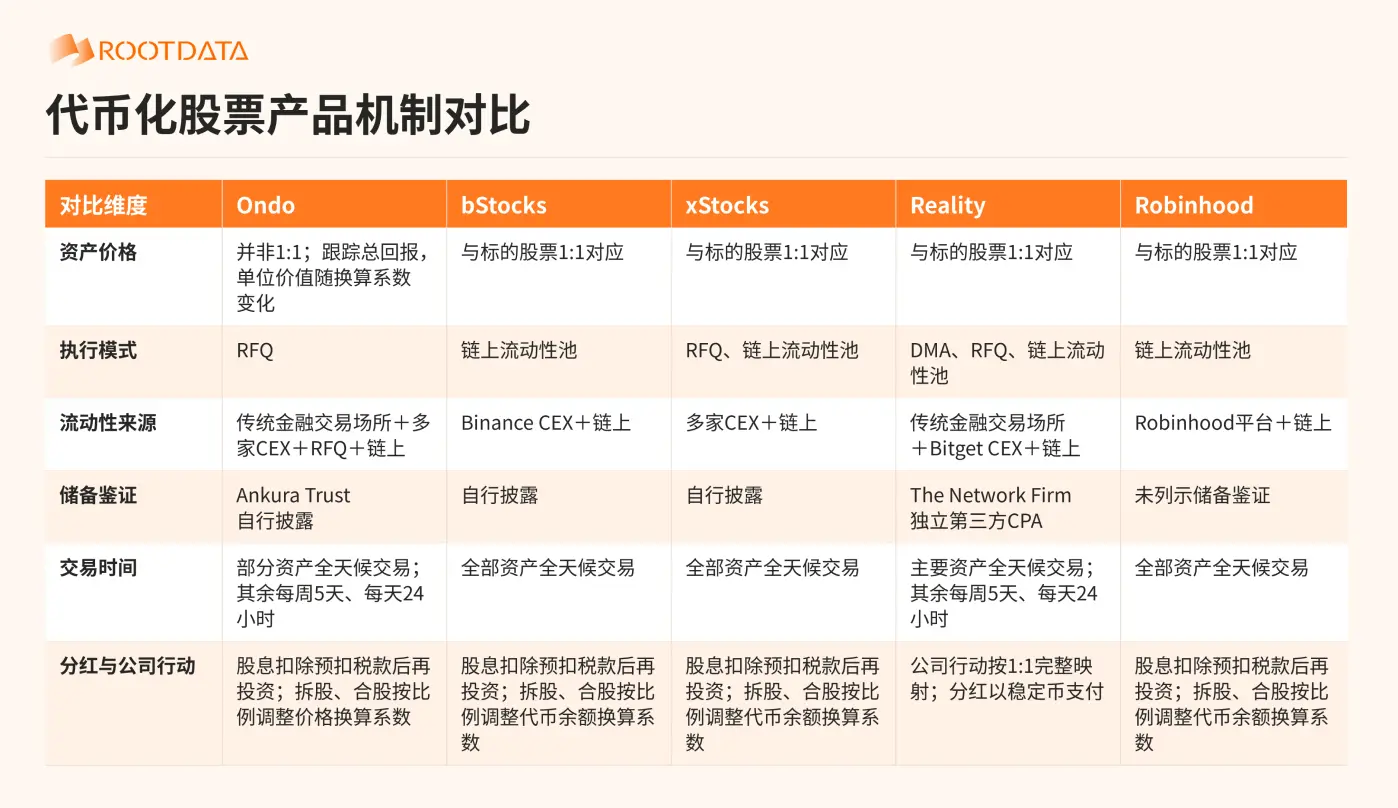
The report also described differences a holder could encounter beyond the number of listed assets. According to RootData, Reality offered direct market access, request-for-quote execution and on-chain liquidity pools, and paid dividends to holders in stablecoins. It described the other four products as automatically reinvesting after-tax dividends instead. RootData said Reality listed an independent third-party CPA reserve attestation; Ondo, xStocks and bStocks relied primarily on their own disclosures, while its comparison did not list a reserve-attestation arrangement for Robinhood. These are the report’s product descriptions, not an independent verification of any issuer’s reserves.
The August–October snapshot suggests a distinction worth keeping in view as tokenized equities expand: product coverage, trading access and actual trading activity are separate measures. RootData’s figures show a spot market growing in October, but still much smaller than the derivatives market it compared.