On November 19, 2026, crypto investment firm Syncracy described a bet on Pearl: a proof-of-work network designed to let GPUs secure a blockchain while performing AI inference for paying customers. Syncracy disclosed that it had built a substantial PEARL position over the preceding two quarters. Its case for the project is an investment thesis, not evidence that the proposed mining model has reached scale.
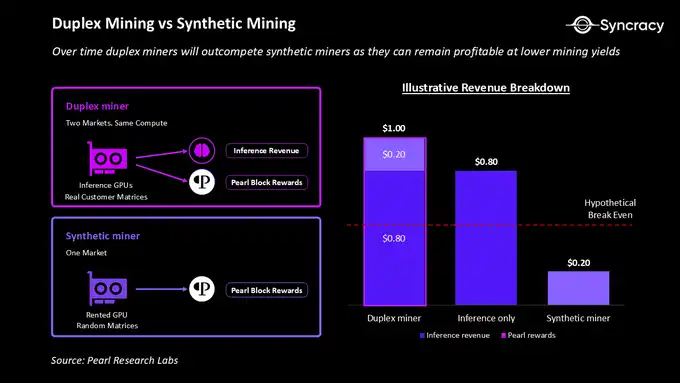
The idea is to give an AI infrastructure operator two sources of revenue from the same computation: inference fees and PEARL mining rewards. Syncracy said the approach builds on 2025 research by Pearl co-founders Omri Weinstein and Ilan Komargodski showing how matrix multiplication—a core AI operation—could be used in proof of work with little additional overhead. They launched Pearl with co-founder Idan Sugarman in 2026, according to the firm.
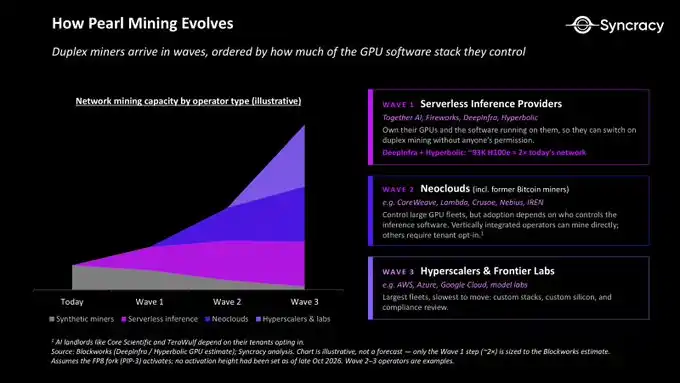
There is a product to watch, but it does not yet establish broad adoption. Together AI has introduced an inference service that mines PEARL while handling customer requests and uses the tokens to subsidize inference prices. Syncracy said it had checked that Together had not, at the time of its report, sold its mined tokens at large scale. Neither point shows how many other providers will adopt the system.
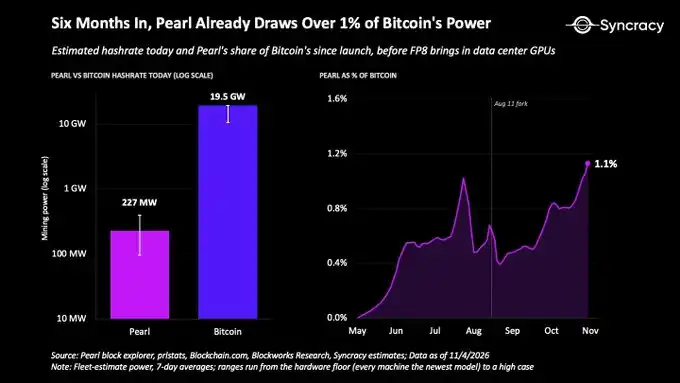
The gap between the thesis and today’s miners
Syncracy said its conversations with miners indicated that roughly 80% of Pearl mining was still performed on consumer GPUs, largely in China. The firm expects a planned FP8 upgrade to make mining more compatible with AI inference in data centers and reduce additional computational overhead from about 5% to near zero. Whether the upgrade achieves that result—and whether inference providers then connect substantial amounts of paid customer work—remained open questions.
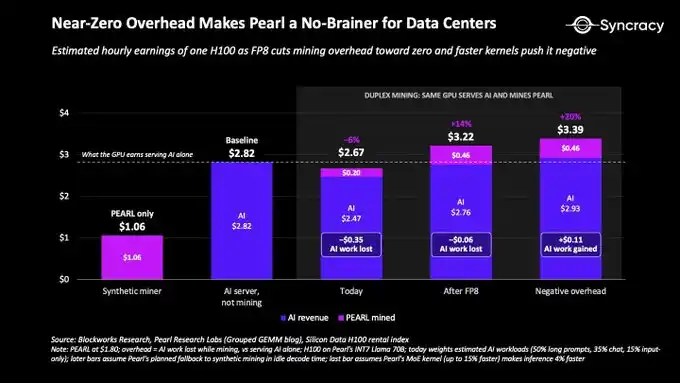
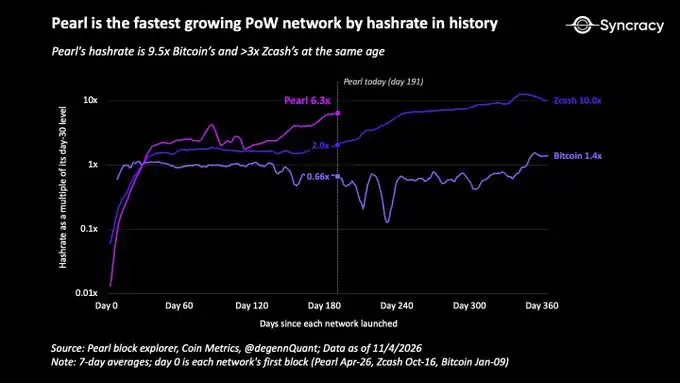
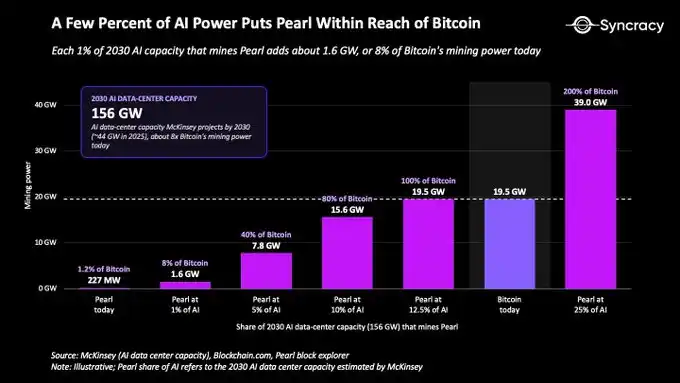
Syncracy predicted that the computing and energy resources securing Pearl could exceed those devoted to Bitcoin before 2030. That is not a direct comparison of the networks’ raw hash-rate figures: they perform different computations. Nor would more participating GPU capacity, by itself, prove stronger lasting security. GPUs can be reassigned to other work, while Bitcoin’s specialized mining hardware is much more dependent on Bitcoin’s economics. Syncracy acknowledged that this difference could make Pearl’s apparent computing resources overstate the economic cost of an attack.
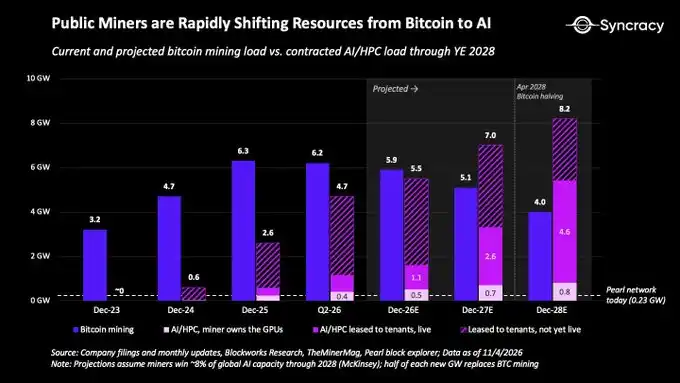
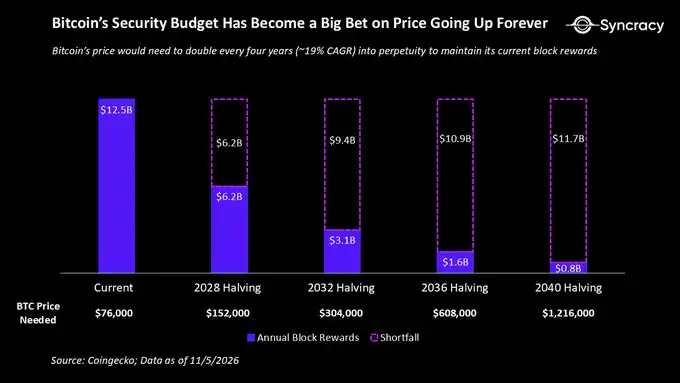
The firm framed Bitcoin’s declining block subsidy and competition from AI data centers as reasons to seek another security model. It cited figures indicating that as much as 44% of publicly listed miners’ power capacity had been contracted for AI and high-performance computing during 2026–2028. Its calculation that Bitcoin’s price would need to double every four years—about 19% compounded annually—to preserve the dollar value of block-subsidy revenue assumes transaction fees do not make up the difference. These are arguments about future incentives, not a finding that Bitcoin’s security has failed.
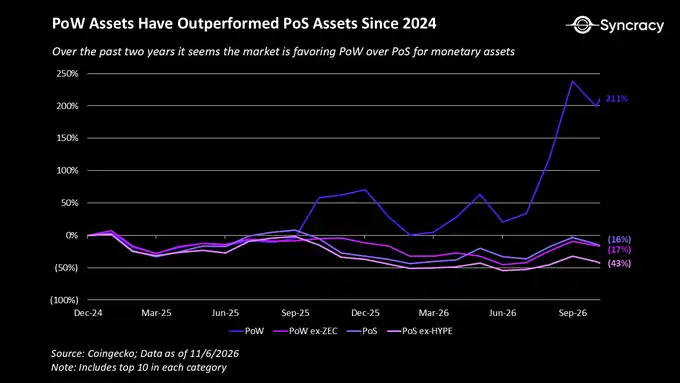
Pearl has a separate trade-off: keeping mining useful for AI may require repeated changes as inference formats evolve. Syncracy said the network had undergone four forks since April 2026 and planned another to support FP8. It described native privacy features and a market for future computing capacity as possibilities under development or consideration, not established uses of PEARL.
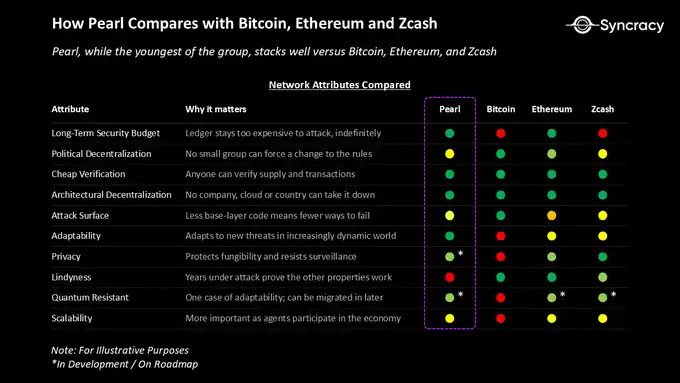
For now, the clearest test of Syncracy’s thesis is narrower than its forecast of surpassing Bitcoin: after the FP8 upgrade, what share of Pearl’s mining actually comes from AI inference that customers are paying to use? That would show whether the network is drawing security from an existing service rather than chiefly from GPUs running computations for mining rewards alone.