When Elysium’s mainnet launched on November 9, 2026, launchpads were already a conspicuous part of its emerging community. ChainCatcher reported that more than ten had announced plans to join within weeks of the testnet launch, and that thousands of tokens had been created. That activity makes Elysium’s first cultural question as important as its technical one: will rapid token creation help build lasting applications, or mostly produce short-lived speculation?
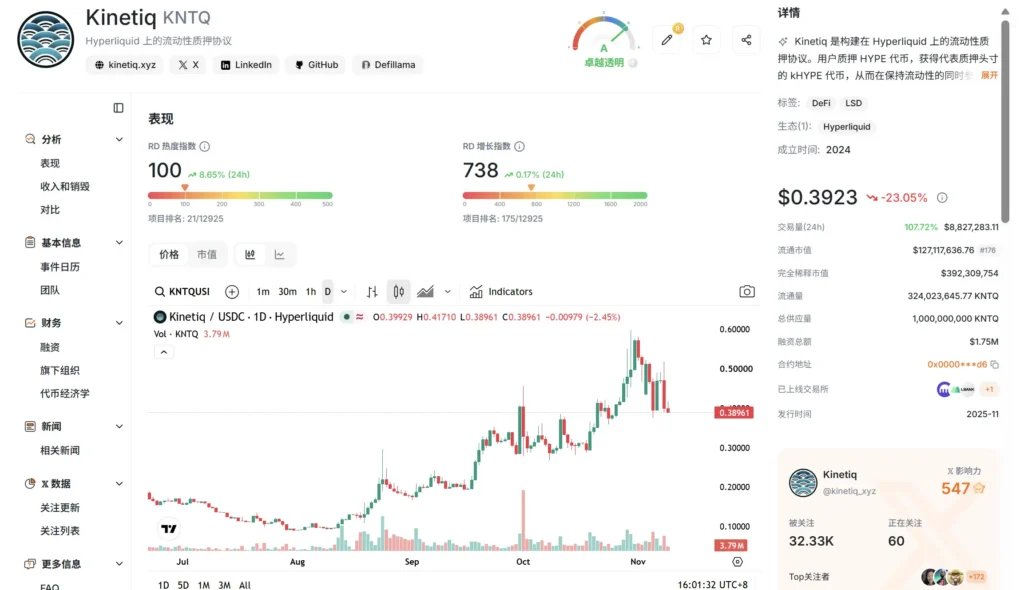
Elysium is a Layer 2 network built by Kinetiq, the Hyperliquid ecosystem’s liquid-staking protocol and issuer of kHYPE. Its stated aim is to give applications more capacity while connecting token launches and liquidity to HyperCore’s spot order book and, ultimately, HIP-3 perpetual markets. The project is trying to address a gap identified in the original report: Hyperliquid’s strength in perpetual trading has not been matched by comparable spot and DeFi activity.
The launch attracted announced support across trading, NFT, tokenized-asset and cross-chain services, including Uniswap, OpenSea, xStocks and Wormhole. Its launchpad roster included aka.fun, BunnyPad and other projects experimenting with formats such as auctions, AI-agent token issuance and tokens linked to social accounts. Announced support and testnet token creation, however, do not establish sustained use on mainnet.
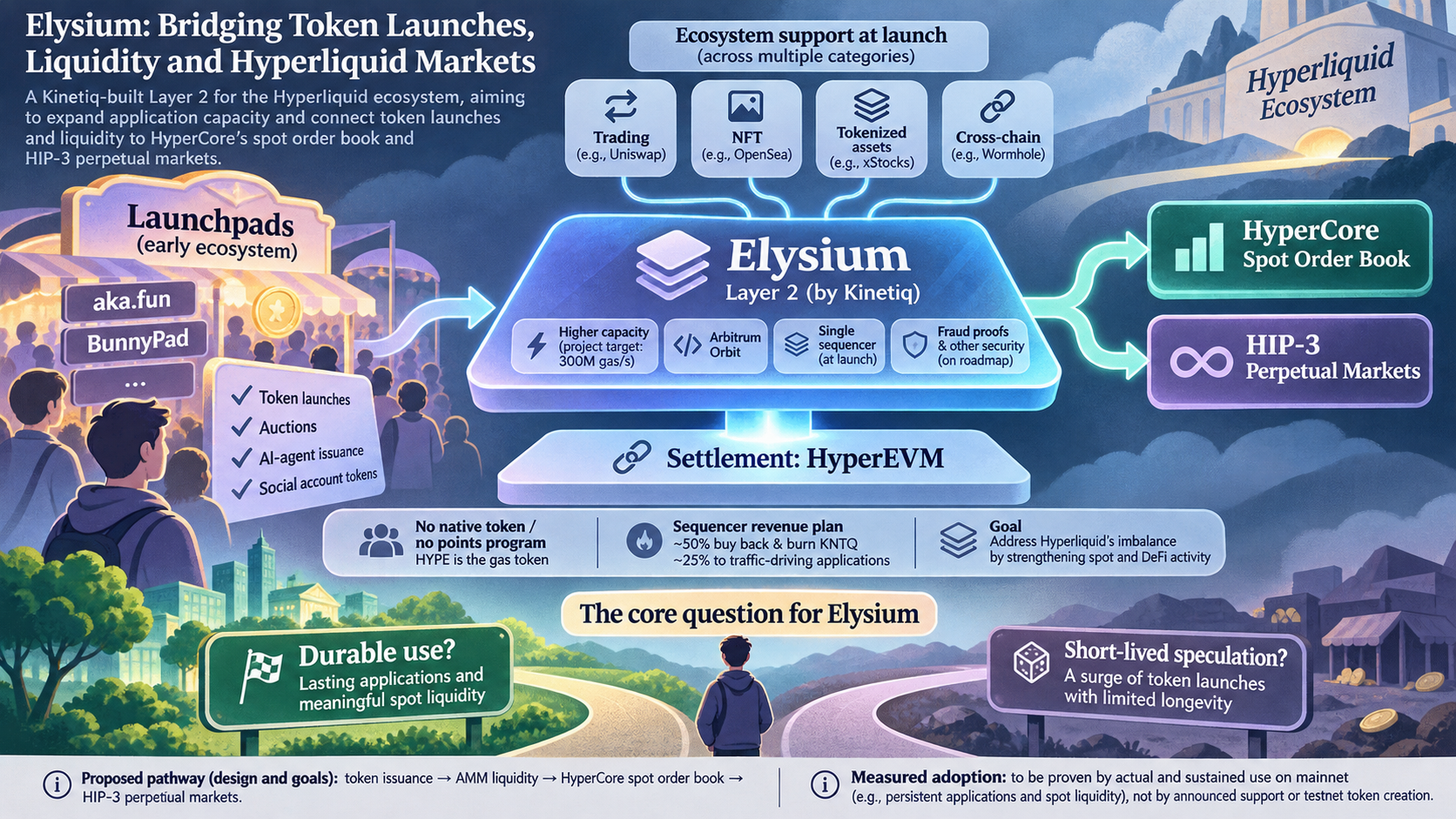
Elysium uses Arbitrum Orbit technology and settles to HyperEVM. Its stated performance target is 300 million gas per second; the project describes that as 600 times HyperEVM’s cited capacity. Those are project targets and comparisons, not evidence of the traffic the network will ultimately attract. At launch, Elysium used a single sequencer, while permissionless fraud proofs and other security measures remained on its roadmap.
The distinction between the network and tokens launched on it matters. According to the report, Elysium has no native token or points program: HYPE is its gas token. The report says officials had repeatedly warned that purported “Elysium token” presales and points claims were suspicious. Kinetiq has also outlined a plan to use about 50% of sequencer revenue to buy back and burn KNTQ, with about 25% directed to applications bringing traffic. Whether that plan produces meaningful revenue depends on actual network use.
As of the November 9 report, Elysium had attracted plenty of projects ready to launch tokens. The unresolved test was whether that activity could develop into durable spot liquidity and applications—not simply more launches.