As reported on November 6, 2026, the week’s tokenization developments showed two different kinds of progress: more people holding on-chain real-world assets, and institutions working out what those assets can actually do. A proposed gold ETF pilot in Hong Kong, live tokenized-deposit transactions and objections from stock issuers all point to the same question: who gets to authorize an asset’s move on-chain?
More holders, little change in asset value
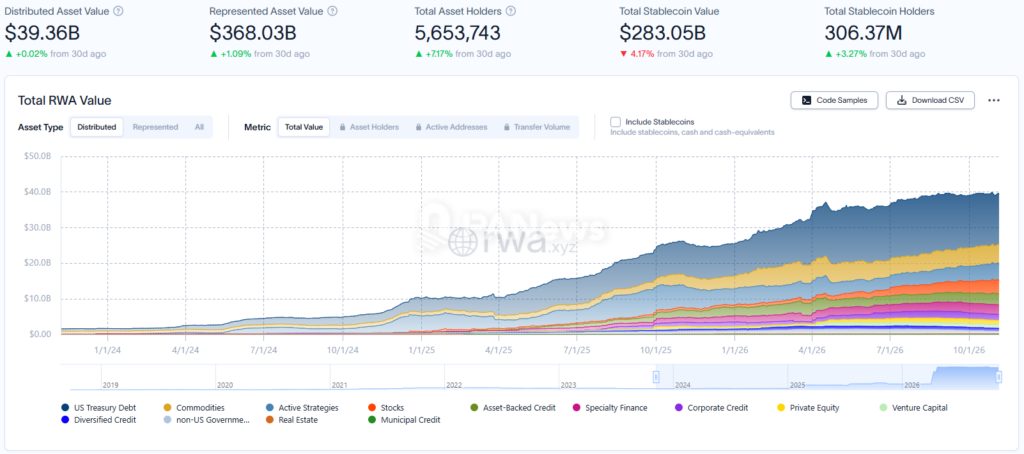
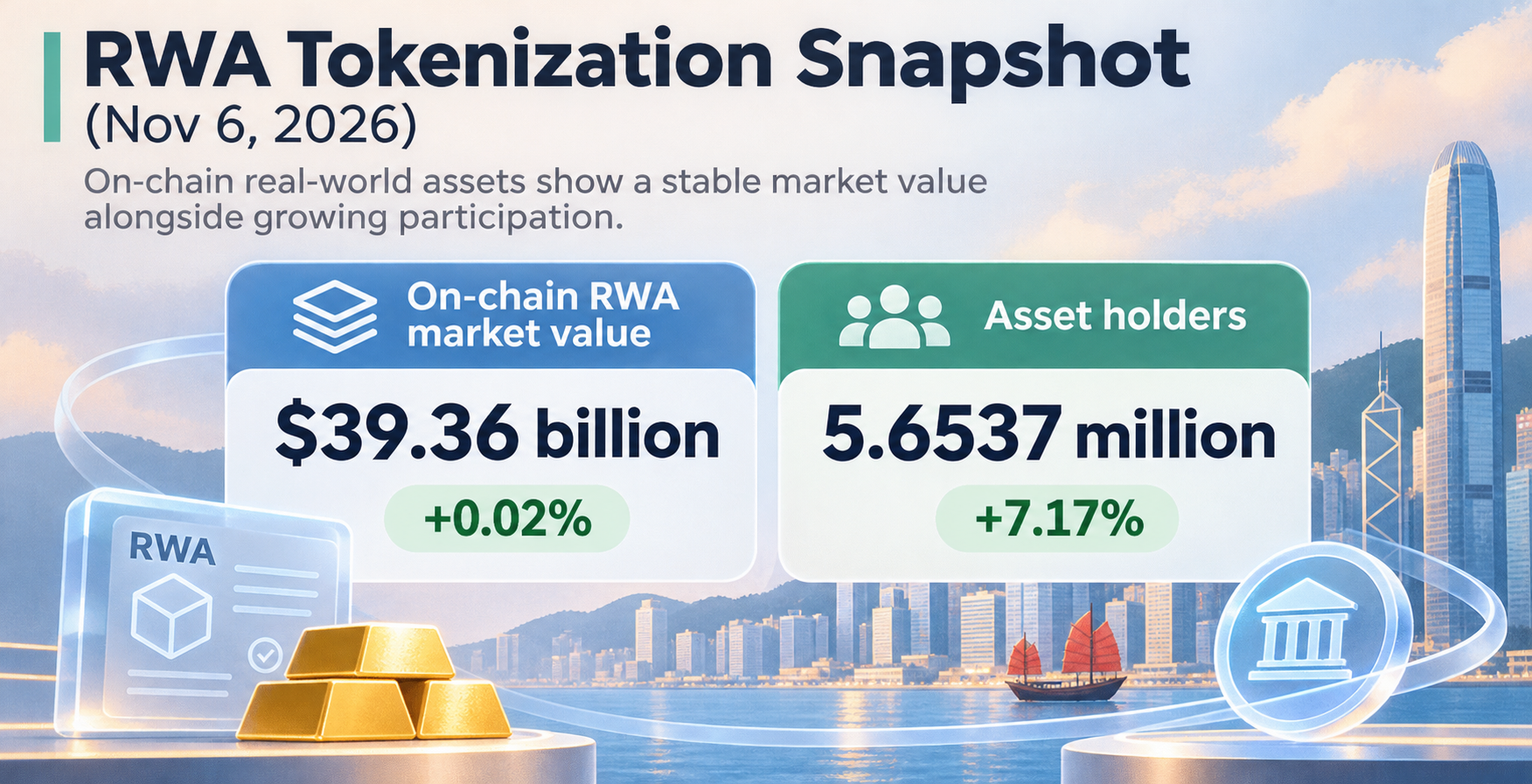
RWA.xyz data cited in the weekly report put the on-chain RWA market at $39.36 billion on November 6, up just 0.02% from the same point a month earlier. The number of asset holders reached 5.6537 million, up 7.17% over that period. Holder growth is a measure of participation, not evidence that the market’s assets grew at the same pace.
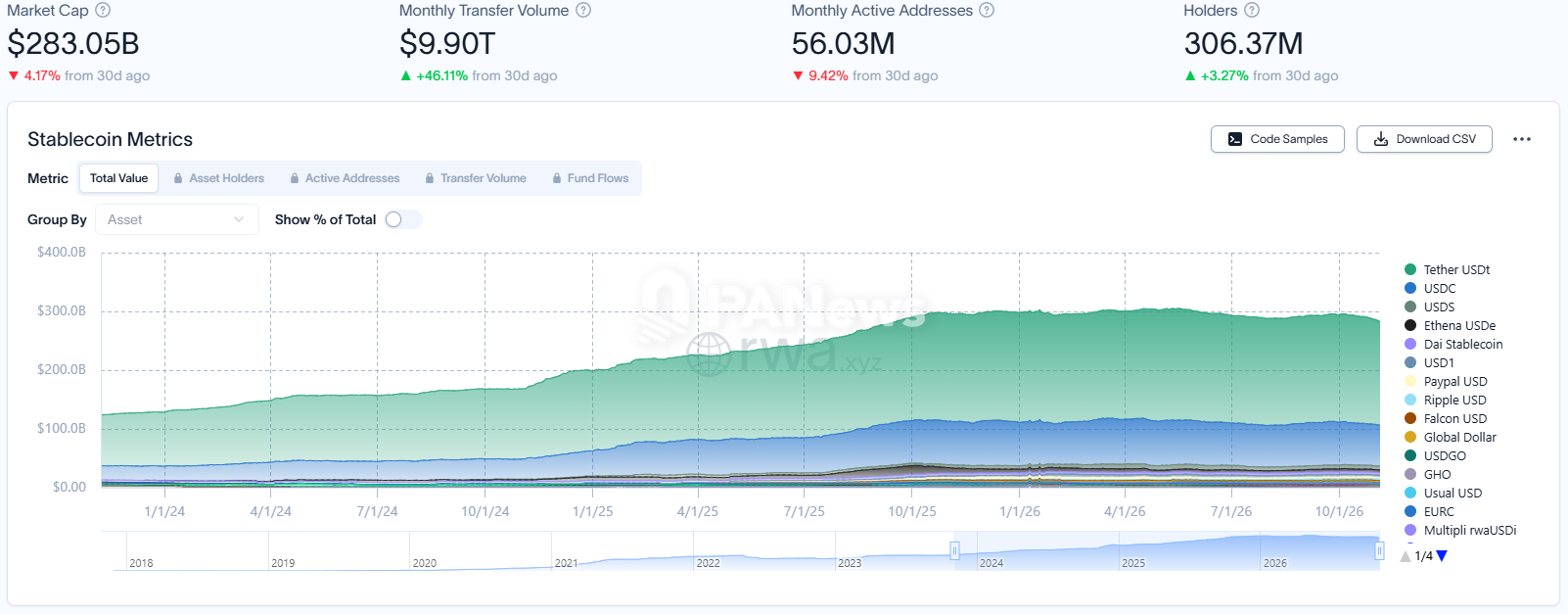
Stablecoins showed a different split. Their combined market value fell 4.17% month over month to $283.05 billion, while monthly transfer volume rose 46.11% to $9.9 trillion. Holders rose 3.27% to 306 million, but monthly active addresses declined 9.42% to 56.03 million. Those figures describe greater transfer volume alongside fewer active addresses; they do not, by themselves, establish why activity changed.
Hong Kong tests how tokenized products can be used
At Hong Kong FinTech Week, Securities and Futures Commission executive director Wu Ka-li said a tokenized gold ETF could be a next pilot. She described an “Innovation Pathway” intended to connect tokenized funds with digital currencies. According to her remarks, Hong Kong had approved 17 tokenized retail products, spanning money-market funds, gold products and ETFs, with $1.3 billion in assets under management. The gold ETF was a possible pilot, not a completed launch.
The Hong Kong Monetary Authority said its Ensemble TX initiative had reached a stage involving round-the-clock, real-value tokenized-deposit transactions. It plans to extend the experiment to regulated stablecoins. Separately, Standard Chartered launched a corporate tokenized-deposit service in Hong Kong, using its own blockchain system and Ensemble TX infrastructure. The bank did not disclose the value of completed transactions or how many institutions could initially use the service.
Other plans remain plans. In a post on X, Solana said Anchorpoint—the venture formed by Standard Chartered, HKT and Animoca Brands—would bring the Hong Kong dollar stablecoin HKDAP to Solana for native minting and redemption. That announcement should not be read as evidence that the proposed uses, from payments to tokenized assets, have already been adopted.

An issuer’s objection is part of the story
Tokenized stocks raise a participation question beyond whether trading infrastructure works. In a November 5 public-notice update, the OKX–Intercontinental Exchange venture OKXICE TSV said the number of listed companies objecting to tokenized trading of their shares on its platform had risen from 62 to 67. The newly named objectors included Meta, Palantir and S&P Global. Their objections complicate any narrative that putting equities on-chain has automatic support from the companies represented.
The week also brought different kinds of legal developments. Dubai International Financial Centre Courts proposed a voluntary dispute-resolution oracle that could convey eligible off-chain decisions for execution against participating on-chain assets; it was a white-paper proposal, not an operating universal court system. Nigeria’s central bank, by contrast, issued regulations for non-security virtual assets, including capital requirements for stablecoin issuers. In France, crypto-related tax and self-custody reporting amendments were removed from the budget version headed to the Senate after lawmakers rejected the revenue portion; the provisions could still be reintroduced.
Taken together, the November 6 snapshot shows why “tokenization” is too broad to serve as a single adoption story. A growing holder count, a live deposit service, a potential ETF pilot and issuer objections describe distinct forms of participation—with distinct limits.