A token name in a public BitGo pull request became a pivotal clue in a trader’s account of buying cashcat ahead of its Robinhood listing. Published on November 16, 2026, the account by 3 (@3i) describes a search through wallet activity, contract permissions and infrastructure updates—not a confirmed advance listing notice.
Following the cashcat clues
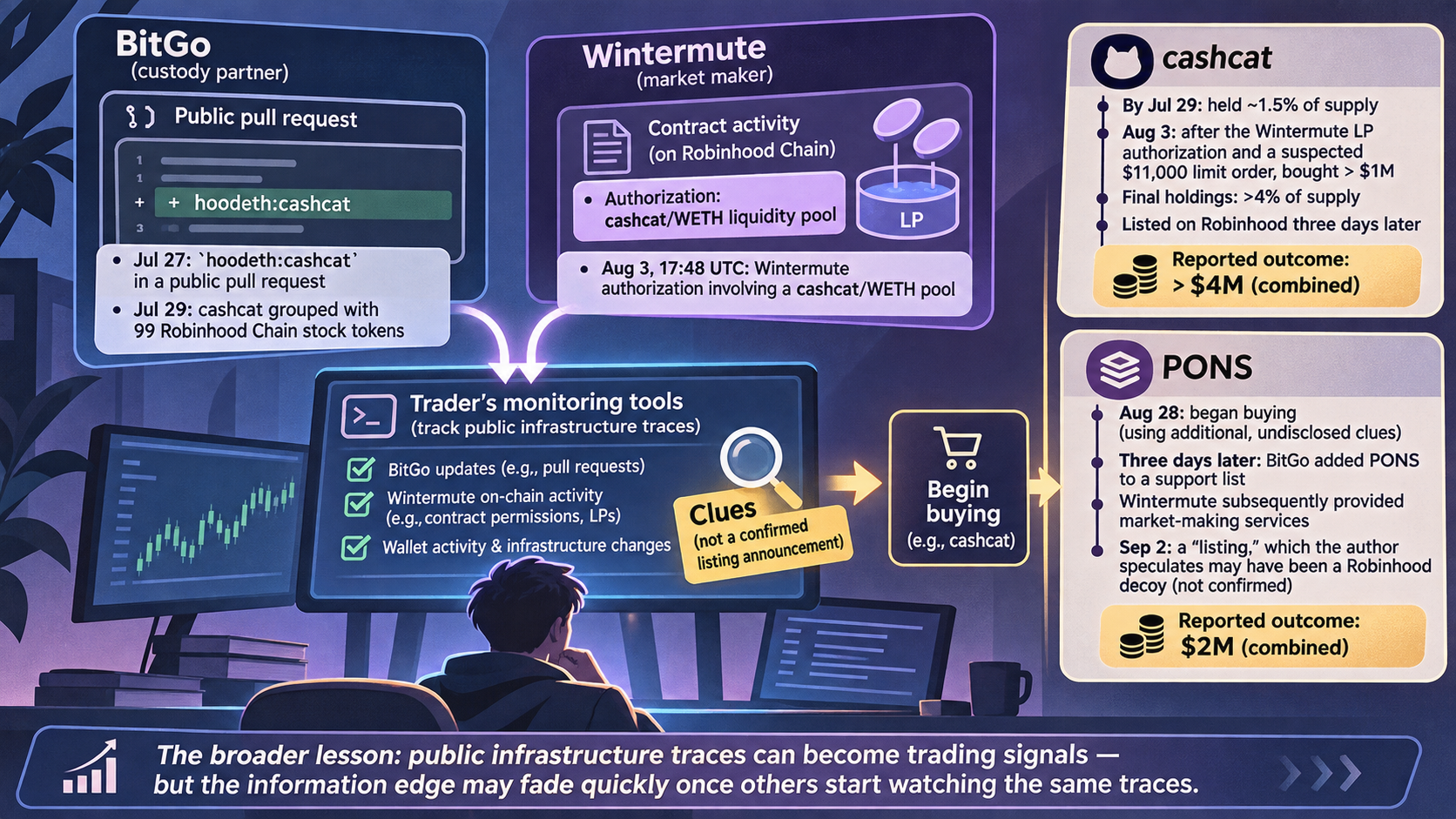
The author says an earlier observation shaped the search: Wintermute had moved tokens to a Robinhood hot wallet about an hour before a previous listing announcement. That pattern alone did not establish what would happen with cashcat. The author and a partner instead built monitoring tools for Wintermute activity on Robinhood Chain and for updates from BitGo, which the account identifies as a custody partner.
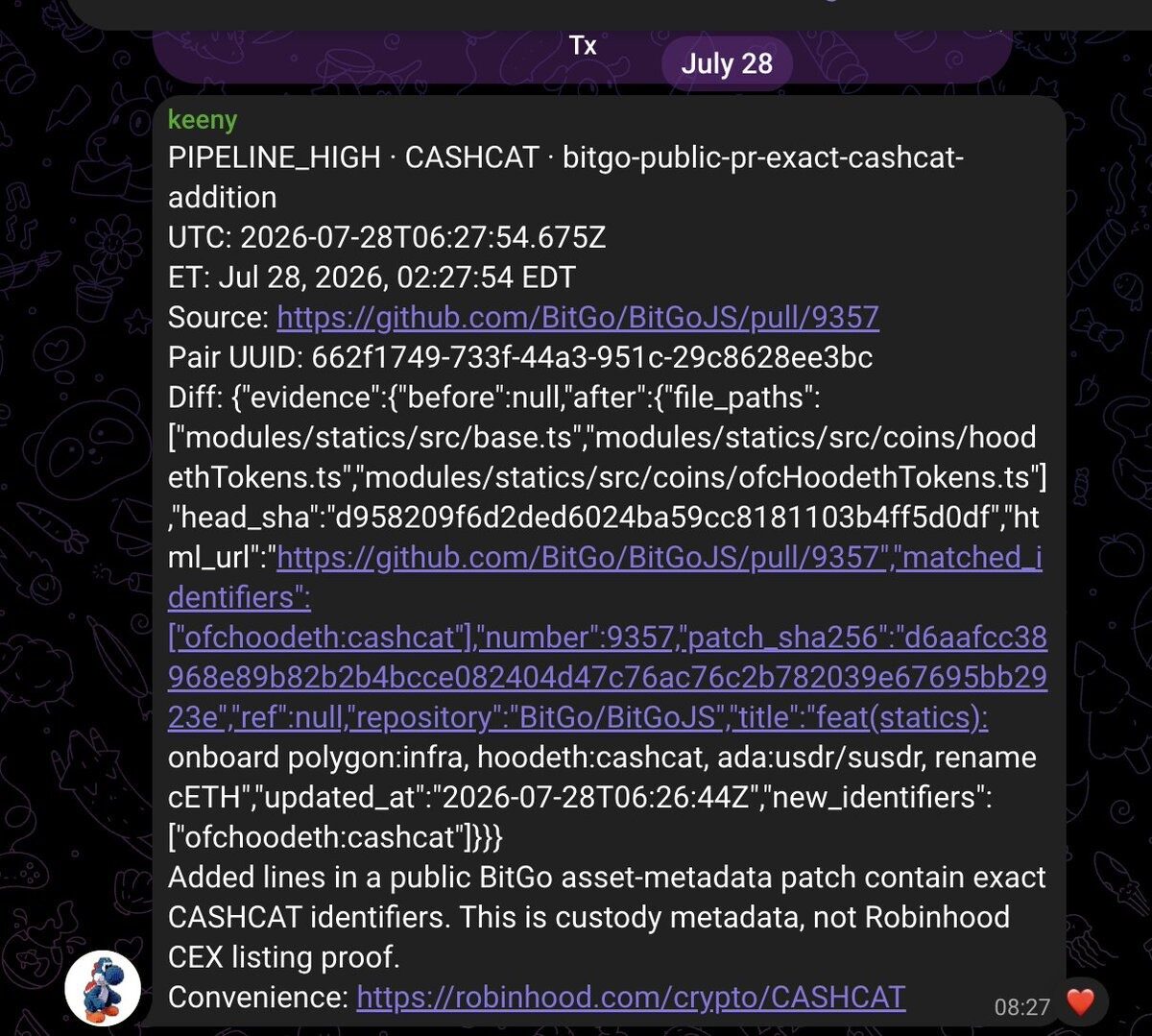
On July 27, their BitGo monitor detected hoodeth:cashcat in a public pull request five seconds after it appeared. The author says the reference mattered but was not conclusive because BitGo served many clients. A July 29 update grouped cashcat with 99 Robinhood Chain stock tokens, which the author interpreted as stronger evidence of a Robinhood connection. By then, the two traders said they held 1.5% of cashcat’s total supply.
At 17:48 UTC on August 3, their tool detected a Wintermute authorization involving a cashcat/WETH liquidity pool. The pair began buying. About half an hour later, they saw an $11,000 cashcat limit order from a wallet they suspected was linked to a Robinhood insider. That identity was not established. Fearing other traders would notice the order, they abandoned their slower buying plan and bought more than $1 million worth of cashcat between them. The author says their combined holdings exceeded 4% of supply once they finished.
Robinhood listed cashcat three days later. The author reports that the pair made more than $4 million combined, while acknowledging that their buying drew attention to their wallets before the listing.
A less certain repeat with PONS
The author says the same visible Wintermute signals were becoming easier for others to follow. They began buying PONS on August 28 using additional clues they did not disclose. BitGo added PONS to a support list three days later, and Wintermute subsequently provided market-making services, according to the account. The author describes a September 2 PONS “listing” but speculates that it may have been a Robinhood decoy to identify people with advance information. The account offers no confirmation of that theory.
The author says they and friends made $2 million combined on PONS. Those reported outcomes are the trader’s own claims, not independently established returns. The broader story is about how public infrastructure traces can become trading signals—and how quickly a perceived information edge may fade once others begin watching the same traces.