Puffpaw’s return after a long silence was supposed to include a VAPE token launch and an airdrop. Instead, it became a dispute over whether the token’s price was used to influence bets on Polymarket. As reported on November 9, 2026, those bets had not been settled, and allegations of manipulation remained allegations.
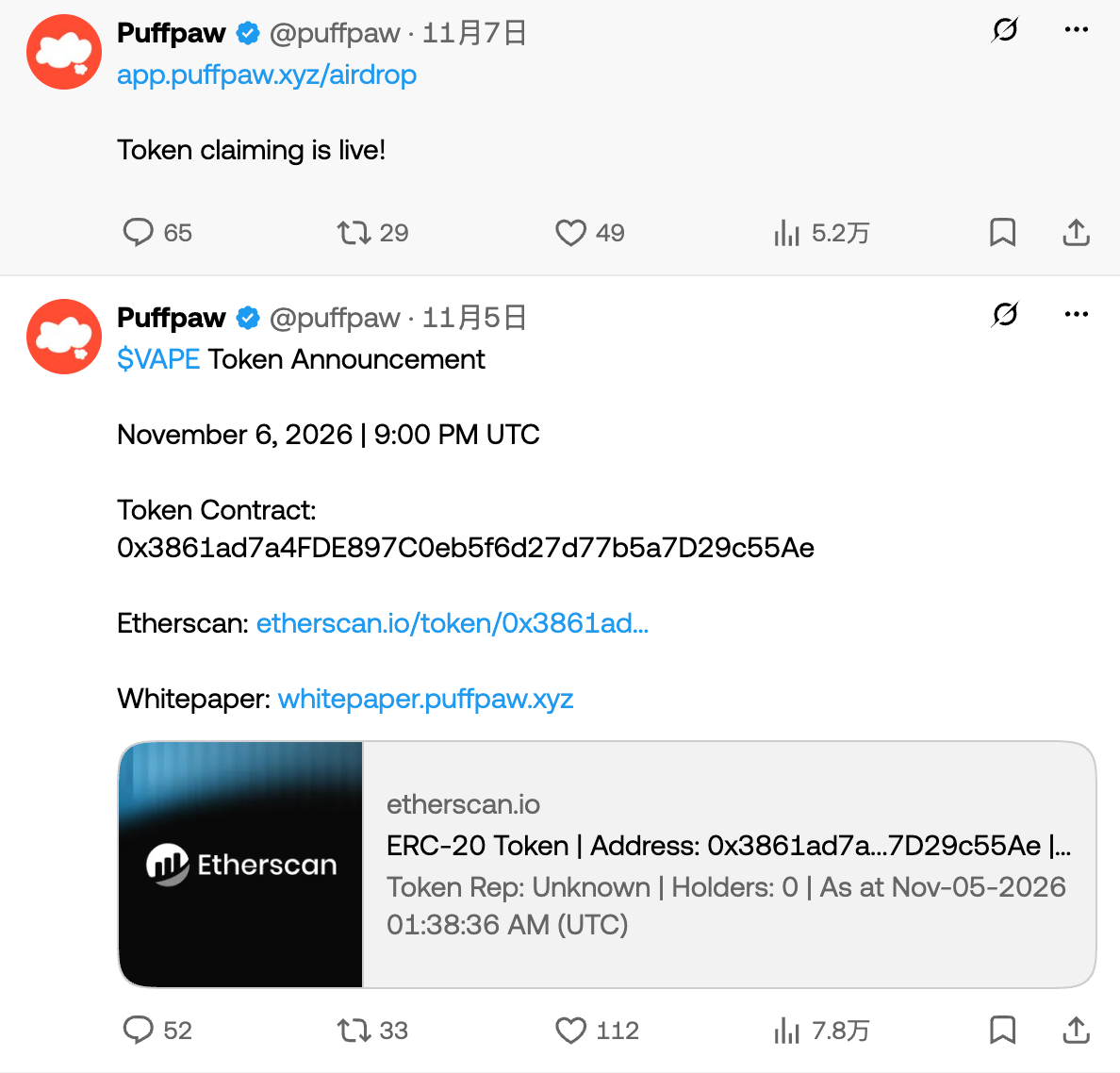
Puffpaw was a Berachain-based decentralized physical infrastructure project built around a “Vape-to-Earn” concept: smart vaping devices would record usage data and provide token incentives. In 2024, it raised $6 million in a seed round led by Lemniscap, with Folius Ventures and Spartan Group among the participants. It also sold device nodes and genesis NFTs. The project later went quiet; according to Odaily, its announcement of the VAPE launch and airdrop the previous week was its first update in more than six months.
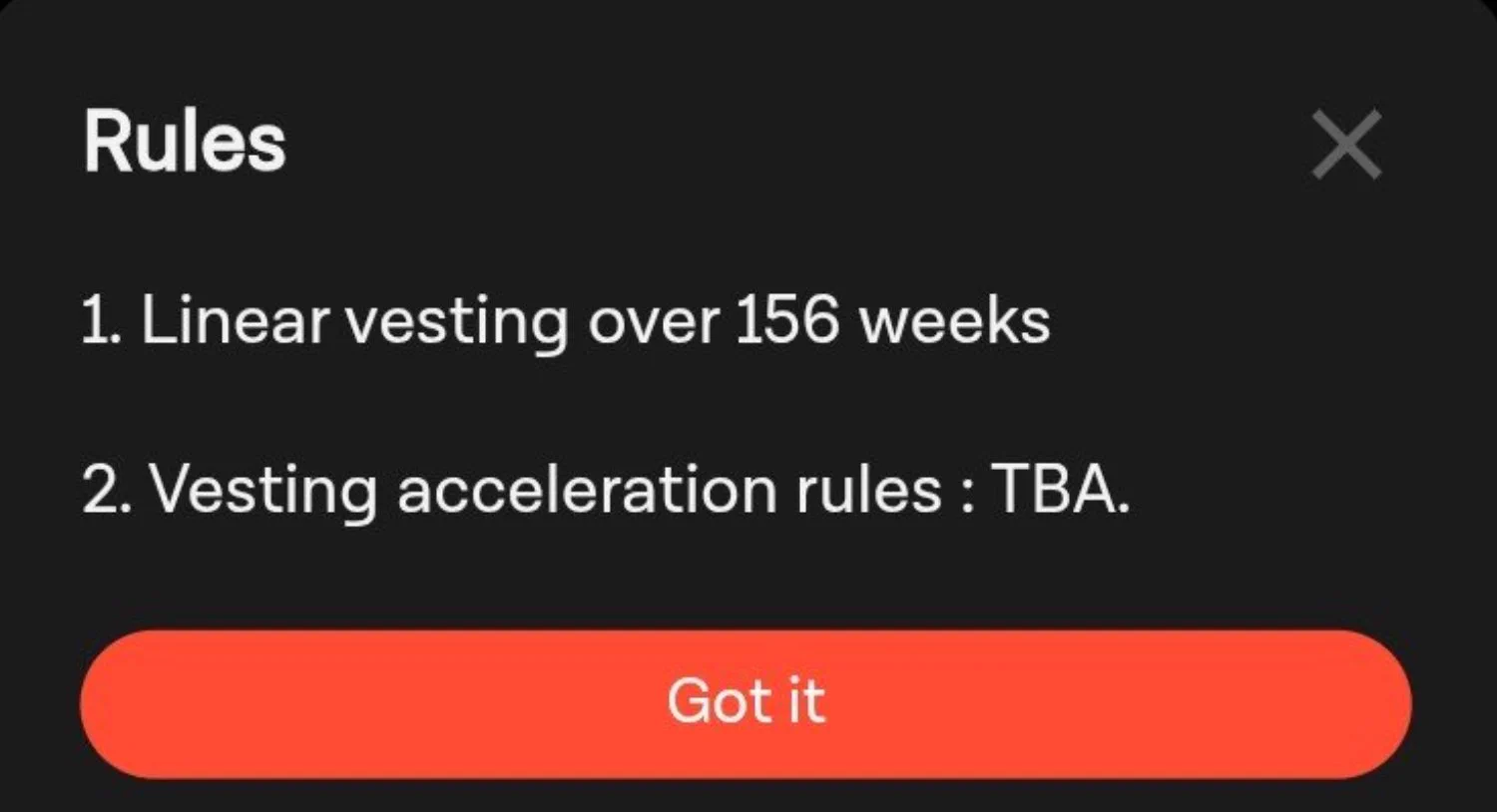
An airdrop with a long wait
Odaily reported that VAPE launched without a centralized-exchange listing and with an on-chain liquidity pool worth only roughly tens of thousands of dollars. It said some early participants who had spent $200–$300 on a genesis NFT or device received airdrop allocations worth only tens of dollars, subject to 156 weeks of linear vesting. Odaily also cited on-chain data indicating that team-linked addresses controlled between 97% and 99.88% of the circulating supply. Those figures are central to its allegation that the token’s price could be steered in a thin market; they do not, on their own, establish who placed any Polymarket bets.
Why Polymarket became the focus
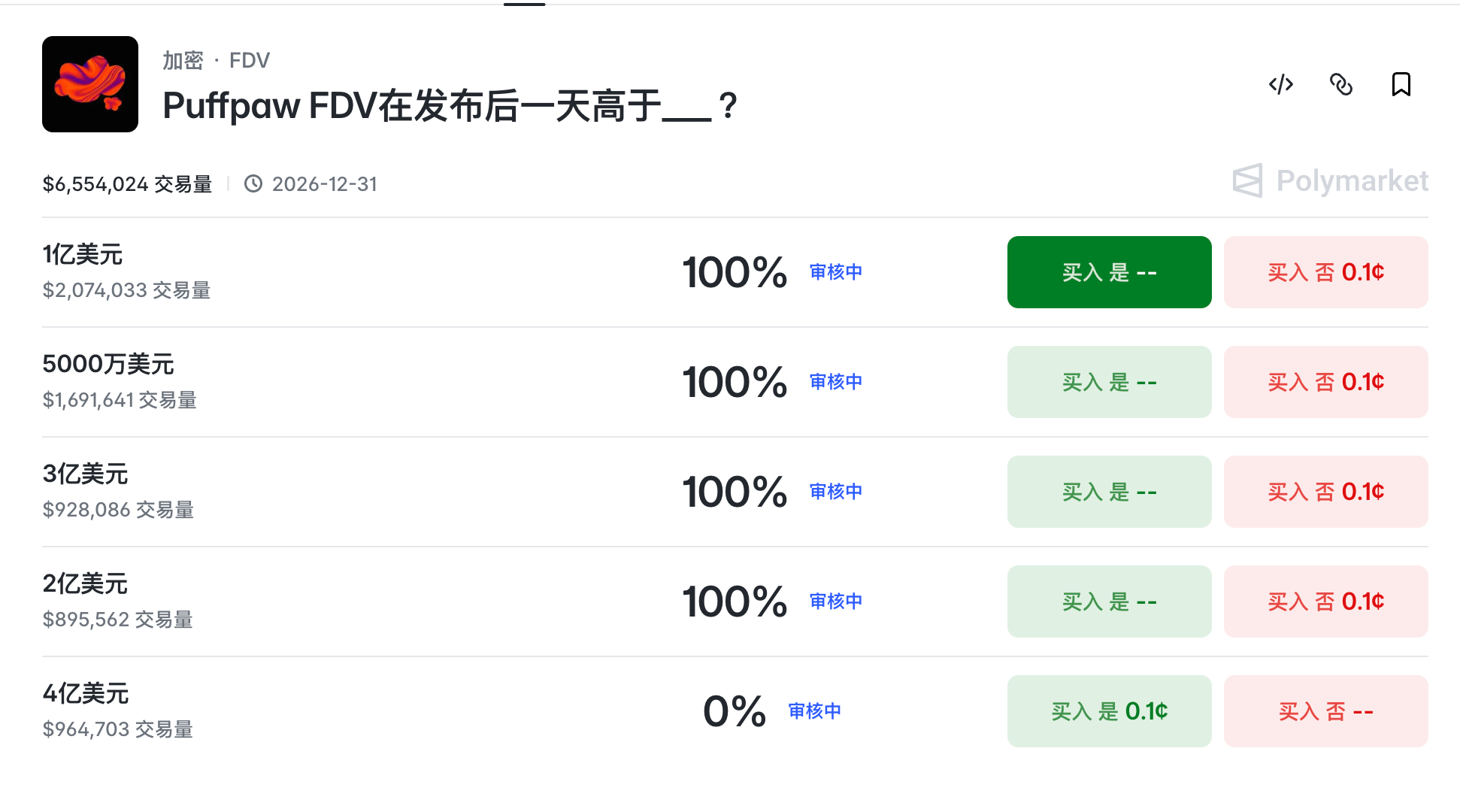
Polymarket had markets asking whether Puffpaw’s fully diluted valuation (FDV) one day after launch would exceed $50 million, $100 million, $200 million, $300 million or $400 million. Odaily alleged that Puffpaw’s team could have bought inexpensive YES positions while a launch appeared unlikely, then used its control of VAPE’s supply to push its FDV across the thresholds. The markets were due to expire at the end of 2026, with a failure to launch counting as NO.
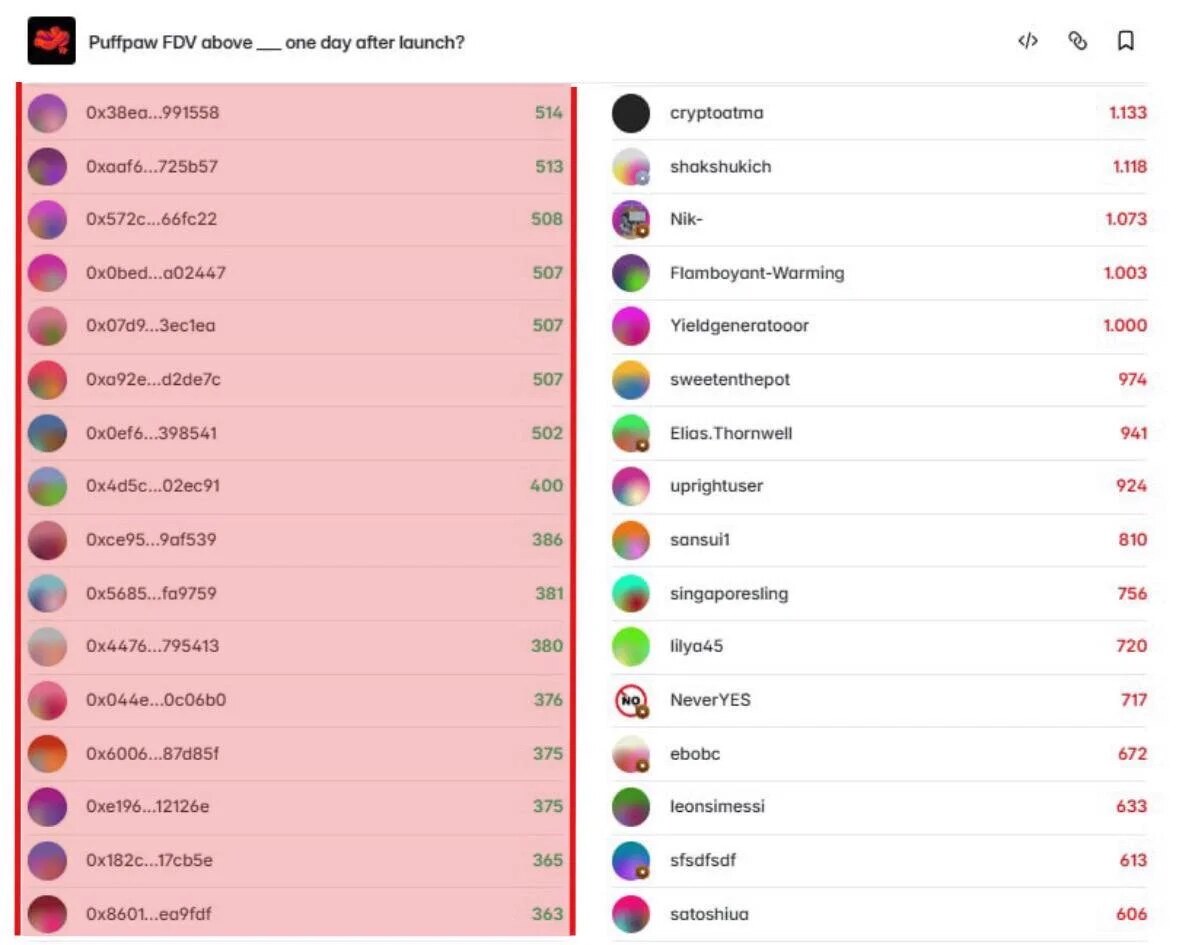
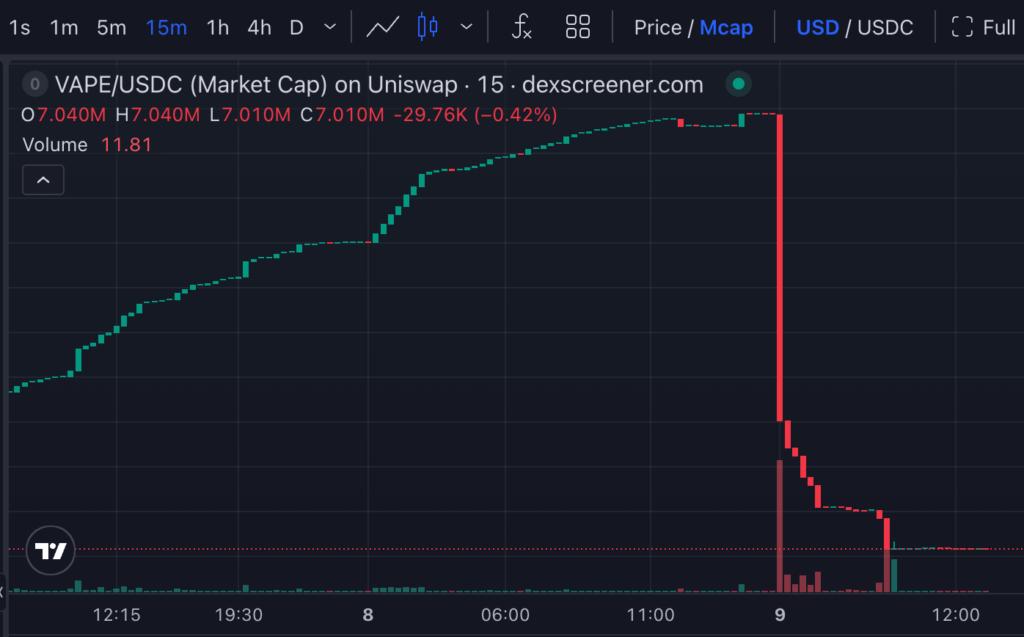
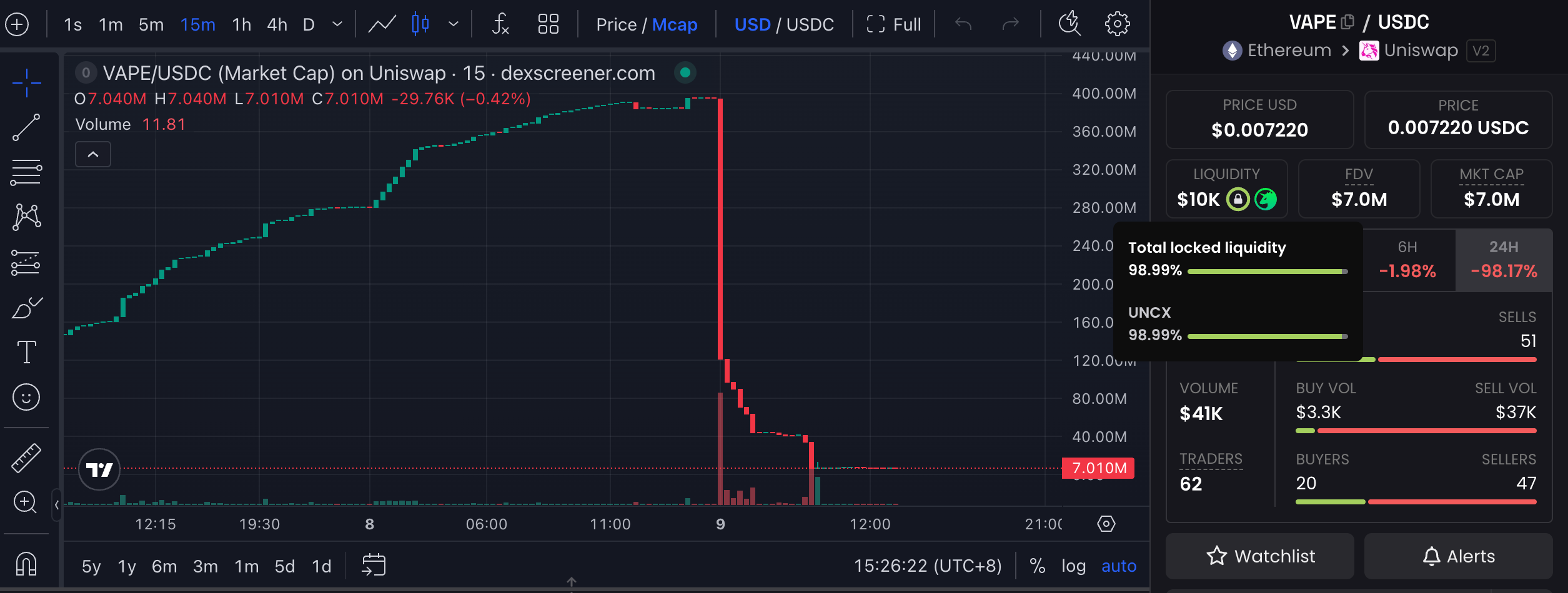
Odaily described VAPE’s first-day price chart as a step-like rise that brought its FDV to just below $400 million, followed by a sharp decline to about $7 million by the time of its report. That price pattern underpins the article’s manipulation allegation, but the source does not establish the identity or profits of any Polymarket bettor. On-chain analyst Atlantis liquidity separately reported that 1,259 of 1,285 wallets holding positions in the Puffpaw FDV markets—nearly 98%—had not traded any other Polymarket market. That observation does not identify who controlled those wallets.
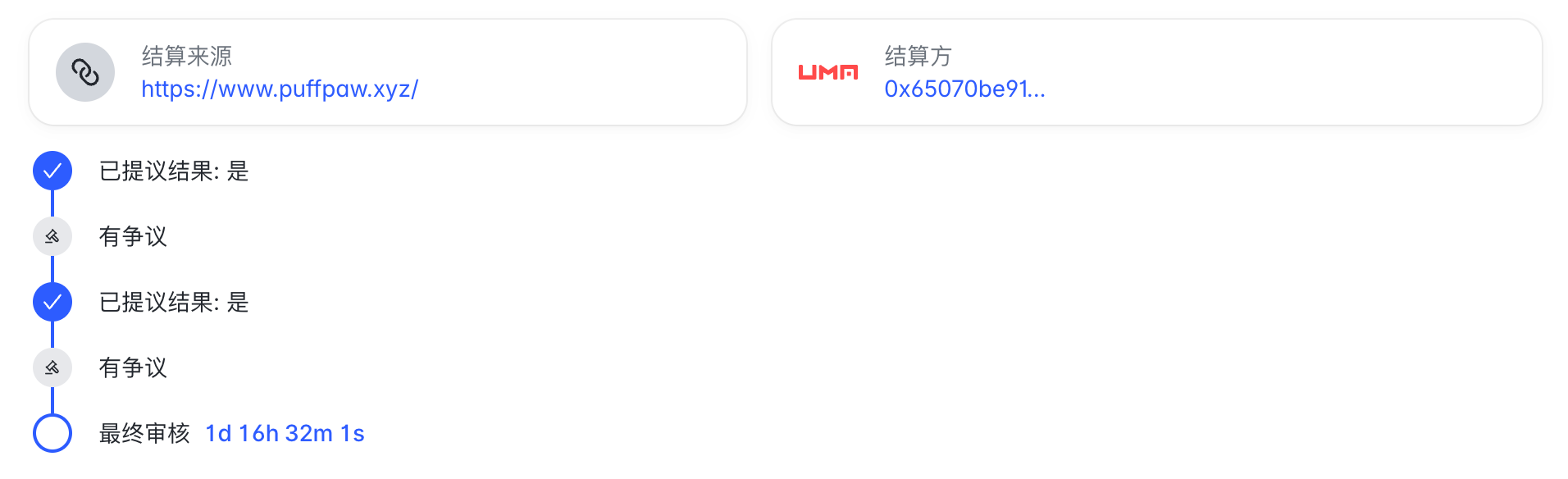
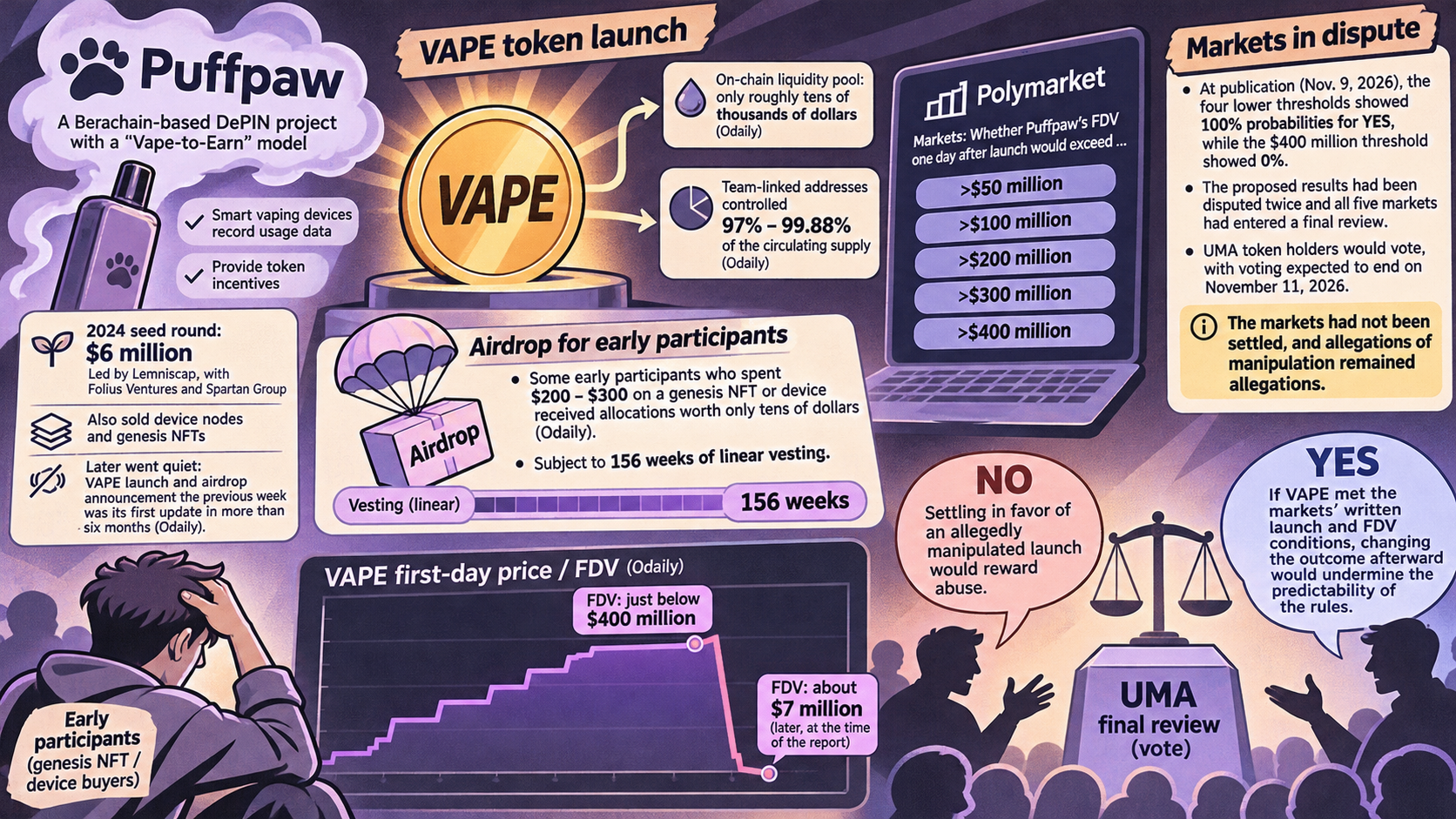
At publication, Odaily said the markets for the four lower FDV thresholds showed 100% probabilities for YES, while the $400 million threshold showed 0%. Displayed probabilities were not final settlements. The report said the proposed results had been disputed twice and all five markets had entered a final review in which UMA token holders would vote. That round of voting was expected to end on November 11, 2026.
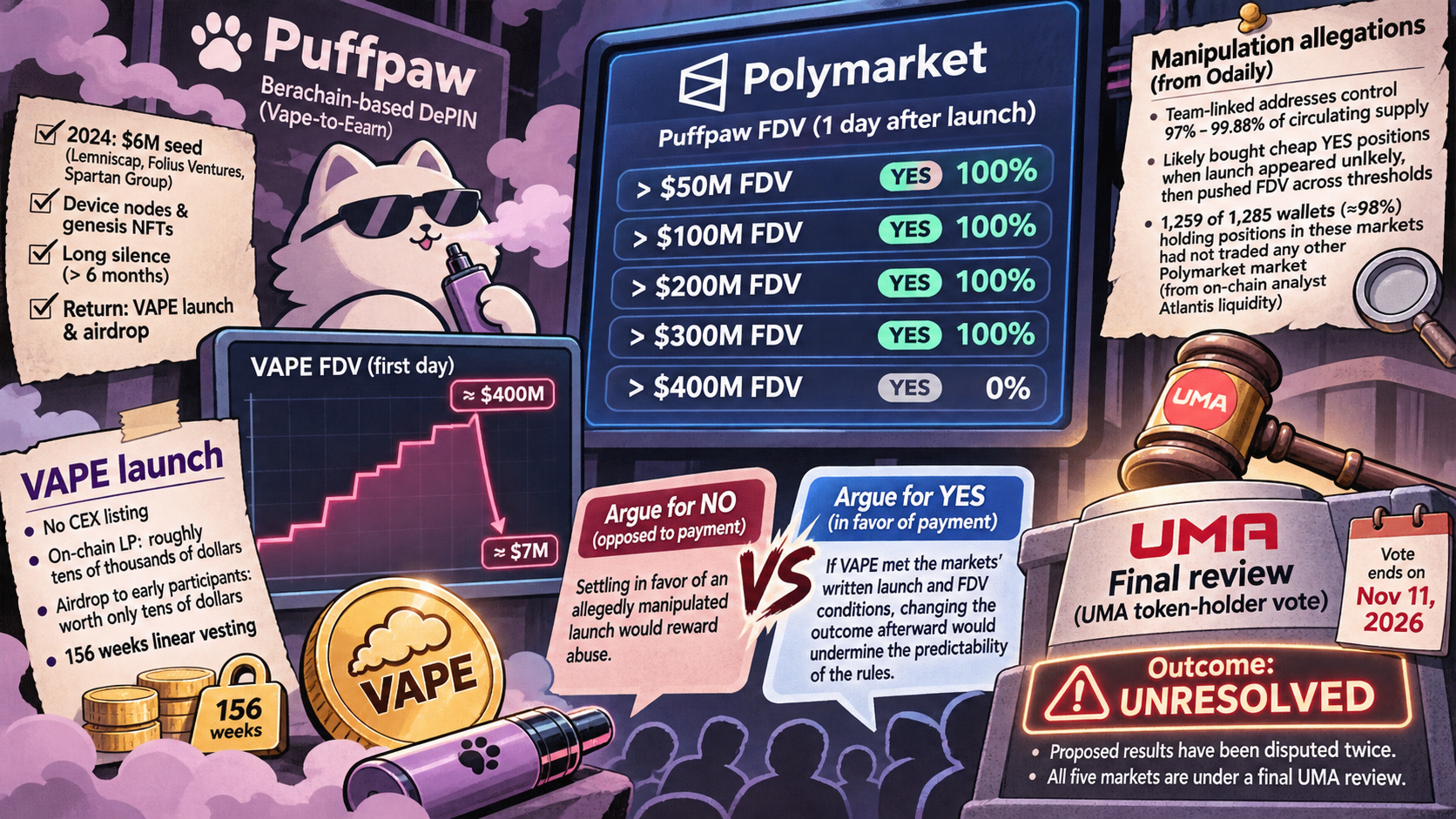
The disagreement went beyond Puffpaw. Traders arguing for NO said settling the markets in favor of an allegedly manipulated launch would reward abuse. Those arguing for YES said that, if VAPE met the markets’ written launch and FDV conditions, changing the outcome afterward would undermine the predictability of the rules. At the time of the report, UMA’s decision—and whether the challenged bets would pay out—remained unresolved.